Fabrics / Knitted · Stretch jersey, light
Milk Silk Spandex Jersey 150 GSM — 165 cm
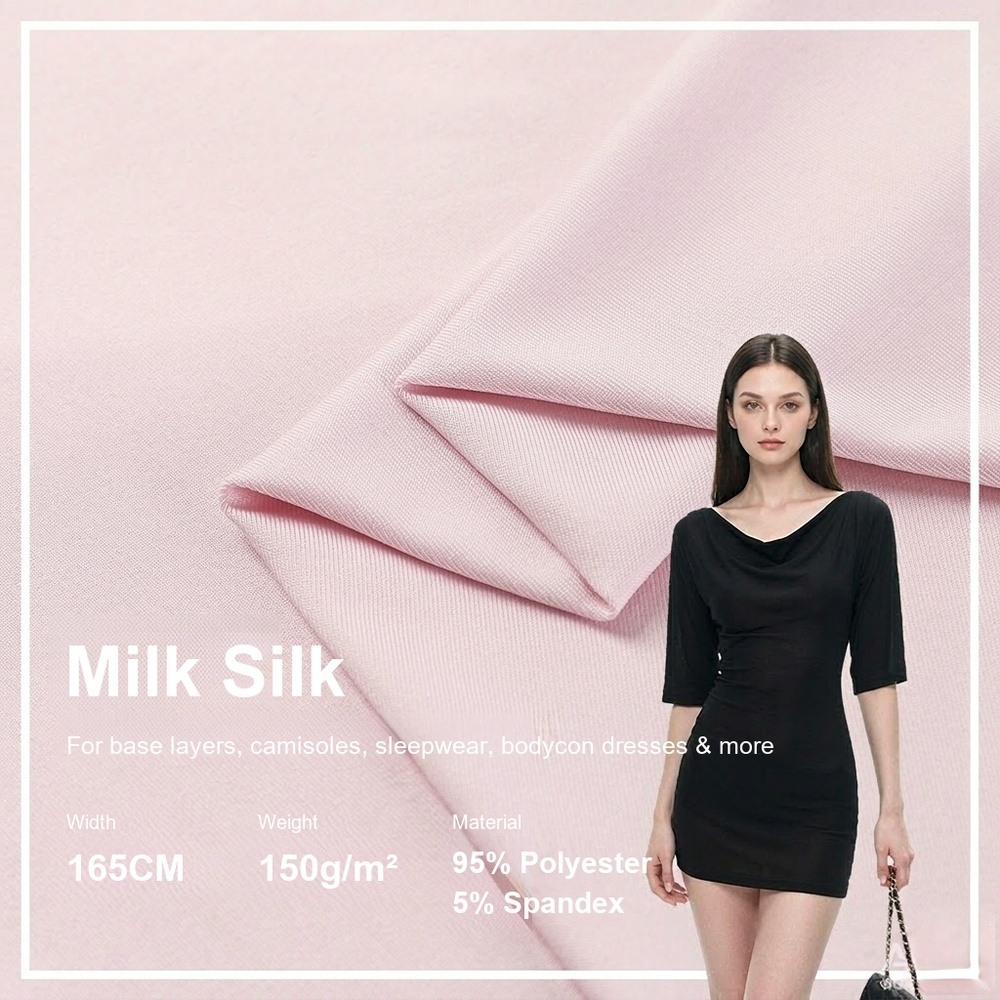
The light, stretchy end of the milk silk range: 150 GSM on a 165 cm width, knitted 95% polyester with 5% spandex and left unsanded. 拉架 in the mill’s listing means exactly that — the yarn carries spandex, so the cloth gives and recovers rather than merely draping. It is the article behind bodycon dresses, camisoles and sleepwear that has to cling without bagging, and the one buyers ask for when the 240 GSM brushed quality is too warm and too thick for a fitted garment.
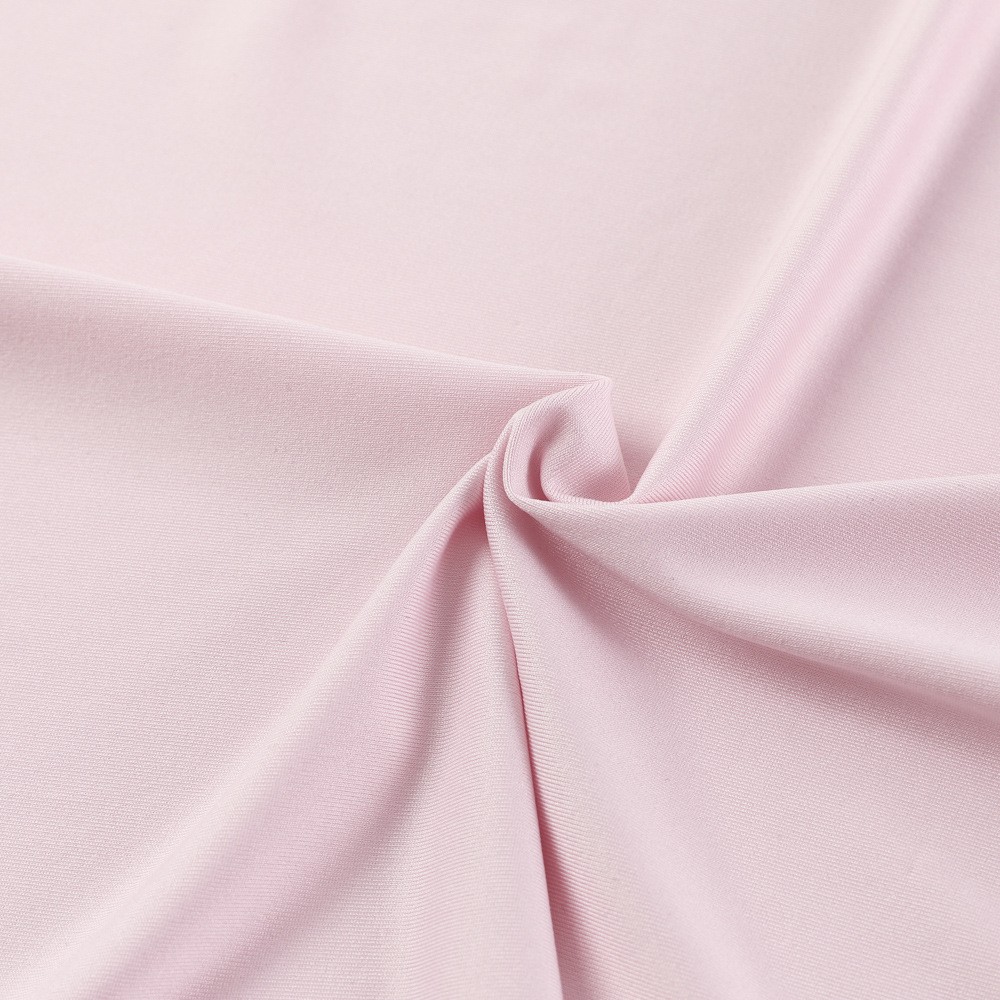
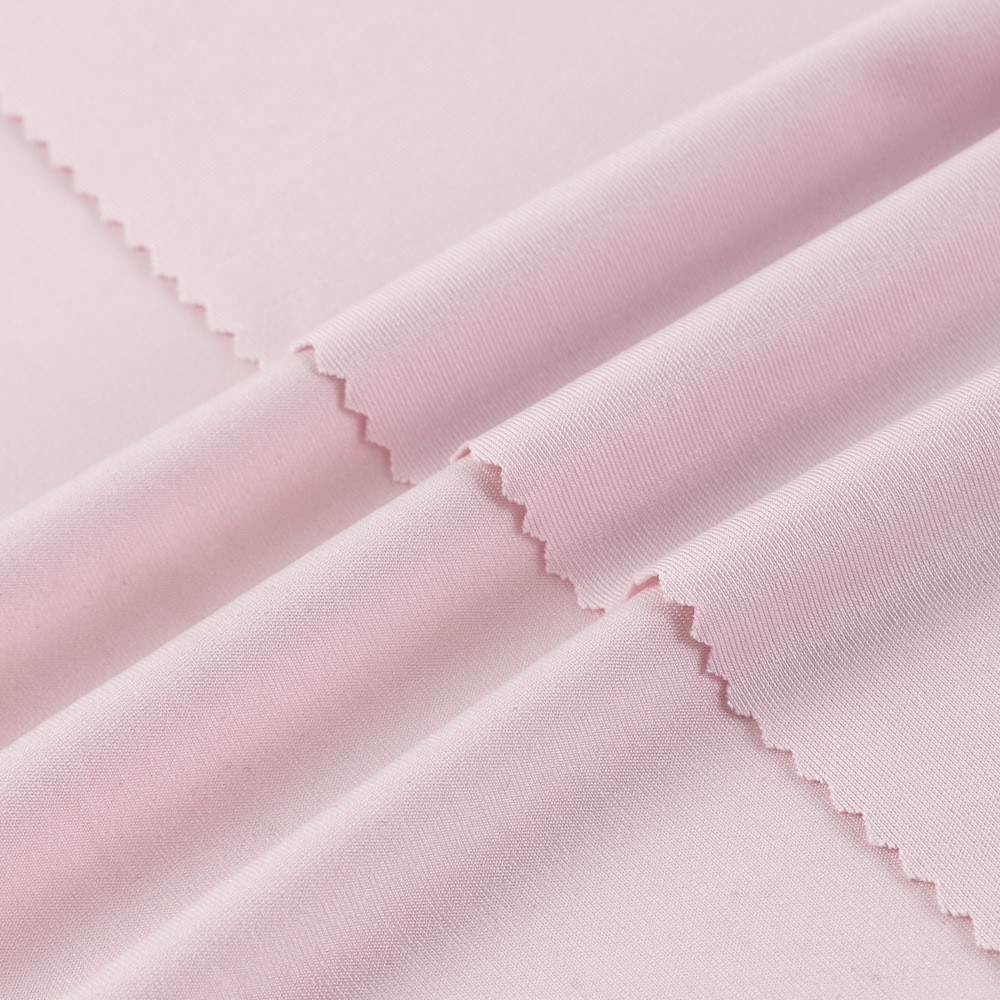
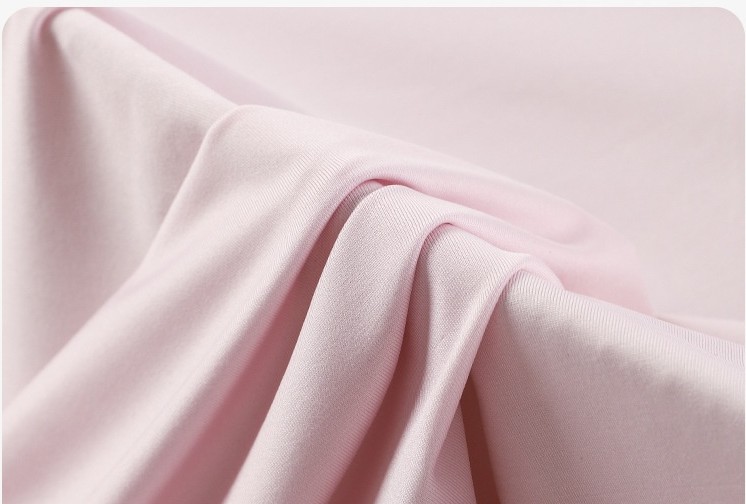
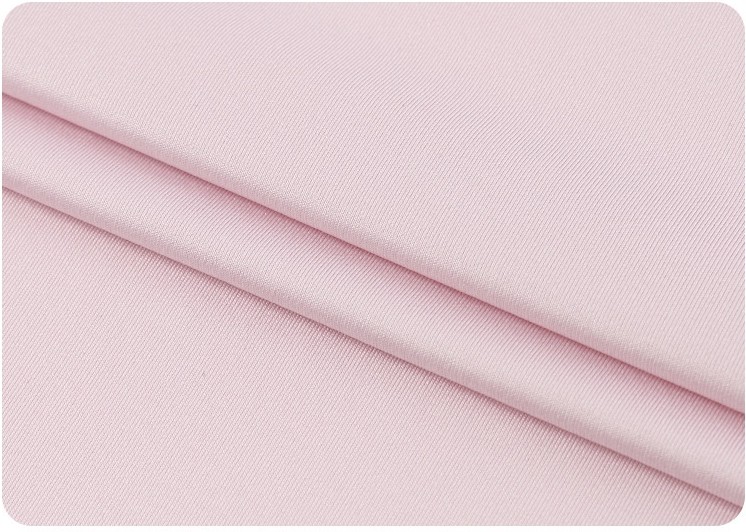
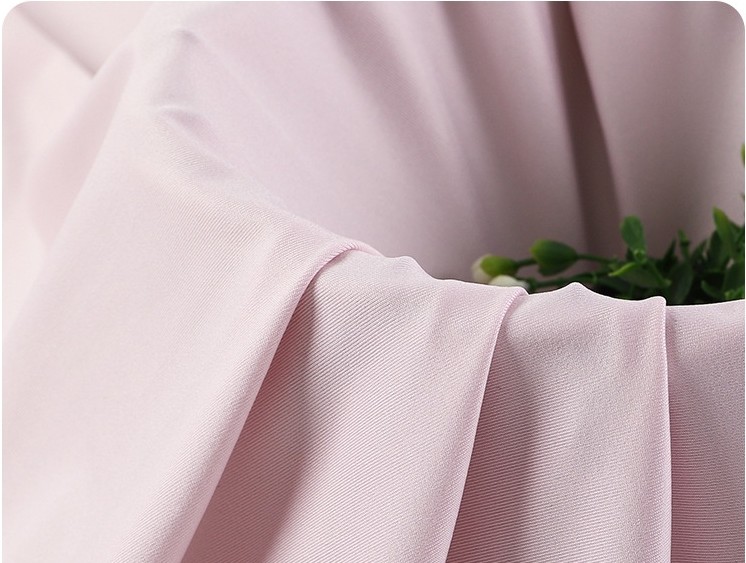
Because nothing is brushed or peached on this one, both faces read the same: a fine, tight, faintly ribbed surface with a soft sheen, not a matte pile. That is why it prints and dyes cleanly and why it is the quality we usually quote for a shade that has to match across a range of styles — there is no raised face to flatten or to catch light differently from the body cloth.
- Composition
- 95% Polyester5% Spandex
- Weight
- 150 GSM4.4 oz/yd²
- Width
- 165 cm65 inch, open width
- Yarn count
- 100Dsingle 100 denier, spun with spandex
- MOQ
- 300 kg≈ 1,210 running metres
- Shown in
- No.006other shades dyed to order
Full specification
| Customization | Available — shade, weight and width confirmed at quotation |
|---|---|
| Knitting technics | Knitted (circular knit, single jersey with spandex, not sanded) |
| Composition | 95% polyester + 5% spandex |
| Weight | 150 GSM / 4.4 oz/yd² |
| Width | 165 cm / 65 inch, open width |
| Yarn count | 100D |
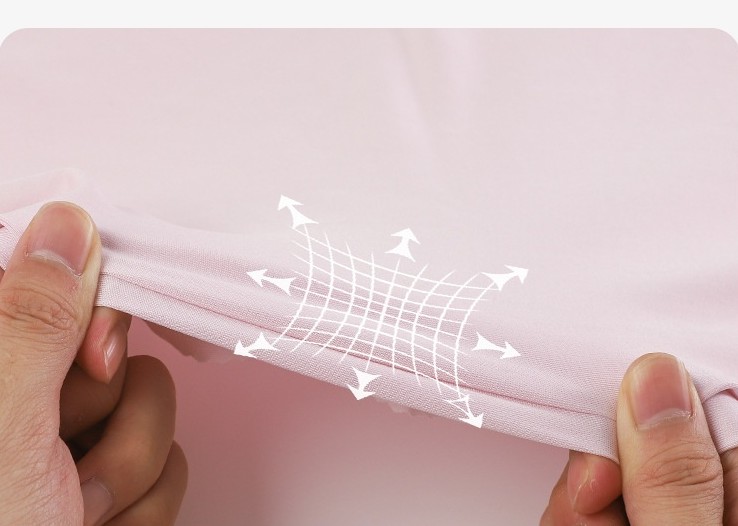
| Stretch | Two-way. Full-width extension and recovery confirmed on the bulk lot — tell us the extension you need and we test against it |
| Colour | Shown in No.006. Other shades dyed to order against an approved lab dip |
| Origin | Shaoxing City, Zhejiang, China |
| MOQ | 300 kg per shade |
| Price | US$ 9.44 / kg (300–999 kg) · US$ 8.86 / kg (1,000 kg+) |
| Yield | ≈ 4.0 running metres per kg at 150 GSM × 165 cm (≈ US$ 2.34 per running metre) |
| Lead time | Confirmed at quotation. Shades are dyed to order, so the first run includes lab dip approval |
| Packing | Roll-packed, roughly 25 kg per roll, poly bag inside a woven sack |
| Sample | Hanger swatch free. Lab dip for a specific shade charged at cost and credited against the bulk order |
| Documents | Invoice, packing list, B/L, certificate of origin; test reports on request |
| Care | Machine wash cold, do not bleach, tumble low — spandex loses recovery if it is washed hot or tumble dried on high |
Stretch is the point
A plain jersey at 150 GSM stretches because it is thin, not because it was built to. This one carries spandex in the yarn, so it can be pulled across the width for a fitted dress or a legging and still come back to its original size after wear and wash — the difference shows up on the third wash, not the first fitting.

What it costs per metre
At 150 GSM on a 165 cm width one kilo yields about 4.0 running metres, so a 300 kg order is roughly 1,210 metres — about 1,120 garments of 1.1 m consumption. Working back from the kilo price, the cloth lands at about US$ 2.34 per running metre at 300–999 kg (US$ 2.19 at 1,000 kg+), which is the number to put against your cutting ticket.
Why there is no shade card on this page
The 96 stock shades are printed on the peached 160–170 GSM and brushed 240 GSM pages, and they were matched on those base cloths. This article is knitted from a different yarn (100D with spandex) and at a different weight, so the same colour number would not land on the same shade here. It is dyed to order: you name the shade, we send a lab dip on the actual cloth, and bulk starts once you sign it off.
No.006 — the pale rose in these photographs — is a shade we keep in production because it sells through in sleepwear and basics. If you are matching a Pantone or a physical swatch of your own, send the reference with the enquiry; the dip is the answer, not a screen colour.
Where it goes
Bodycon and slip dresses, camisoles and base layers, sleepwear and loungewear, and light activewear — training tops, shorts, leggings for warm rooms. It is also the quality to look at for children’s and baby basics where softness and recovery matter more than body. If your pattern needs a wider lay, the 230 GSM peached version comes on 239 cm; if you want a raised, warm surface instead of a smooth one, that is the 240 GSM brushed.
Naming notes. 拉架 is the mill’s word for spandex — the same fibre the composition line calls 5% spandex, so this page and a supplier who quotes “lycra jersey” are talking about the same cloth. Milk silk is a trade name for the hand-feel, not a fibre: this is polyester and spandex, and it will not behave like silk in the wash. And unlike the rest of the family, nothing here is brushed or peached — if the surface in your reference photo looks matte and sandy, you are looking at the peached quality, not this one.
Ask for a shade and a price
Send the shade you need (or the Pantone), the weight and width you can actually cut, and the quantity. We reply within one working day with the price, the earliest dye date, and a lab dip on the real base cloth before bulk.