Fabrics / Sports & activewear · Stretch bird’s-eye knit
Stretch Bird-Eye Mesh 180 GSM — 175 cm
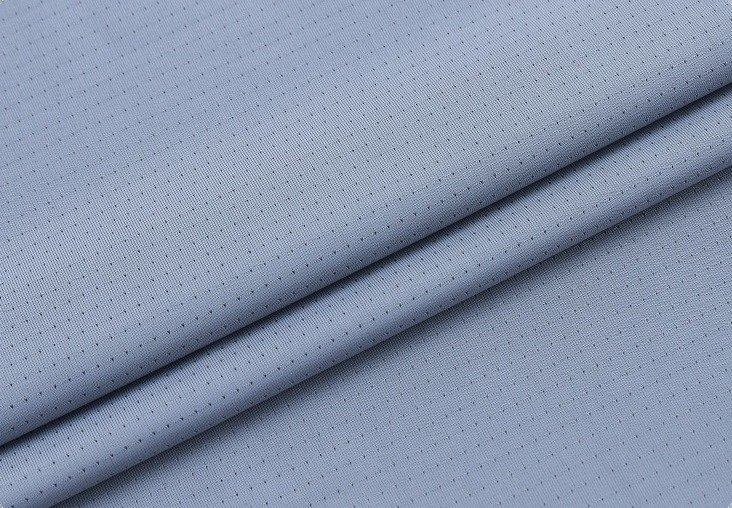
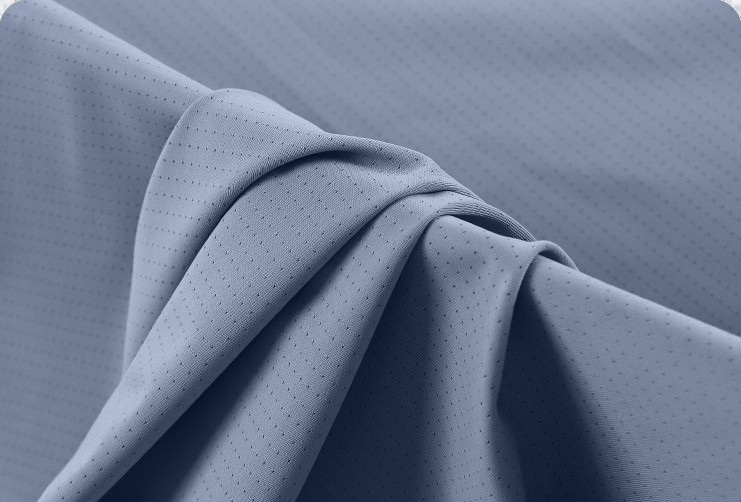
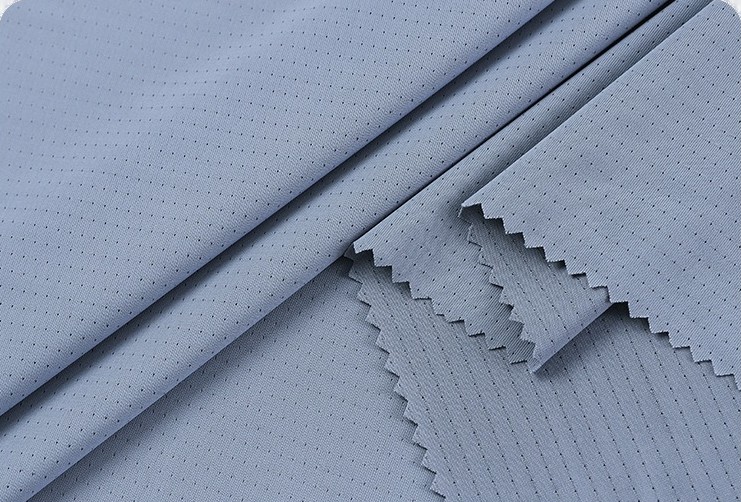
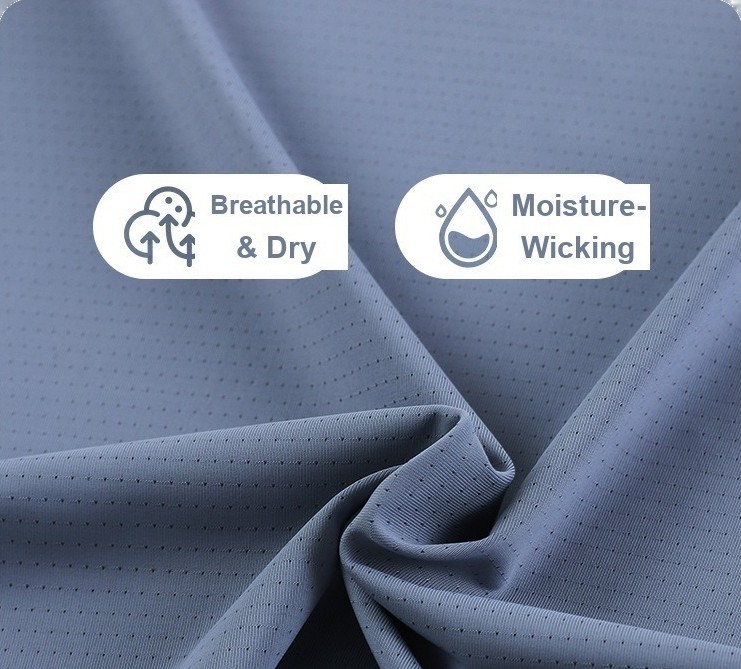
A 180 GSM bird’s-eye knit on a 175 cm width, with 5% spandex through the yarn so the cloth stretches and comes back. The eyelets are knitted in — knit and tuck stitches alternate, and a small open hole forms at every repeat — so the airflow is part of the structure rather than a punched or coated finish that washes out.
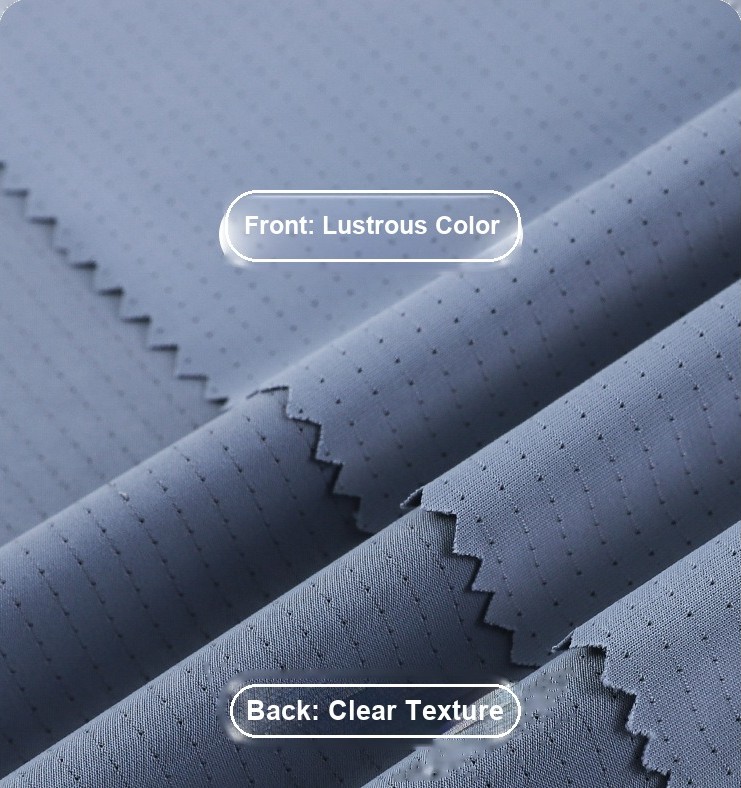
This is the quality behind quick-dry polos, sun-protective outer layers, yoga tops and kids’ sportswear: light enough to breathe at 180 GSM, dense enough not to go transparent when it stretches over a shoulder, and smooth on the face so a print or an embroidery sits flat. The reverse carries a clear, even texture — that is the bird’s-eye showing through, and it is what keeps the cloth from feeling like a plain jersey with holes in it.
- Composition
- 95% Polyester5% spandex
- Weight
- 180 GSM5.3 oz/yd²
- Width
- 175 cm69 inch, open width
- Yarn count
- Set at orderbuilt against 180 GSM on 175 cm
- MOQ
- 300 kg≈ 950 running metres
- Colour
- No.001 – No.096quote the shade number
Full specification
| Customization | Available — shade, weight and width confirmed at quotation |
|---|---|
| Knitting technics | Knitted (circular). Bird’s-eye structure: knit and tuck stitches alternate so a small open eyelet forms at every repeat, with spandex in the yarn path for stretch |
| Composition | 95% polyester + 5% spandex |
| Weight | 180 GSM / 5.3 oz/yd² |
| Width | 175 cm / 69 inch, open width |
| Yarn count | Set at order. Tell us the count you already run and we knit this quality to it against 180 GSM on the 175 cm width; the price above is quoted on our standard count |
| Dyeing | Piece dyed after knitting, so the shade runs even from the first metre of the roll to the last |
| Colour | Our stock shade card, quoted by number (No.001–No.096); or dyed to order against an approved lab dip. Ask for the card and we send it with the quotation |
| Stretch | Two-way stretch from the 5% spandex, with recovery built into the knit rather than added by a finish. Elongation and growth can be tested to the figure your buyer asks for |
| Airflow | The eyelets are knitted in, not punched or coated, so the airflow does not wash out or block up with softener |
| Origin | Shaoxing City, Zhejiang, China |
| MOQ | 300 kg per shade |
| Price | US$ 12.14 / kg (300–999 kg) · US$ 10.69 / kg (1,000 kg+) |
| Yield | ≈ 3.2 running metres per kg at 180 GSM × 175 cm (≈ US$ 3.83 per running metre, ≈ US$ 2.19 per m²) |
| Lead time | Stock shades ship from the dye lot on hand; dyed-to-order shades are confirmed at quotation |
| Packing | Roll-packed, roughly 25 kg per roll, poly bag inside a woven sack |
| Sample | Hanger swatch free; a 1 m cut of a stock shade charged at cost and credited against the bulk order |
| Documents | Invoice, packing list, B/L, certificate of origin; test reports on request |
| Care | Machine wash cold, do not bleach, do not iron the eyelets flat, dry flat in shade |
What the bird’s eye actually does
Three things, and they are worth knowing before you compare prices with a plain jersey of the same weight. First, breathability: the eyes are openings in the knit, so air moves through the cloth rather than around it, and the holes cannot close up with washing or with a softener. Second, stretch with recovery: the spandex runs through the yarn, so the cloth extends two ways and returns — a polo collar or a raglan sleeve keeps its shape instead of growing at the elbow. Third, opacity per gram: the eyelets are small and the ground is dense, so at 180 GSM it covers without the weight of a 200 GSM plain knit.
What it does not do is hide a cheap yarn. Because the structure is open, an uneven yarn shows as streaks along the wale; our greige is inspected before dyeing for exactly that reason.
Colour, quoted by number
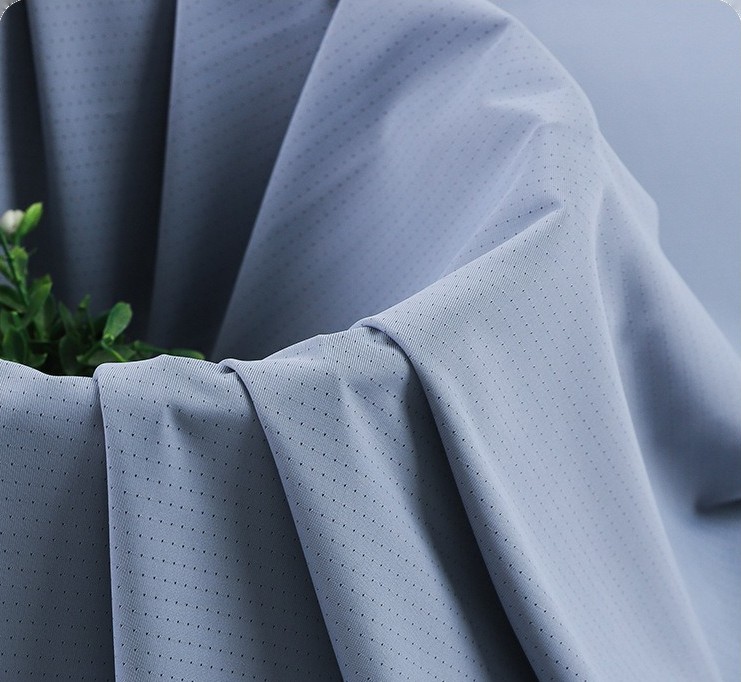
Our stock card runs to 96 shades. Pick the numbers you are choosing between and we dye this base to them; if what you need is not on the card, send a Pantone reference or a physical swatch. Quote the number — No.032, not “the mid blue” — so nothing is misread between your buying office and our dye house. Ask for the card with your enquiry and we send it, together with a lab dip of your shortlisted shades on this base cloth. MOQ is 300 kg per shade.
On an open structure the shade depth reads differently from a flat cloth: the eyelets catch light, so a mid tone sits half a step lighter on the roll than a chip on paper. Judge the lab dip on the cloth, not on the card.
What a kilo buys you
At 180 GSM on a 175 cm width one kilo gives about 3.2 running metres, so the 300 kg minimum is roughly 950 metres — around 730 polo or top bodies at 1.3 m each. That is US$ 3.83 per running metre and US$ 2.19 per m². A stretch bird’s-eye is not the cheapest cloth on the shelf and it is not meant to be; compare it against what a plain jersey plus an elastane finish would cost you, and against the returns you avoid when a polo keeps its shape. Send us your marker and we will run the metres for your style.
Where it goes
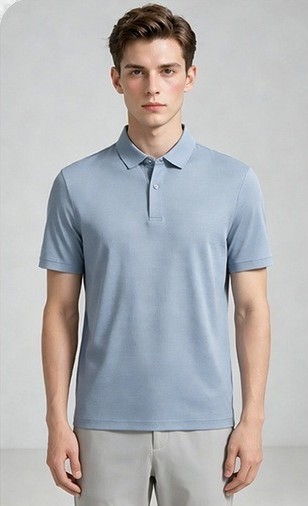
Golf and school polos, quick-dry sports shirts, yoga tops and light leggings, sun-protective outer layers, kids’ sportswear and the technical end of casual tops. The 175 cm width cuts a front and a back side by side, and the smooth face takes a screen print, a sublimation transfer or an embroidery without the stitch sinking into a hole. It is not a compression cloth: if your spec asks for a firm hold, that is a different construction and we quote it separately.

Worth saying plainly: bird’s-eye names the knit structure, not a brand and not a fibre — the small eyelets in a diamond repeat are what you are buying. The composition here is 95% polyester / 5% spandex: if your spec sheet calls for nylon, or for 100% polyester with no stretch, tell us and we quote that construction separately, because the hand and the recovery are not interchangeable. And the yarn count is quoted on request rather than fixed: send the count you run and we knit to it.
Ask for the shade card and a price
Send the shade numbers you are choosing between, the quantity in kilos and the garment you are cutting. We reply within one working day with the price, what is on the dye lot, and a lab dip of your shortlisted shades on this base cloth.