Fabrics / Sports & activewear · Cationic heather knit
Cationic Milk Silk 180 GSM — 185 cm
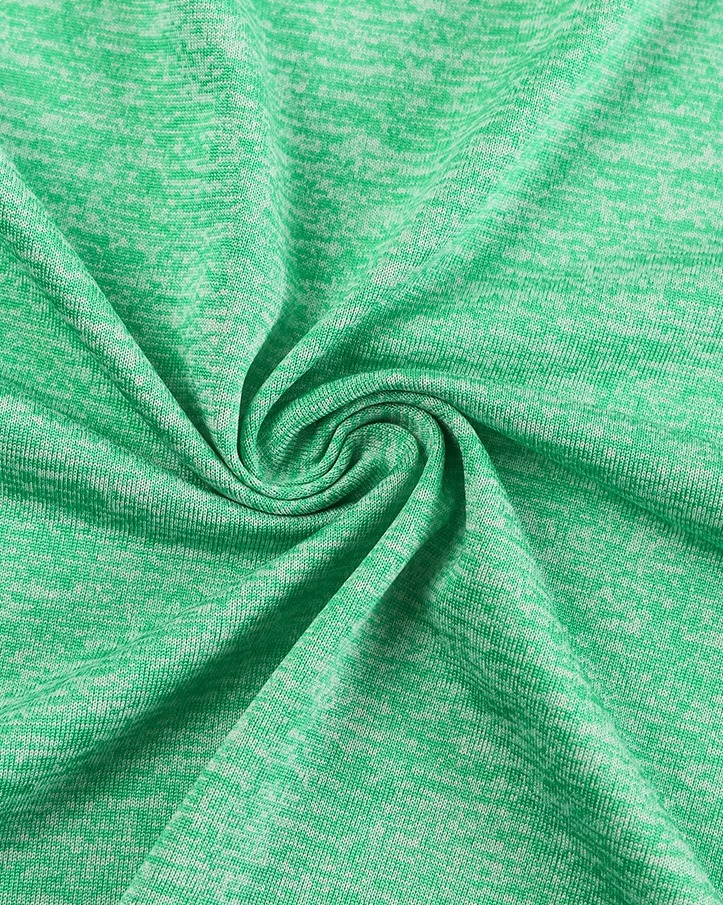
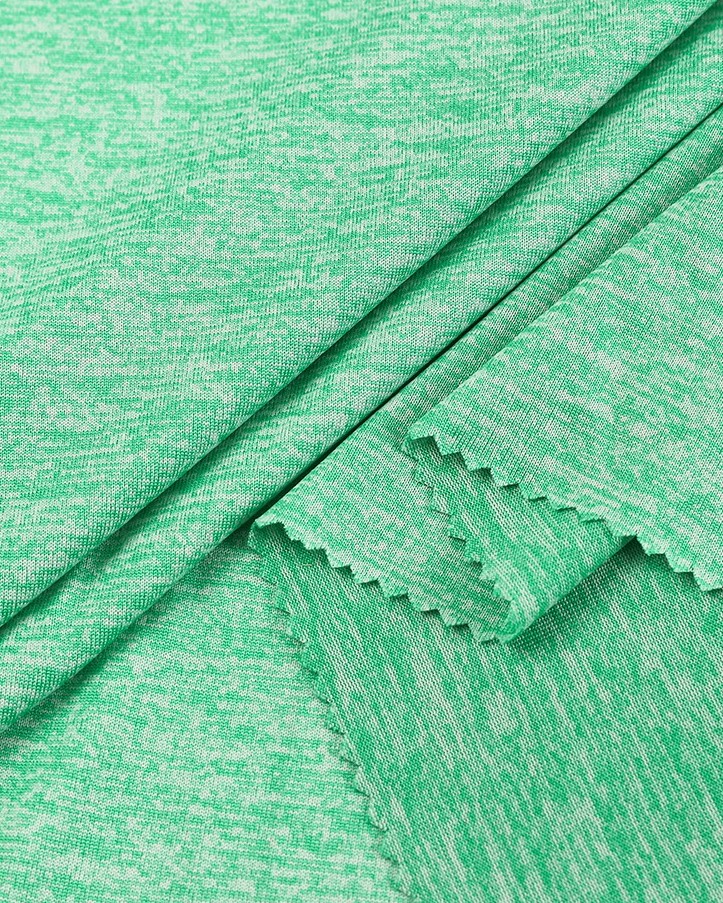
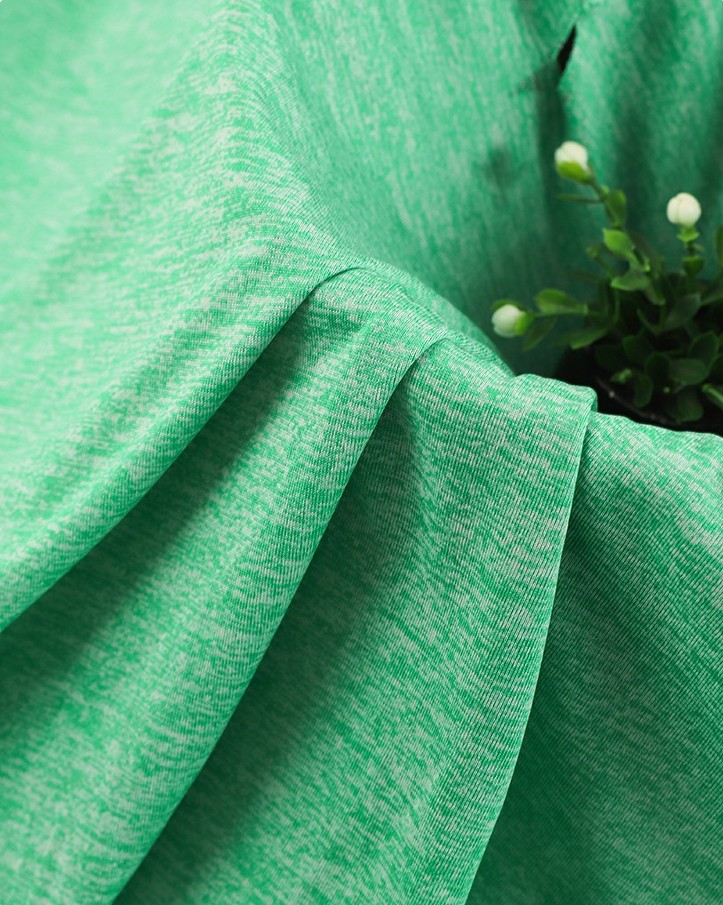
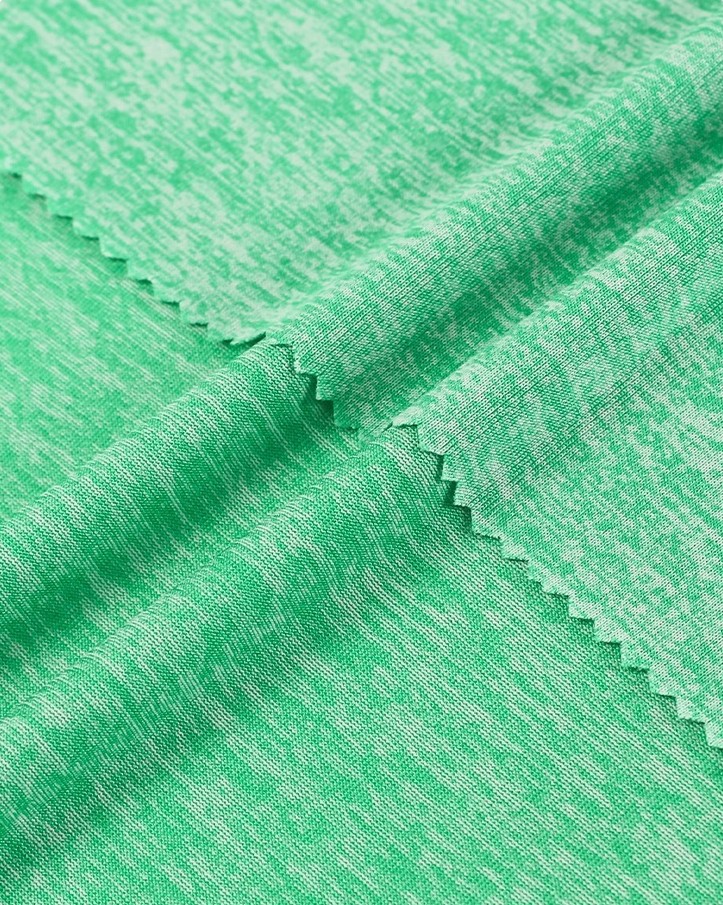
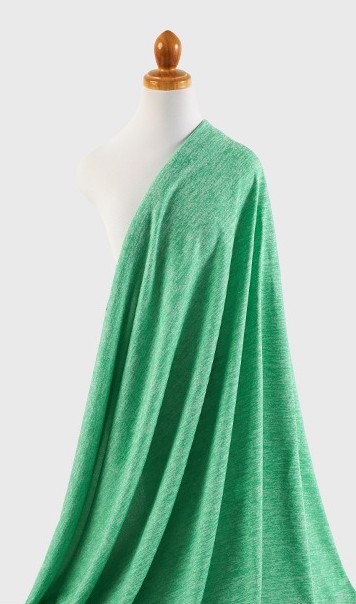
A soft, stretch jersey with a two-tone heather face knitted in at 180 GSM on a 185 cm width. The marl is not printed and it is not a coating: cationic polyester and regular polyester sit side by side in the same yarn and take the same dye bath to two different depths. One dyeing, two tones, and nothing on the surface to wear off.
That is the difference buyers pay for when they are tired of sublimated marl that goes chalky after twenty washes, or of yarn-dyed striping that carries a minimum in the thousands of kilos. Here the colour is in the fibre, the hand stays silk-soft against skin, and the 5% spandex means it recovers at the seat and the elbow instead of bagging. This is our quality for tops, base layers, dresses and sports sets where the fabric is meant to be the design.
- Composition
- 95% Cationic Poly.5% spandex
- Weight
- 180 GSM5.3 oz/yd²
- Width
- 185 cm73 inch, open width
- Yarn count
- Set at orderbuilt against 180 GSM on 185 cm
- MOQ
- 300 kg≈ 900 running metres
- Colour
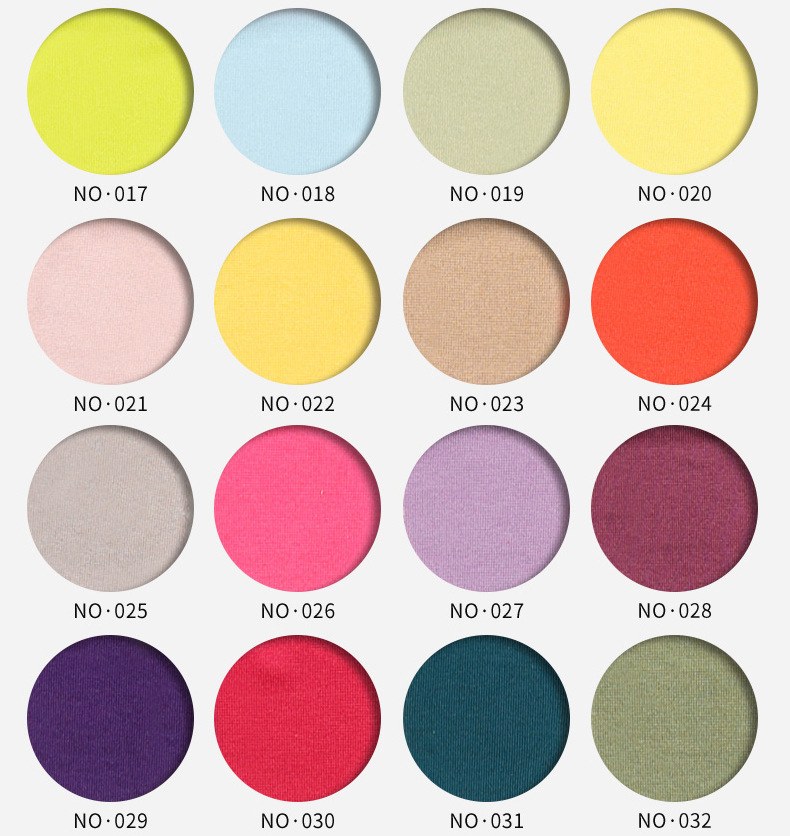
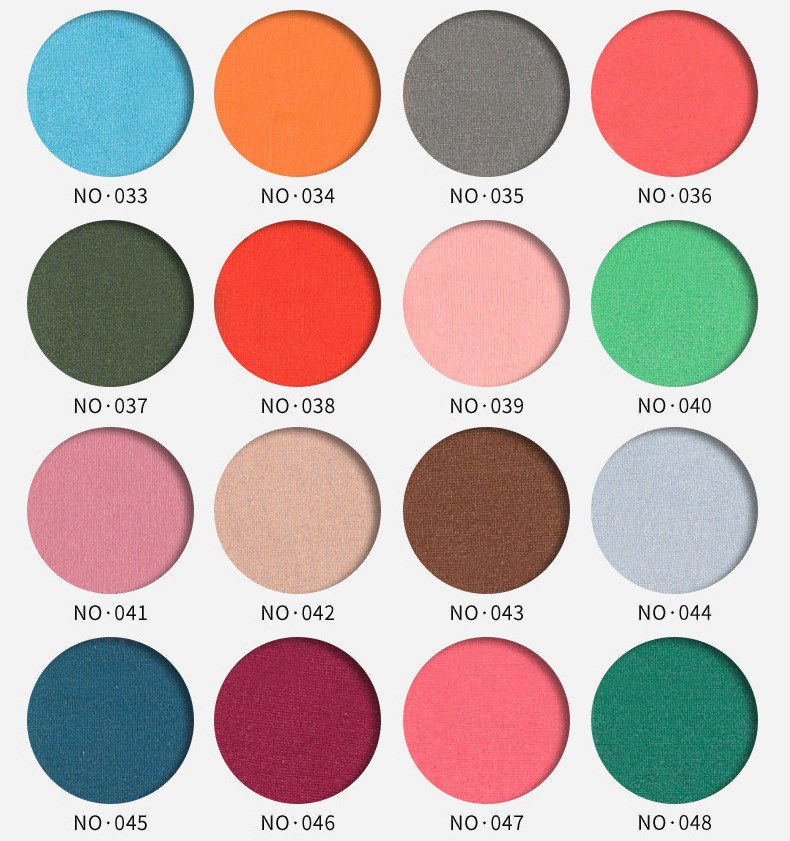
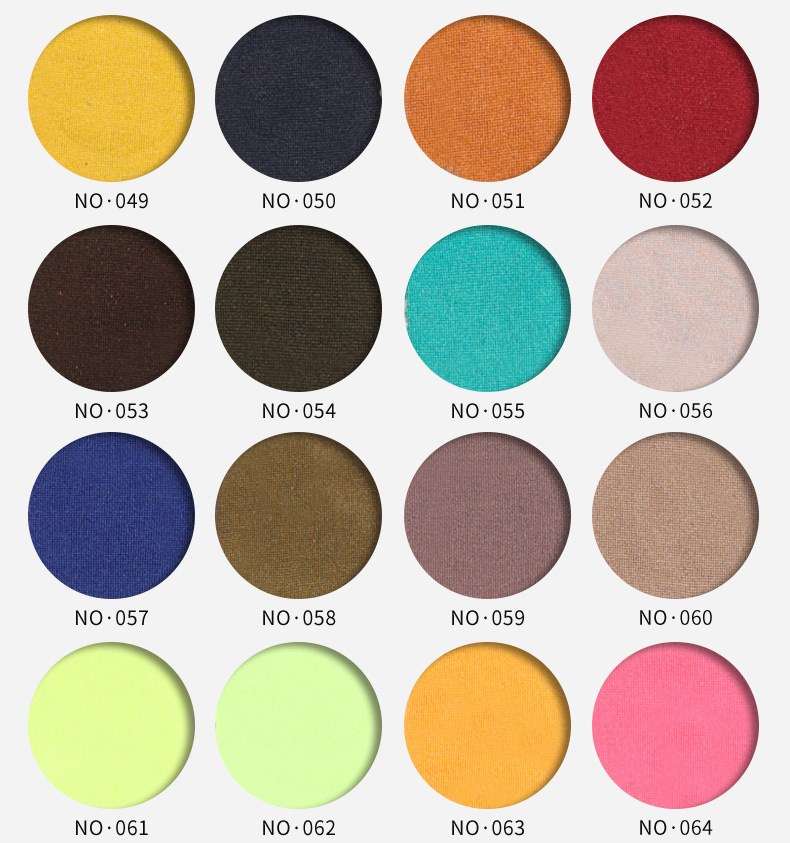
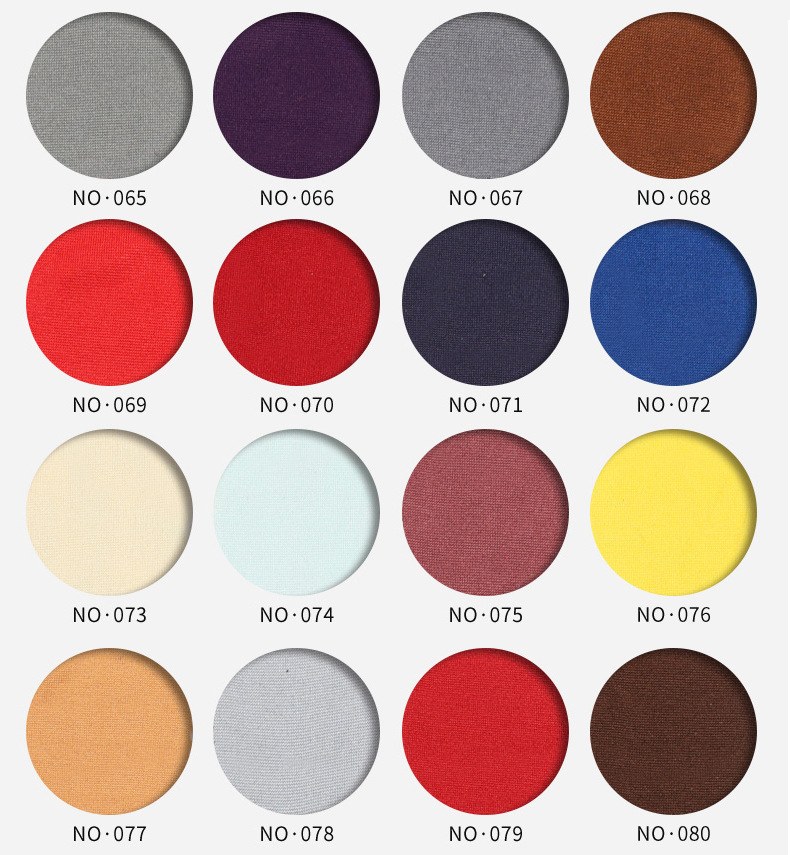
- No.001 – No.096quote the shade number
Full specification
| Customization | Available — shade, weight and width confirmed at quotation |
|---|---|
| Knitting technics | Knitted (circular knit single jersey; cationic and regular polyester in the same yarn, which is where the two-tone face comes from) |
| Composition | 95% cationic polyester + 5% spandex |
| Weight | 180 GSM / 5.3 oz/yd² |
| Width | 185 cm / 73 inch, open width |
| Yarn count | Set at order. Tell us the yarn you already run and we build the count against 180 GSM on the 185 cm width, so the hand matches the pattern you have already graded |
| Dyeing | Cationic dyed. The two polyester components take the same bath to different depths, so the marl is in the cloth — there is no yarn dyeing step and no print film to crack |
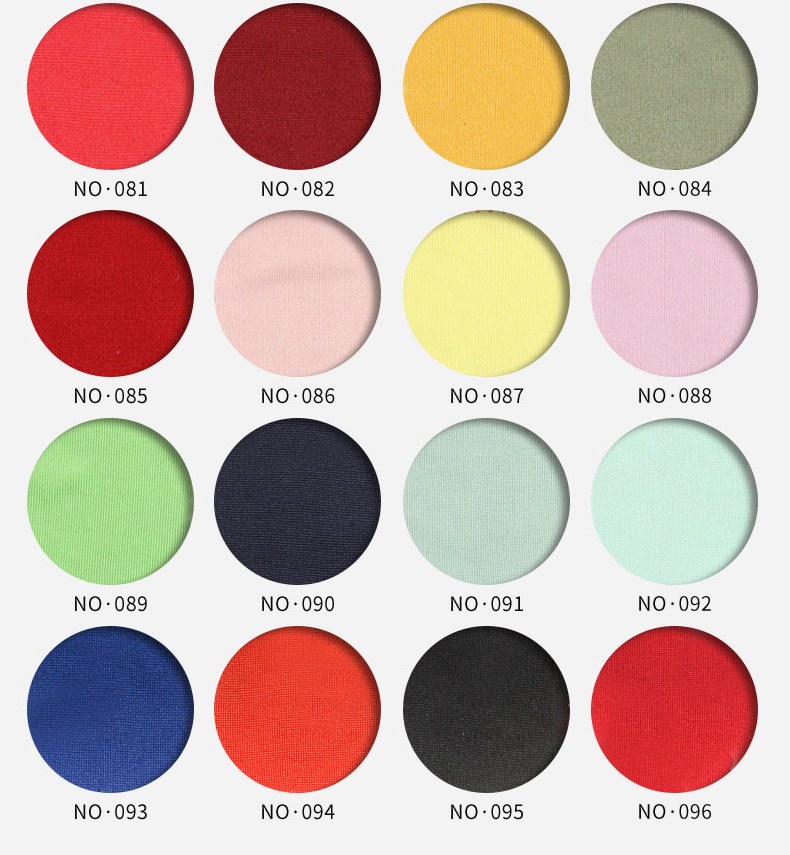
| Colour | 96 stock shades, ordered by shade number from the card below; or dyed to order against an approved lab dip |
| Stretch | Two-way stretch from the 5% spandex. Elongation and recovery can be tested to the figure your buyer asks for |
| Origin | Shaoxing City, Zhejiang, China |
| MOQ | 300 kg per shade |
| Price | US$ 15.15 / kg (300–999 kg) · US$ 13.77 / kg (1,000 kg+) |
| Yield | ≈ 3.0 running metres per kg at 180 GSM × 185 cm (≈ US$ 5.05 per running metre, ≈ US$ 2.73 per m²) |
| Lead time | Stock shades ship from the dye lot on hand; dyed-to-order shades are confirmed at quotation |
| Packing | Roll-packed, roughly 25 kg per roll, poly bag inside a woven sack |
| Sample | Hanger swatch free; a 1 m cut of a stock shade charged at cost and credited against the bulk order |
| Documents | Invoice, packing list, B/L, certificate of origin; test reports on request |
| Care | Machine wash cold, do not bleach, dry flat in shade. Cationic shades hold colour well, but chlorine bleach will still strip them |
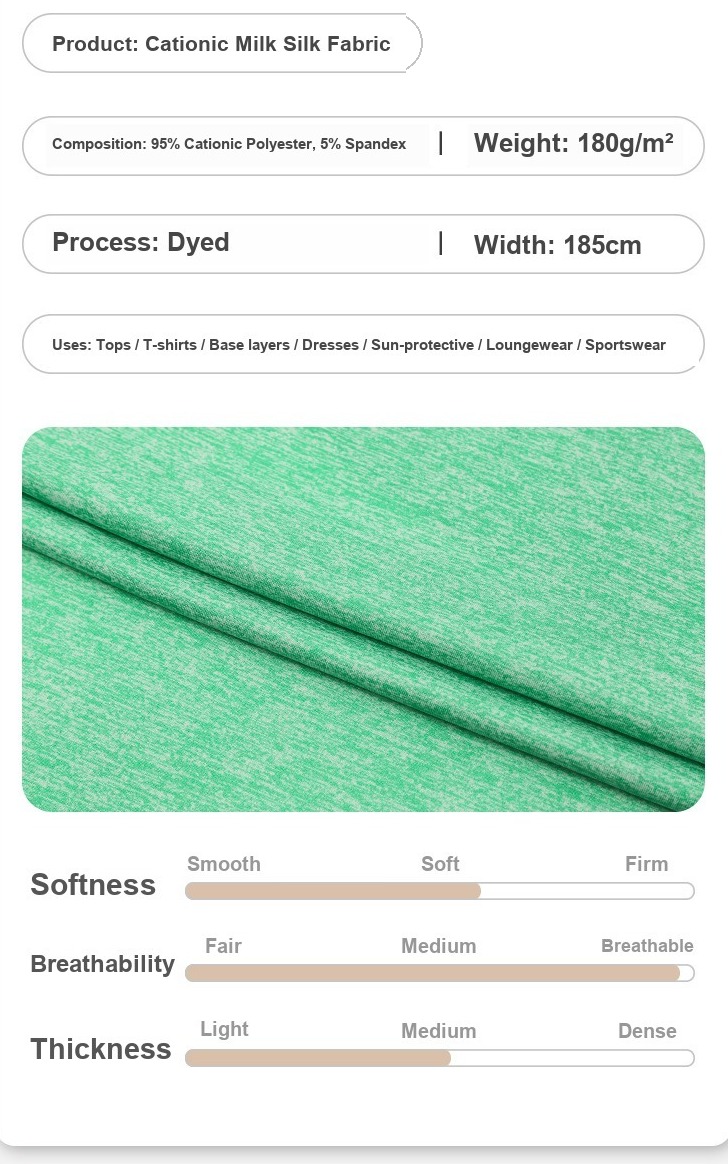
Two tones, one dye bath
Look closely at the cloth and you see lighter and darker filaments running together. That is not a fault and it is not uneven dyeing: cationic polyester takes dye faster and deeper than regular polyester, so a blend of the two dyes to two tones in a single bath. Dye it mid-grey and you get a blue-grey marl; dye it green and the same green splits into a light and a deep.
Practically, that means three things. The marl does not fade, crack or peel, because there is no print film. The minimum is a normal dye minimum rather than a yarn-dye minimum. And the colour reads as depth rather than as flat pigment, which is why these qualities sell in loungewear and sun-protective ranges as much as in sportswear.
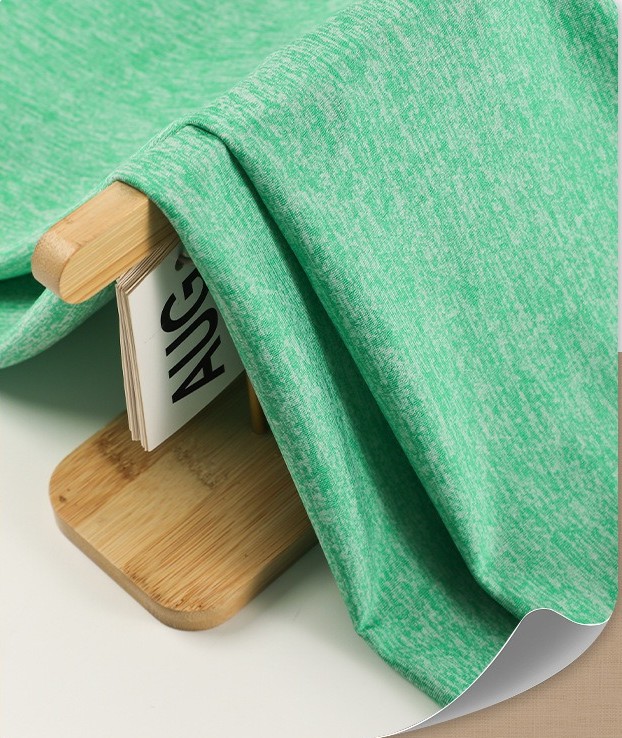
What a kilo buys you
At 180 GSM on a 185 cm width one kilo gives about 3.0 running metres, so the 300 kg minimum is roughly 900 metres — about 690 T-shirt bodies at 1.3 m each. That is US$ 5.05 per running metre and US$ 2.73 per m². A heavier cloth always looks expensive per kilo next to a 160 GSM mesh; the honest comparison is per garment. Send us your marker and we will run the metres for your style against this price.
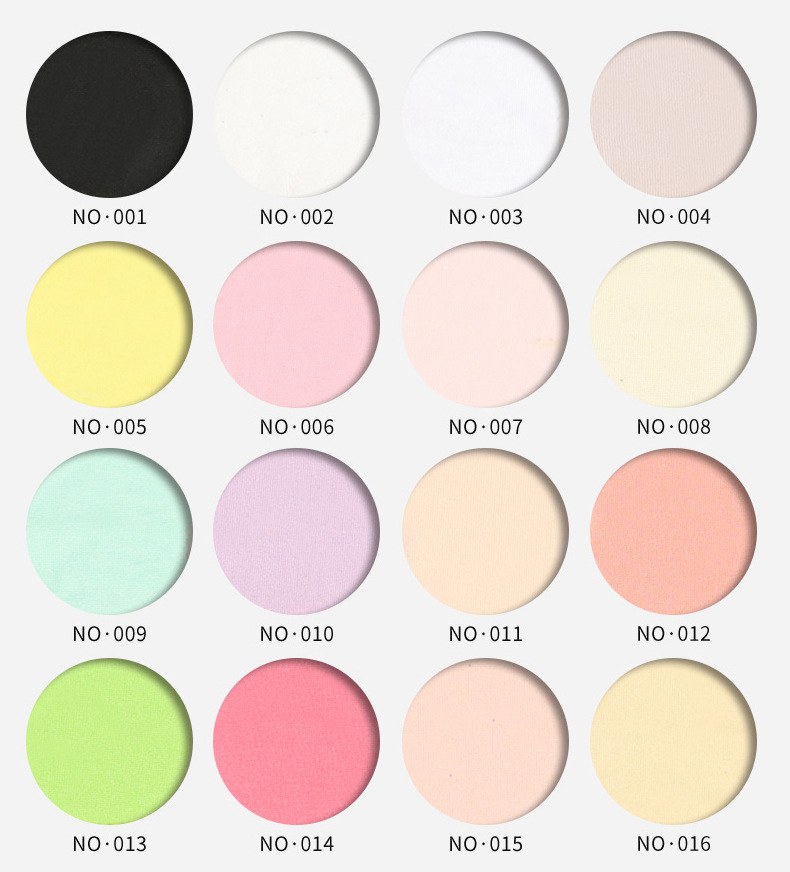
96 colours, ordered by number
Our 96 stock shades are the fastest route to a colour decision: pick the numbers you are choosing between and we dye this base to them. Order by number — No.014, not “the mid blue” — so nothing is misread between your buying office and our dye house. Because cationic yarn takes dye deeper, treat the card as the hue and ask for a lab dip to fix the depth: we send one on this base cloth before any bulk is dyed. If a shade you need is not on the card, send a Pantone reference or a physical swatch. MOQ is 300 kg per shade.
Where it goes
Women’s tops, T-shirts and base layers, dresses, sun-protective cover-ups, loungewear and sports sets. The 185 cm width is what makes it work for a dress or a wide-leg pant cut in one length; at 180 GSM with spandex it also holds a soft legging or a fitted long-sleeve without going sheer at the knee. It takes a sublimation transfer and a screen print cleanly on the lighter shades, though on this cloth most buyers leave it plain — the marl is already the pattern.
Three things worth saying plainly. Cationic is a dyeing route for polyester, not a fibre: it describes yarn that accepts cationic dye, which is what allows two depths of colour from one bath. Milk silk is our trade name for the hand of this knit — there is no milk protein in it, so no casein and no food-allergen labelling question. And the content is 95% cationic polyester / 5% spandex: if your spec sheet calls for nylon, or for 100% polyester with no stretch, tell us and we quote that construction separately — the fit and the recovery are not interchangeable.
Ask for the shade card and a price
Send the shade numbers you are choosing between, the quantity in kilos and the garment you are cutting. We reply within one working day with the price, what is on the dye lot, and a lab dip of your shortlisted shades on this base cloth.