Fabrics / Cotton & rayon · TR air layer
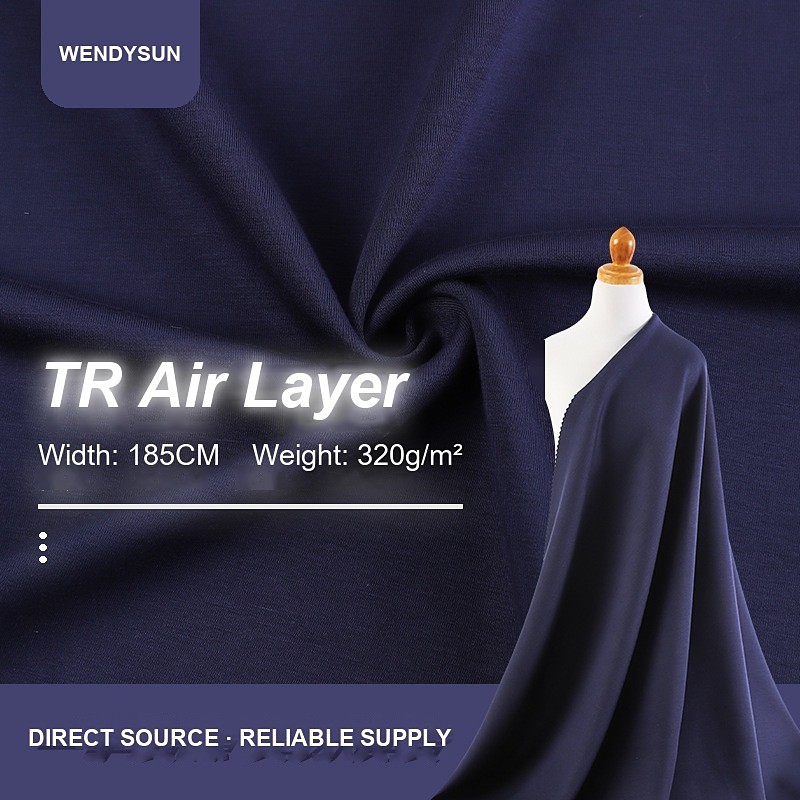
TR Air Layer 320 GSM — 185 cm
A 320 GSM three-layer knit in 65% polyester / 35% rayon, on a 185 cm width — the heaviest and the widest cloth we run. Two plain faces with a hollow middle: the panel stands up on its own without being stiff, and the rayon is what stops it feeling like a polyester sweatshirt.
Two things decide whether it suits you. There is no spandex, so this is a structured cloth rather than a stretch one — a hood or a pocket flap cut from it keeps its shape, a fitted top does not move with the body. And there is no cotton in it, despite the hand: the 35% rayon is where the softness comes from. If your label has to declare cotton, this is the wrong quality, and it is better to say so here than at the sample stage.
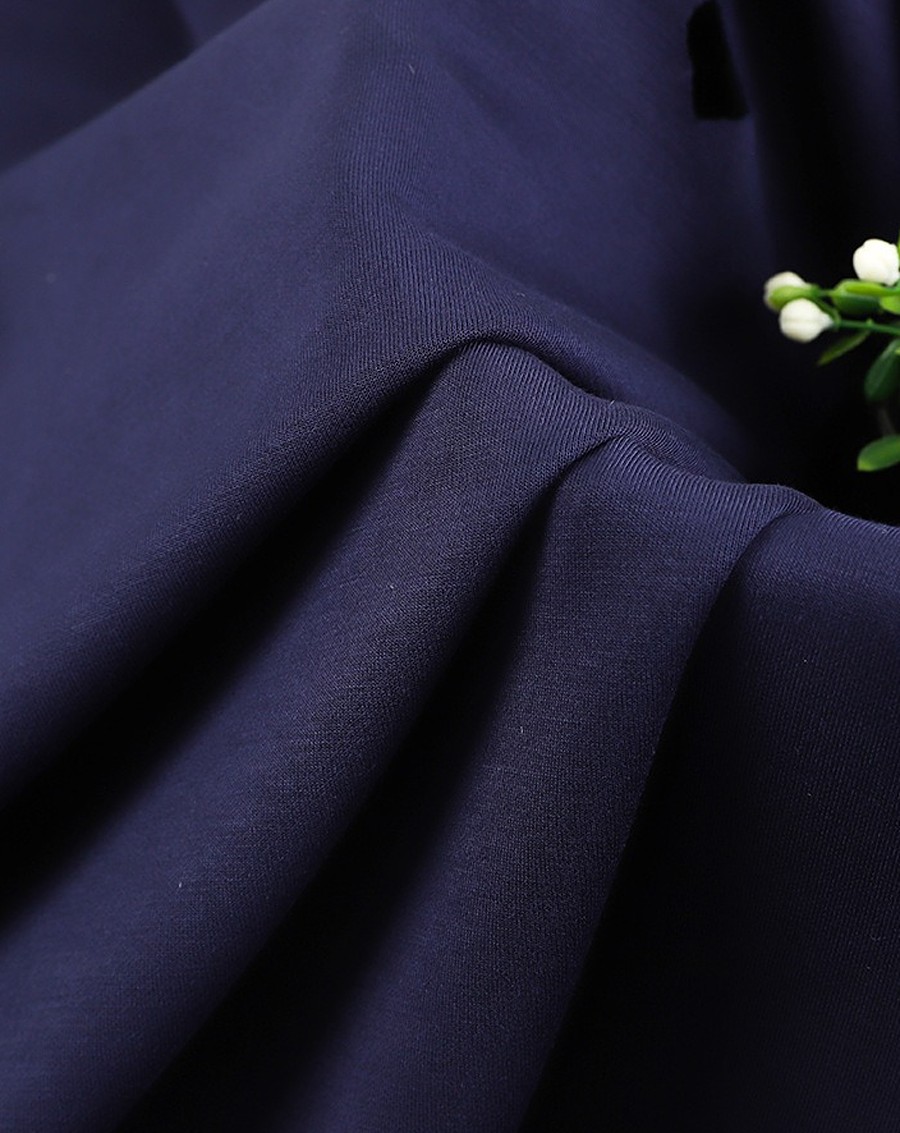
- Composition
- 65% Polyester
35% Rayonno cotton, no spandex - Weight
- 320 GSM9.4 oz/yd² — our heaviest knit
- Width
- 185 cm73 inch — the widest we run
- Structure
- Three-layer air layerhollow middle, knitted in
- MOQ
- 300 kg≈ 507 running metres
- Colour
- No.001 – No.096quote the shade number
Full specification
| Customization | Available — shade, weight and width confirmed at quotation |
|---|---|
| Knitting technics | Three-layer weft knit on a double-jersey circular machine. Two plain faces are knitted and tied together by a middle yarn that holds them apart; the gap between them is the air layer. Nothing is laminated and no foam is inserted, so there is no film to delaminate, no glue line to fail in a wash and no foam to go flat |
| Composition | 65% polyester / 35% rayon (viscose). No cotton, and no spandex — the cotton-like hand comes from the rayon, and the body comes from the knit structure |
| Yarn | Polyester filament on both faces with spun rayon in the middle. Knitted to 320 GSM on the 185 cm width |
| Weight | 320 GSM / 9.4 oz/yd². The weight is in the structure rather than in a tightly spun yarn, so the cloth is thick to the hand without being hard or papery |
| Width | 185 cm / 73 inch, open width — 25 cm wider than a standard 160 cm roll. On hoodie bodies that difference is a third more panels per running metre (see the cutting-room note below) |
| Yarn count | Set at order. Send the count you already run and we knit to it against 320 GSM on the 185 cm width; the price above is on our standard count |
| Stretch | None. There is no spandex, so the cloth does not stretch and does not recover. It gives a soft compression through the hollow middle and moves with a garment cut with ease, but it will not hold the body the way an elastane jersey does |
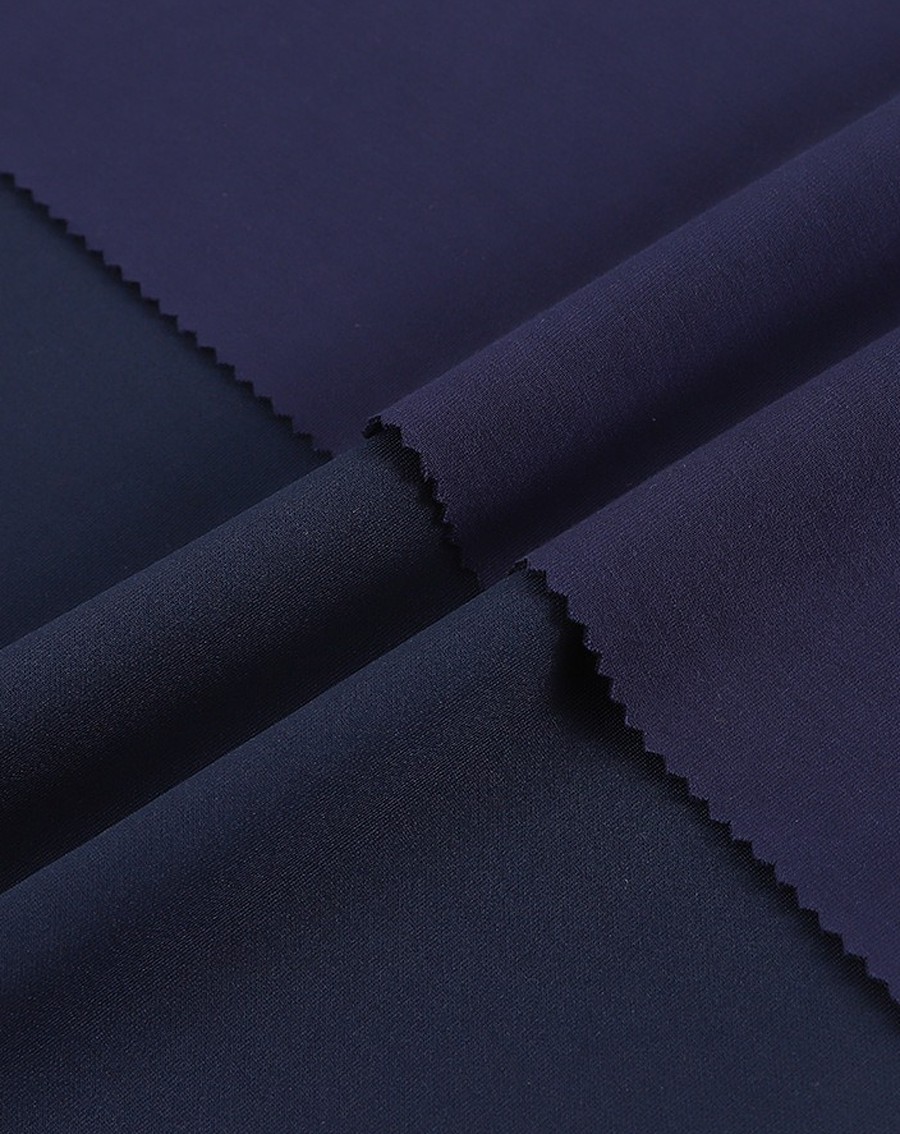
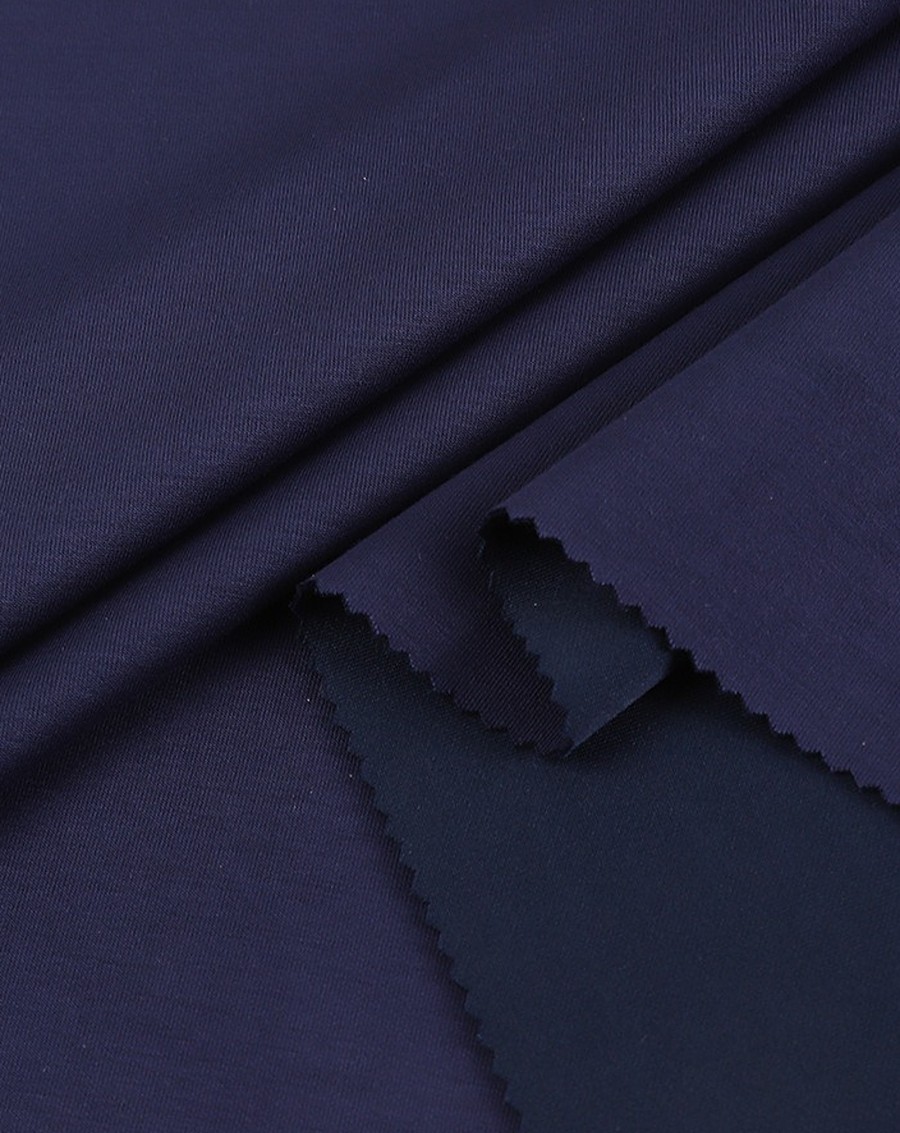
| Structure | Face / hollow middle / face, roughly 2–3 mm apart. The middle yarn is what gives the panel its thickness, its warmth and its ability to stand up on its own. On a cut edge you can open the layers with a thumbnail and see the gap — that is the third and fourth photographs above |
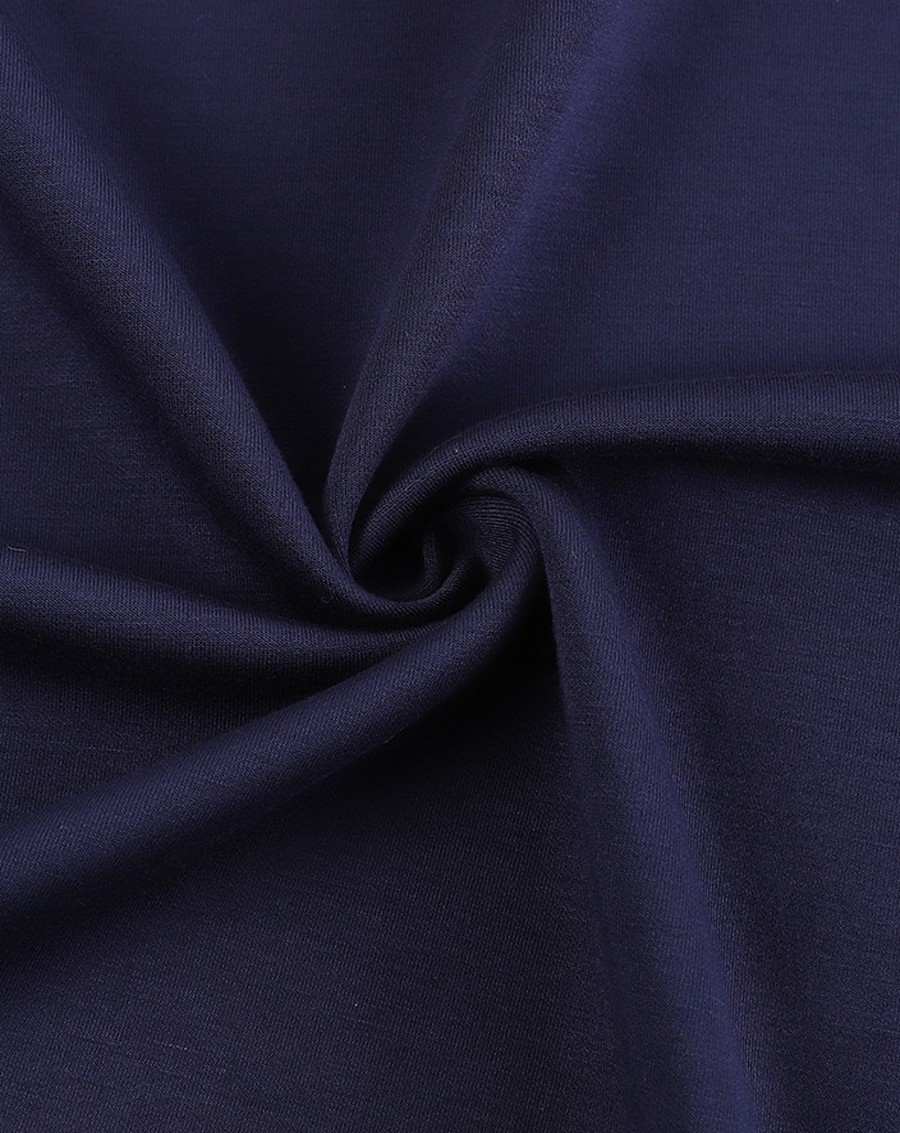
| Hand | Dry and smooth on the surface with a soft, slightly spongy body underneath. It reads as a cotton-rich sweatshirt cloth rather than a polyester one, which is the whole point of the 35% rayon |
| Surface | Plain and closed on both faces — no eyelets, no loops, no brushed pile. The cloth is reversible, so an unlined hood, a raw hem or a contrast inner panel shows the same clean face as the outside |
| Colour | Our stock shade card, quoted by number (No.001–No.096), or dyed to order against an approved lab dip |
| Dyeing | Piece dyed after knitting, both faces the same shade. Polyester and rayon take dye by different routes, so a TR blend needs a two-stage dye to come out level — a mill that runs it as a single polyester batch gives you a heathered, patchy face and calls it a feature |
| Fastness | Good on wash and on rub. Rayon is the weaker half of the blend when wet, so shade and strength are checked after washing rather than only before it |
| Shrinkage | Rayon relaxes and the cloth moves on the first wash. Pre-shrink or relax the roll before cutting, not after — the note at the bottom of this page covers how |
| Pilling | Low. Both faces are filament and the surface is closed, with no brushed pile and no short staple on the outside to work loose |
| Sublimation is not the route for this blend. Rayon does not take disperse dye the way polyester does, so a transfer print dyes the polyester and leaves the rayon behind, and the print reads chalky and uneven. Screen print, pigment print, puff and embroidery all work well on the closed face. Test on the actual cloth before committing to an all-over print | |
| Making up | Ball-point needle, 80–90, and a walking foot. Three layers of cloth is three layers to feed, and a standard foot will shift the bottom face and leave a twisted seam on a long run. Press on the reverse with steam only — a hot iron compresses the middle layer permanently and leaves a shine on the face that does not come out |
| Cutting | Rotary cut, pinked edge or die cut all work. The layers hold on a cut edge, which allows raw-edge and unhemmed details that a single-layer knit cannot carry |
| Origin | Shaoxing City, Zhejiang, China |
| MOQ | 300 kg per shade |
| Price | US$ 12.54 / kg (300–999 kg) · US$ 10.99 / kg (1,000 kg+) |
| Yield | ≈ 1.69 running metres per kg at 320 GSM × 185 cm (≈ US$ 7.42 per running metre, ≈ US$ 4.01 per m²) |
| Lead time | Stock shades ship from the dye lot on hand; dyed-to-order shades are confirmed at quotation |
| Packing | Roll-packed, roughly 20 kg per roll, poly bag inside a woven sack |
| Sample | Hanger swatch free; a 1 m cut of a stock shade charged at cost and credited against the bulk order |
| Documents | Invoice, packing list, B/L, certificate of origin; test reports on request |
| Care | Machine wash cool (30°C), do not bleach, do not tumble dry hot, dry flat, cool iron on the reverse only, do not dry clean |
The hollow middle is the whole point
An air layer is not a thick single cloth and it is not a bonded one. It is two faces knitted at the same time and held apart by a middle yarn — on the machine, in one pass, with nothing glued in between. Everything this quality does for you follows from that gap.
It stands up. The two faces behave like the skins of a panel, so a hood keeps its shape, a chest pocket reads as a pocket rather than a patch, and a hem does not collapse on the hanger. This is why the structured end of the sweatshirt market runs on air layers rather than on heavy fleece.
It insulates without weight. Still air is a better insulator than any fibre, and the middle gap holds a layer of it. Measured against a single-jersey of the same weight, this cloth wears warmer at a lower mass — which is the argument for it in a school uniform, a team jacket or a workwear mid-layer.
It does not unravel. Open a cut edge with a thumbnail and you meet three separate layers rather than one fraying edge — the second, third and fourth photographs show exactly that. Raw hems, pinked edges and unlined openings are all safe on this quality, and an inner face that is as clean as the outer means a hood or a jacket can go unlined without a lining to hide.
Why 65/35, and why there is no cotton in it
TR is an old tailoring ratio — polyester for strength and shape, rayon for hand and drape — usually met in suitings and uniform trousers. Running it as a knit air layer takes that logic somewhere it is not normally used: the polyester gives the panel its memory, the rayon gives it the soft, slightly cool touch a buyer reads as cotton.
Why not simply use cotton? A cotton-rich air layer is a real product and it has three problems this blend does not: it shrinks harder and less predictably, it gets heavy when wet and slow to dry, and its short staple pills at the cuff and under the arm. Rayon is a regenerated cellulose — it brings the same moisture absorbency and a softer drape, on a filament yarn that does not pill and that dries faster. It still shrinks, which is why the note at the bottom of this page exists.
What you are buying, then, is a hand, not a fibre. If the garment copy says cotton, or a buyer needs a cotton declaration for a school programme, choose a genuine cotton interlock or fleece. If the requirement is feels like cotton, holds a shape, washes in a school laundry, this is the cloth that does it at 320 GSM.
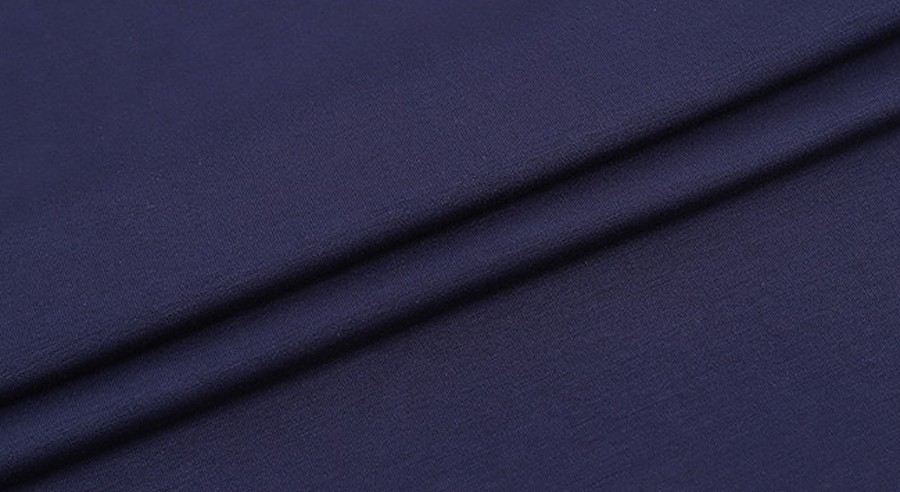
320 GSM at 185 cm: the cutting-room arithmetic
Thickness is easy to sell and width is easy to ignore, but on a hoodie programme the width is where the money is. An adult hoodie body is roughly 60–62 cm across including seam allowance. On a standard 160 cm roll you lay two bodies and have around 38 cm left — not enough for a third. On this 185 cm roll you lay three, with nothing meaningful left over: a third more bodies from the same running metre.
Do that sum on your own marker before you compare prices per kilo, because two practical things can cancel it. At 185 cm the roll is wide and heavy to handle, and plenty of cutting rooms are built around 160–170 cm tables. If yours is one of them, say so at quotation: we can supply this quality slit to 170 cm, and the price per kilo moves because the yield per kilo moves with it.
Where it goes
Hoodies and heavyweight sweatshirts, varsity and baseball jackets, school and club uniforms, tracksuits and warm-up sets, casual and bomber-style jackets, workwear and corporate outer layers, kids’ jackets. Anything where the garment has to read as substantial on a hanger and survive an institutional wash.
It is not the cloth for close-fitting activewear, for anything that has to cling, or for a summer weight. At 320 GSM it is also too heavy for a dress that should move — the panel holds its own shape and will not follow the body. Worth saying plainly rather than letting a buyer discover it on the first sample.
Four things that catch people out on an air layer. Relax and pre-shrink: the rayon in this blend moves on the first wash, and a roll comes off the machine under tension — cut it the same day and the panels come out short. Use a walking foot: three layers feed unevenly under a standard foot and the bottom face drifts, which shows up as a twisted side seam on a long run. Never press flat with a hot iron: the middle layer compresses permanently and the face takes a shine that no amount of steaming removes — press on the reverse, with steam, or use a clapper. Keep a retained standard per shade: a TR blend is dyed in two stages and batch-to-batch movement is the most common complaint on repeat orders, so approve a lab dip and keep a piece of the bulk against it.
Ask for the shade card and a price
Send the shade numbers you are choosing between, the quantity in kilos and what you are cutting. We reply within one working day with the price, what is on the dye lot, and a swatch you can put through your own wash and sewing trial before you commit.