Fabrics / Cotton & rayon · Woven jacquard
Rayon Jacquard 150 GSM, 165 cm
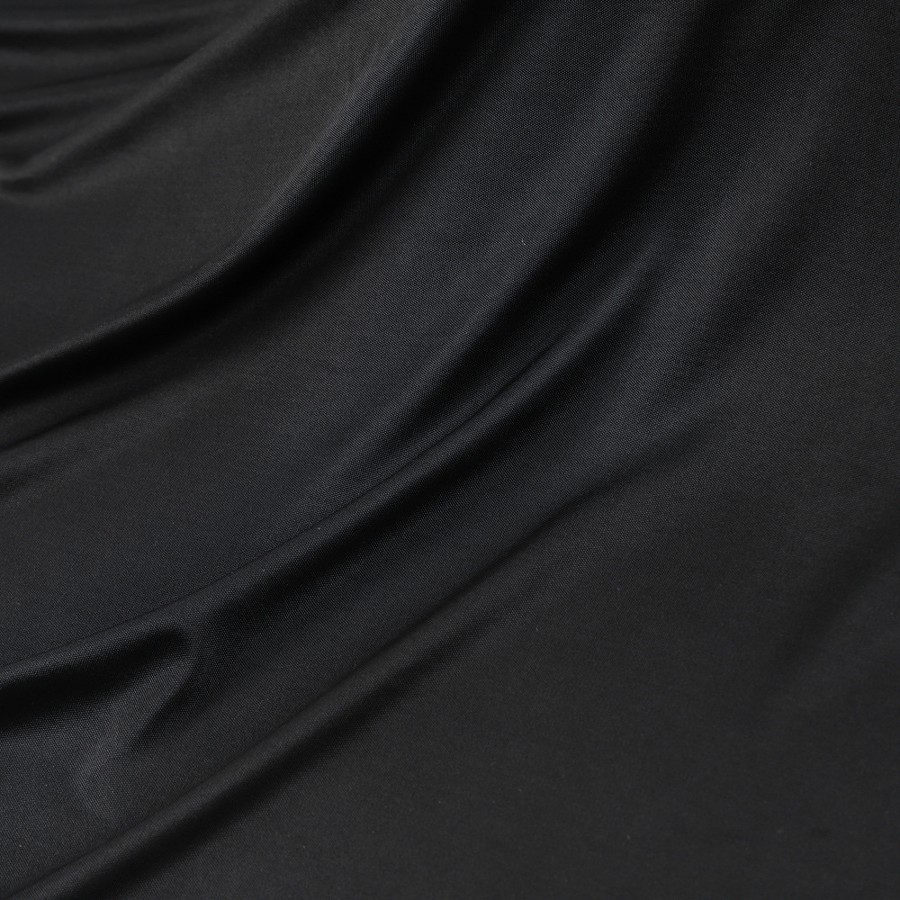
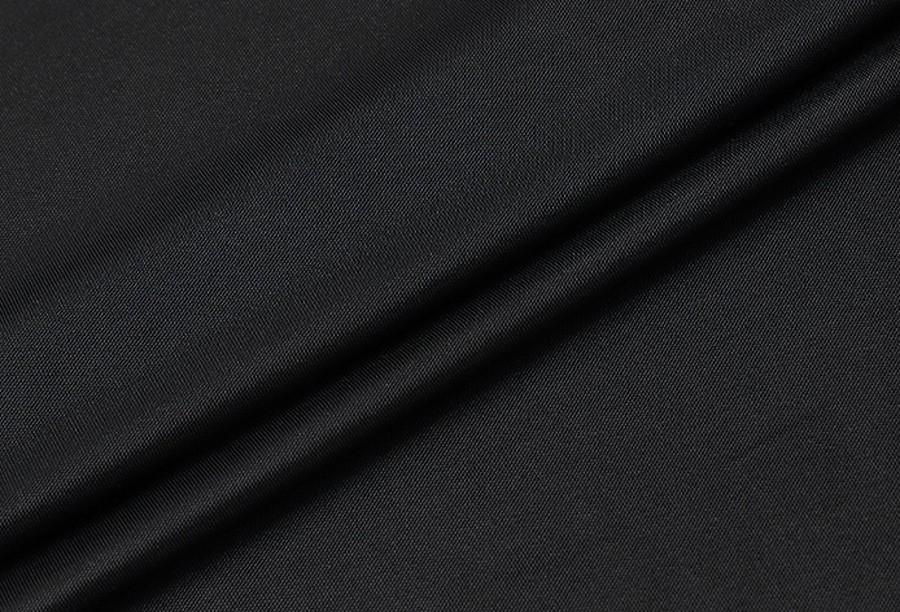
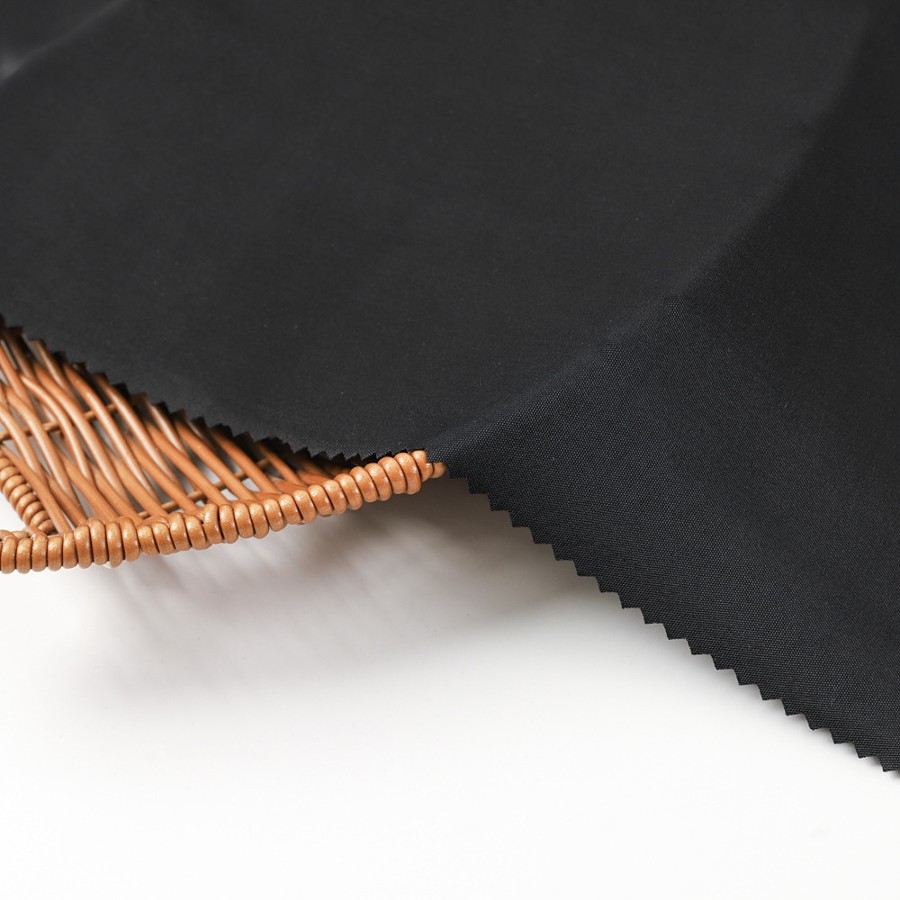
A woven jacquard in 100% viscose, 150 GSM on a 165 cm width, with the pattern built into the weave rather than printed on top of it. The face is tone-on-tone black: at a metre it reads as a fine grain, and the motif appears only when the cloth turns into the light. This is dress cloth — cheongsam, hanfu, dresses, oriental wear — where a quiet surface is worth more than a loud one.
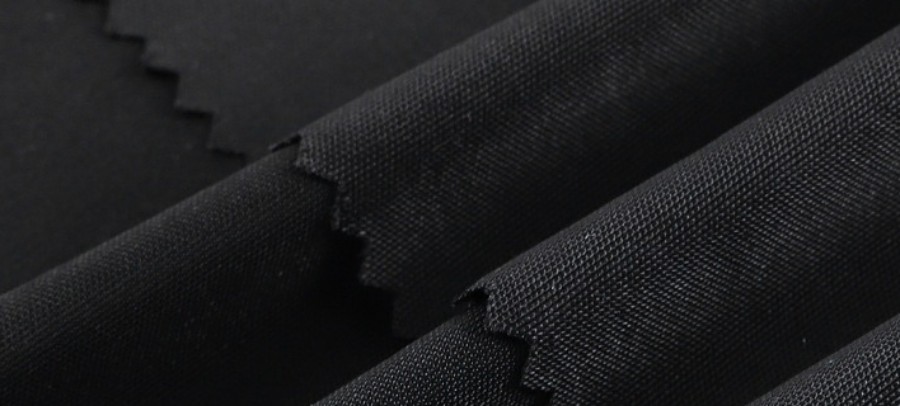
What “jacquard” buys you. The pattern is made by the loom, not by a printer: at every pick the shedding motion lifts individual warp ends, so the face alternates between two interlacings and the design rises out of the structure. Nothing is applied afterwards, so nothing can crack, peel or wash off, and the cloth keeps its surface through years of wear. The price of that is loom time — a jacquard runs at a fraction of plain-weave speed, which is the honest reason a jacquard costs more per metre than a plain cloth of the same weight and yarn.
- Composition
- 100% viscoseregenerated cellulose, no blends
- Weight
- 150 GSM4.4 oz/yd² — dress weight
- Width
- 165 cm65 inch — narrow, plan the marker
- Structure
- Woven jacquardtone-on-tone, pattern in the interlacing
- MOQ
- 300 kg≈ 1,212 running metres
- Colour
- No.001 – No.096shade card, quoted by number
Full specification
| Customization | Available — shade, weight and width confirmed at quotation |
|---|---|
| Weaving | A woven jacquard. The pattern is built by the shedding motion: individual warp ends are lifted selectively at each pick, so the face alternates between two interlacings and the design sits in the structure of the cloth. Nothing is printed, embossed or bonded on afterwards — which is why the pattern cannot crack, peel or wash out, and why a jacquard costs more per metre than a plain weave at the same weight: the loom runs at a fraction of plain-weave speed, and loom time is the cost |
| Composition | 100% viscose (rayon) — a regenerated cellulose fibre, not a synthetic. No polyester, no cotton, no elastane. It takes dye deeper than cotton and drapes more fluidly, and it behaves like a cellulose fibre in the wash: it absorbs water, loses strength when wet and shrinks on the first wash. Read the three notes below before you write the care label |
| Yarn | Viscose filament in the warp and in the weft, sized for weaving and later degummed. Filament rather than spun is what gives the cloth its dry cool hand and its sheen; it is also why the cloth is smooth enough to read as silk from a metre away. Counts are set at order |
| Yarn count | Set at order |
| Weight | 150 GSM / 4.4 oz/yd². Heavy enough to hang as a dress and to carry a jacquard without the pattern looking like a shadow, light enough for a summer cheongsam or a lined shirt. We hold the single figure rather than a band |
| Width | 165 cm / 65 inch, open width. Narrow: a dress panel and a sleeve rarely nest side by side, so read the marker note below before you price the garment |
| Pattern | A tone-on-tone jacquard at a small all-over repeat — at arm’s length it reads as a fine grain or a diagonal, and the motif only appears when the cloth turns in the light. This is deliberate: on black, a bold jacquard motif looks like upholstery, and a quiet one looks like expensive cloth. If your design needs a visible motif rather than a texture, tell us the scale and we will say whether the loom can hold it |
| Colour | Stock card, quoted by number (No.001–No.096), or dyed to order against an approved lab dip. This quality is shown in black. On viscose the deep shades are the ones that show a difference between lots, because black is a build of dye rather than a single component — approve the dip on the shade you will actually run |
| Dyeing | Piece-dyed after weaving, on a viscose route. Viscose takes dye fast and deep, which is why the black here is a true black rather than a charcoal; it also means the cloth is sensitive to water at the finishing stage — a drop of water on an undried piece leaves a mark that has to be re-finished. Ask for the water-spotting test if the garment will be washed by the wearer |
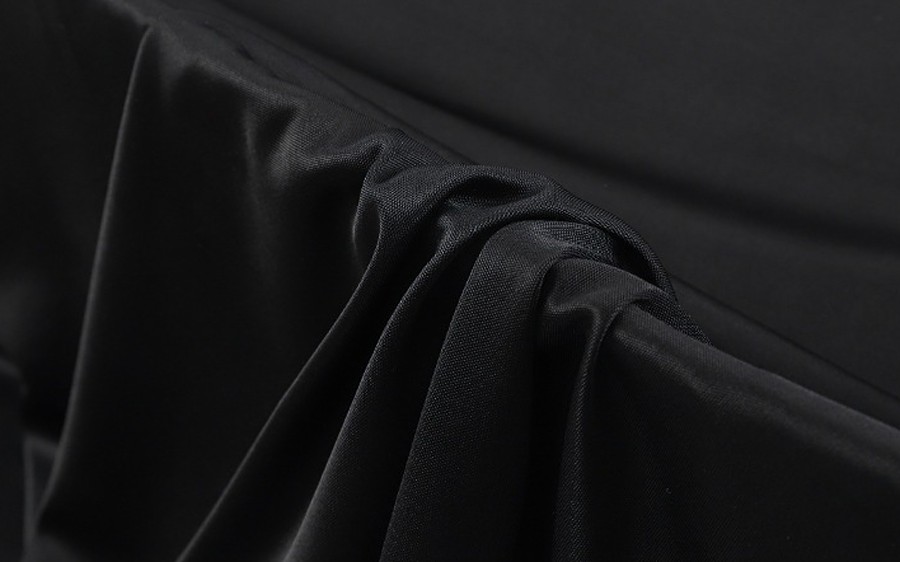
| Hand | Cool, dry, faintly crisp on the face, fluid in the hand. It has the coolness of silk without the price, and it does not have the slick, slightly clammy hand a polyester satin has. Viscose softens further after the first wash |
| Drape | Fluid and heavy for its weight, with a bias that moves. This is the reason the quality sells into cheongsam and hanfu: the cloth follows a body and falls back into place, which a stiffer 150 GSM cotton will not do |
| Creasing | Viscose creases — more than cotton, less than linen — and the creases hang out overnight or drop out with steam rather than with heat. A garment that will travel should be pressed and packed flat, and a buyer who expects a wrinkle-free finish should be told now rather than at the claim |
| Wet strength | Roughly half its dry strength when wet. Never wring, never tumble, never hang a wet garment by the shoulders: a viscose dress that is wrung hard loses shape at the seams and stretches at the hem. Wash it, press the water out in a towel, dry it flat in the shade |
| Shrinkage | Viscose shrinks on the first wash more than cotton does, and it also relaxes on the roll. Expect 6–8% on both directions unless the finisher controls it; we finish to a residual figure agreed at order. Wash-test a panel before cutting a programme, and cut a size larger than your cotton block if the garment will be home-washed |
| Fastness | Good on light for a black viscose, moderate on wet rub — which is the one to name, because a black jacquard against a pale lining shows any crock at the seam. Ask for the wet-rub figure and the five-wash shade hold at 30°C |
| Making up | Viscose slips under the needle: use a 60–65 sharp or a fine ball-point, a fine thread, and a slightly tighter stitch than on cotton — but not a tight tension, or the seam puckers along the jacquard. Sew with tissue paper under a bias edge, and stay-tape the shoulders and the waist seam on a dress. Line the garment: an unlined viscose dress shows every seam allowance through the face |
| Cutting | Cut one way, not two. A tone-on-tone jacquard changes tone with direction — a sleeve cut the other way up reads a shade lighter under a shop light even though it is the same piece of cloth. Match the pattern at the side seams and at the centre front; on a small all-over repeat the eye finds a mismatch faster than it finds the motif |
| Pressing | Medium iron, 150°C, with steam, on the reverse through a press cloth. Dry heat on the face will glaze a viscose black into a permanent shine, and on a jacquard the glaze sits on the raised area where it is most visible. Press the garment damp, or steam it, rather than pressing it dry |
| Abrasion | The one wear point to warn about: on a black jacquard the raised face polishes where it rubs — cuffs, collar edge, the seat of a skirt — and a polished patch reads as a lighter shade. Tell the buyer before the first complaint; it is the reason a black jacquard is usually a dress or an occasion piece rather than a daily uniform |
| Origin | Shaoxing City, Zhejiang, China |
| MOQ | 300 kg per shade |
| Price | US$ 12.95 / kg (300–999 kg) · US$ 11.62 / kg (1,000 kg+) |
| Yield | ≈ 4.04 running metres per kg at 150 GSM × 165 cm (≈ US$ 3.21 per running metre, ≈ US$ 1.94 per m²) |
| Lead time | Stock shades ship from the dye lot on hand; dyed-to-order shades are confirmed at quotation |
| Packing | Roll-packed, roughly 20 kg per roll, poly bag inside a woven sack |
| Sample | Hanger swatch free; a 1 m cut of a stock shade charged at cost and credited against the bulk order |
| Documents | Invoice, packing list, B/L, certificate of origin; test reports on request |
| Care | Dry clean is the safe answer for a cheongsam. For home care: hand wash cool (30°C) with a mild detergent, do not wring, roll in a towel, dry flat in the shade, iron damp on the reverse with steam. No chlorine bleach, no tumble dry, and never leave it soaking — viscose loses strength wet and takes a water mark that only re-finishing removes |
A tone-on-tone jacquard, and what it does for a dress
On black, a bold jacquard motif is a statement and a risk: it dates, it photographs as upholstery, and it commits the garment to one mood. A tone-on-tone jacquard does the opposite. The surface is broken up by the weave, so the cloth catches light in a way a flat black never does — it looks deeper, it moves when the wearer moves, and it reads as expensive without announcing a pattern. For a cheongsam or a hanfu that is the whole point: the garment carries the design, the cloth only has to give it a surface.
Two things follow for the maker. The pattern is a repeat, so the seams have to match — on a small all-over repeat the eye finds a broken line at the side seam faster than it finds the motif, and a jacquard that does not match looks like a mistake rather than a texture. And direction matters: cut one panel up and the next down and the two read a tone apart under a shop light. One-way lay, every time.
Viscose is not a cheap silk — it is its own fibre
Buyers often meet viscose as “silk for less”, and then judge it by silk rules. It is a regenerated cellulose fibre: made from wood pulp, spun into filament, chemically close to cotton and physically closer to silk. That is why it takes black deeper than cotton, why it is cooler than polyester, and why it drapes the way it does. It is not a substitute — it is the reason this cloth can be sold at $3.21 a metre and still look like a dress fabric.
Three facts belong on the care label. Wet, viscose loses about half its strength, so a wrung-out dress stretches at the seams and never comes back. It shrinks on the first wash — 6–8% unless the finisher controls it — and it creases. None of that is a defect; it is the fibre. A customer told in advance becomes a repeat buyer; a customer who finds out after the first wash asks for a claim.
There is also a finishing detail worth naming on black: an undried piece that takes a drop of water marks, and the mark only goes with re-finishing. If the garment will be washed by the end wearer, ask for the water-spotting test with the sample — it is a two-minute check that saves a shipment.
The one wear point on a black jacquard: polish
Where a black jacquard rubs, the raised face polishes and the patch reads as a lighter shade — cuffs, collar edge, the seat of a skirt. It is not a dye failure and it is not pilling: the fibres are flattened. On a dress or an occasion piece nobody notices for years; on a daily uniform it is the first complaint. If the order is a workwear programme, choose a satin-back or a plain weave instead, and we will say so before you commit.
Pressing is the other place a black jacquard gets ruined in the factory rather than on the body. Dry heat glazes viscose into a permanent shine, and on a jacquard the glaze lands exactly on the raised area where it shows most. Press damp, on the reverse, through a press cloth, at 150°C — or steam and let it hang.
165 cm, and what 300 kg actually makes
At 150 GSM on 165 cm a running metre weighs about 248 g, so a kilo runs about 4.04 metres and the 300 kg minimum is roughly 1,212 metres. A lined cheongsam at this width takes 1.8–2.2 m once the bias facings and the lining are counted, so the minimum lands around 550–670 dresses; a short dress or a shirt takes about half that, and a hanfu takes more.
The width is where the costing surprises people. At 165 cm the front and back panels of a dress barely nest, and a bias-cut panel wastes more than a straight one — on a bias cheongsam the waste can reach 25%. Do the marker before you compare this quality with a 150 cm silk: the difference per garment is usually bigger than the difference per metre.
Four things that go wrong on a viscose jacquard. Direction: one-way lay, or the panels read a tone apart. Seam matching: a broken repeat at the side seam looks like a defect. Wet handling: half strength when wet — no wringing, no hanging wet, no tumble. Pressing: dry heat glazes the black permanently; press damp through a cloth.
Ask for a swatch, a wash test or a price
Tell us the shade number, the garment you are cutting and the finish you need — cheongsam, hanfu, dress, shirt or linings. We reply within one working day with the price on the lot we hold, the shade card on this quality and a hanger swatch. If the order needs a shrinkage, wet-rub or water-spotting report, name the standard and we quote it with the cloth.
Related: for a knitted double cloth at a similar dress weight see the TR Air Layer 320 GSM; the same cotton story in a lighter knit is the Modal Jersey 120 GSM. The rest of the range is on the fabrics page.