Fabrics / Cotton & rayon · Single jersey
Modal Jersey 120 GSM, 165 cm
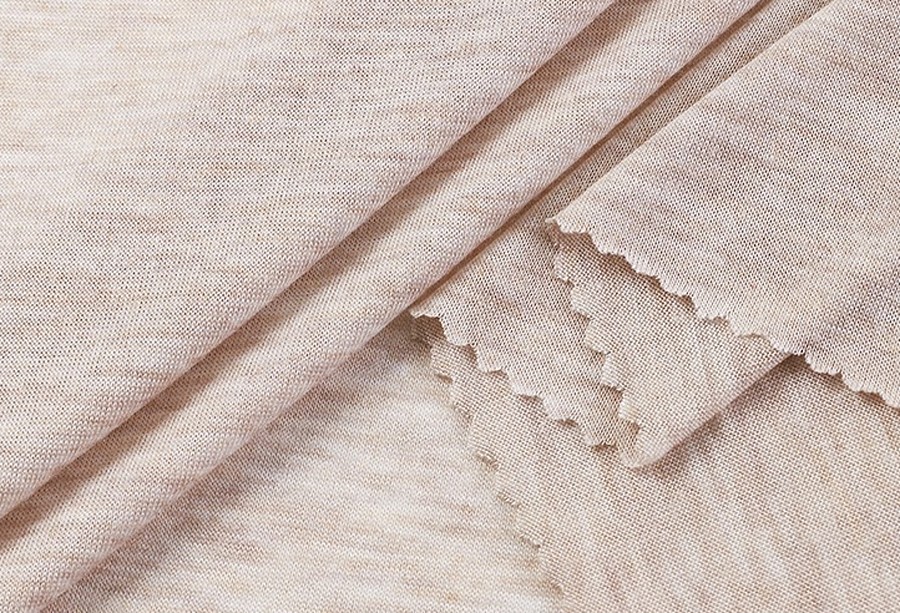
A 120 GSM single jersey in 95% cotton with 5% spandex, on a 165 cm width. This is the light end of the range: base layers, T-shirts, pyjamas, underwear and baby clothing — garments where the cloth is expected to disappear against the skin rather than hold a shape of its own.
On the name. The trade calls this a modal jersey, and the folder it came out of calls it a modal cotton-spandex — but the composition on this quality is 95% cotton and 5% spandex, with no modal fibre in it. What the name describes is the hand: modal is spun to feel cool, fluid and slightly peach-like against the skin, and this cloth is finished to sit in the same place. If your label has to read 100% cotton, read it as 95% cotton 5% spandex; if it has to read modal, this is not the quality for that order and we will say so before you place it.
- Composition
- 95% cotton · 5% spandextwo fibres, no blends to separate
- Weight
- 120 GSM3.5 oz/yd² — base-layer weight
- Width
- 165 cm65 inch — narrow, plan the marker
- Structure
- Single jersey, circular knitfine gauge, soft hand
- MOQ
- 300 kg≈ 1,515 running metres
- Colour
- No.001 – No.096shade card, quoted by number
Full specification
| Customization | Available — shade, weight and width confirmed at quotation |
|---|---|
| Knitting technics | A single jersey on a fine-gauge circular machine: one set of needles, loops drawn through loops on one face, the reverse showing the purl side. At 120 GSM the gauge has to be fine — the same weight knitted coarse gives a cloth that looks open, feels papery and twists at the hem after washing |
| Composition | 95% cotton / 5% spandex. The spandex is bare or covered elastane laid in at the last feed, so the stretch runs across the width and the recovery runs with it. No modal fibre, no polyester and no viscose in this quality — see the note below on the name |
| Yarn | A fine combed cotton count, ring spun, with the elastane laid in. The count is set at order: tell us the count your knitter runs and we match it against 120 GSM on 165 cm |
| Weight | 120 GSM / 3.5 oz/yd². We hold the single figure rather than a band, because at this weight 10 g is visible: it is the difference between a base layer that disappears under a shirt and one that shows every seam allowance |
| Width | 165 cm / 65 inch, open width, tubular slit. Narrow by the standards of a T-shirt mill — read the marker note below before you price the garment |
| Yarn count | Set at order |
| Stretch | About 40–50% across the width with good recovery, from the 5% elastane. Enough for a neckline to be cut and sewn without a separate rib, and enough for underwear and babywear where the garment has to follow the body rather than hang |
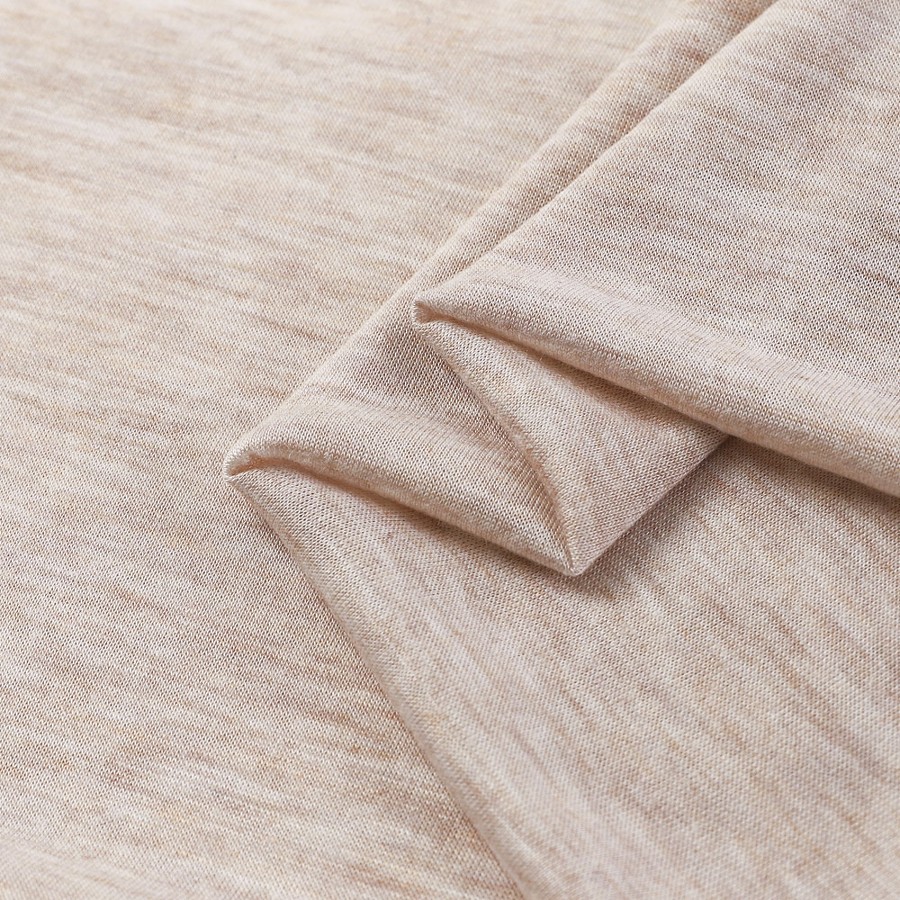
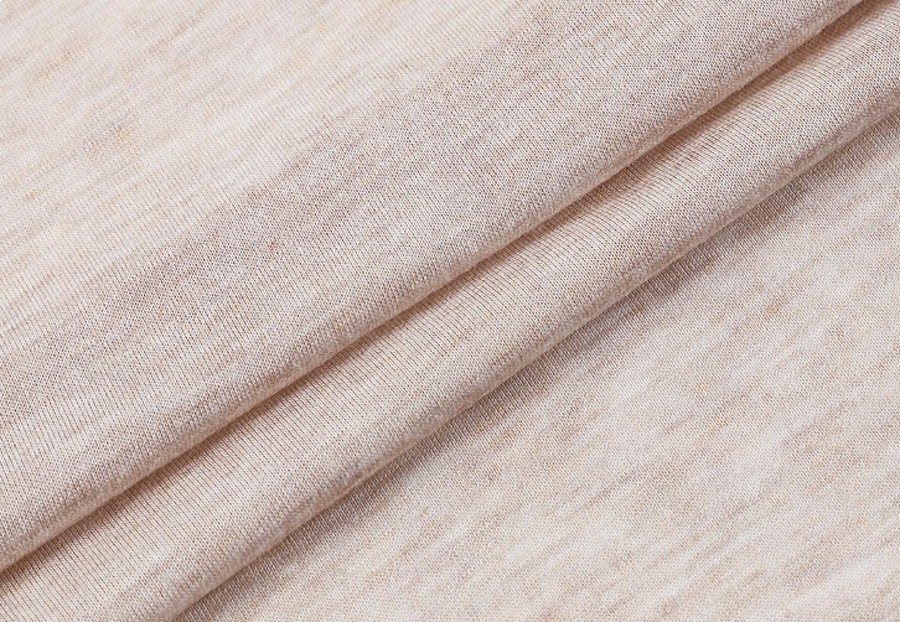
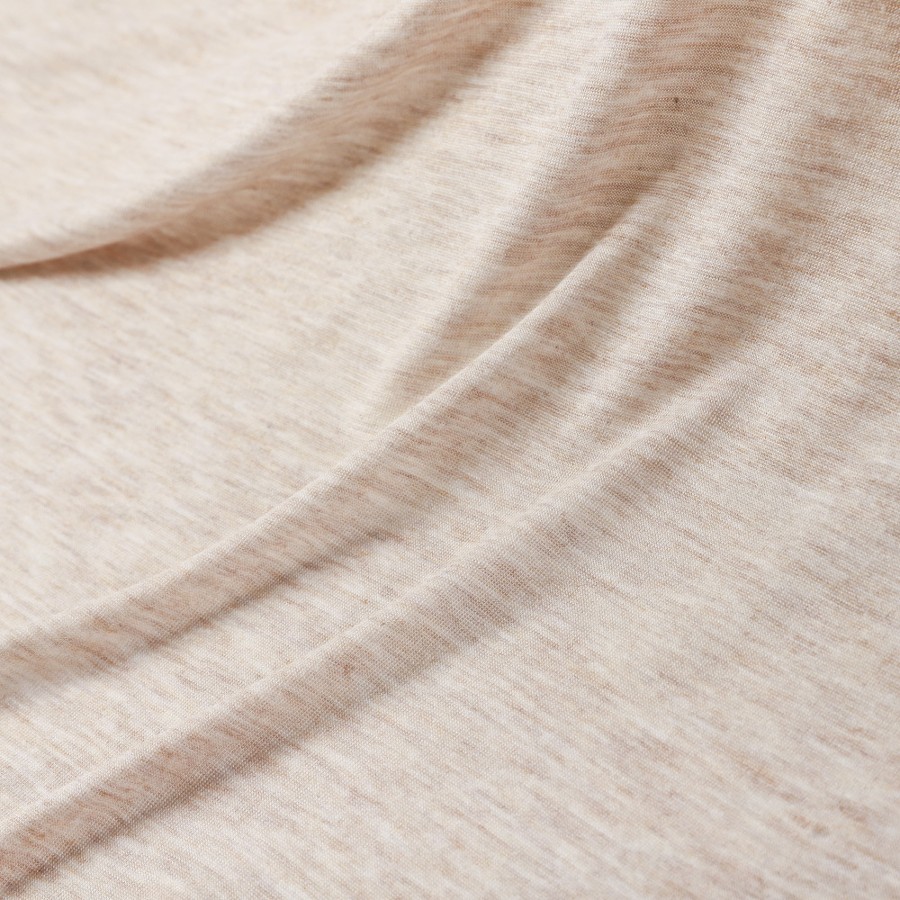
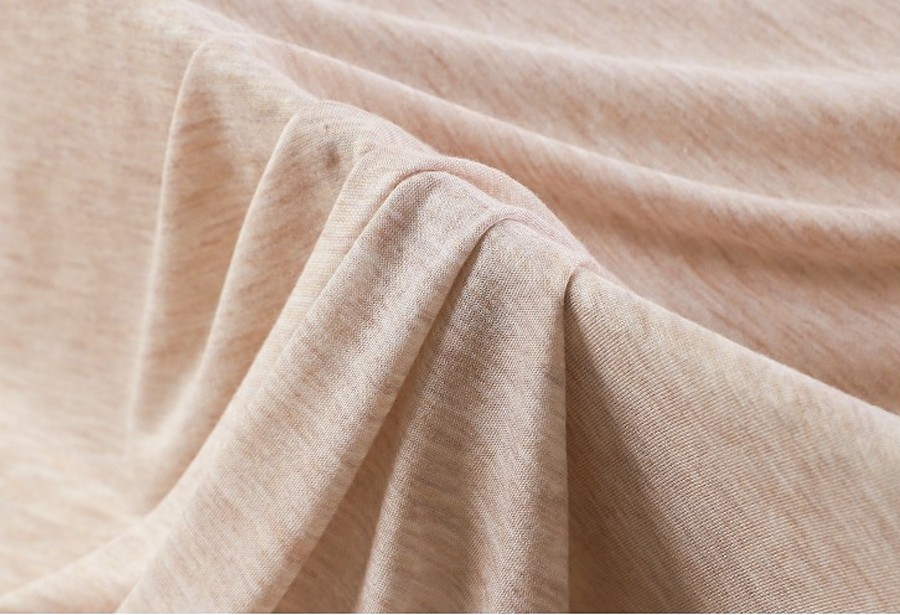
| Hand | Soft, cool, faintly dry — the hand is cotton, not the slick hand a polyester jersey has. At 120 GSM it drapes instead of standing, so it reads as a light cloth the moment a buyer picks it up |
| Surface | A fine even grain with a soft heather cast: the marl comes from cotton dyed before spinning, not from a print or a cross-dye. That is why the speckle is irregular and why it is the first thing to drift between dye lots — see the shade note below |
| Colour | Stock card, quoted by number (No.001–No.096), or dyed to order against an approved lab dip. On a heather shade, approve the dip on the heather itself: a flat shade card and a marl of the same recipe read differently, and the customer compares the garment to the card, not to the roll |
| Dyeing | Reactive dye on cotton, the elastane protected through the cycle. Cotton takes reactive dye deep and holds it; the risk is not the depth but the repeat, because a heather is a blend of dyed and undyed fibre and the ratio shifts a little from lot to lot. Ask for the lot-to-lot shade band in Delta E, not a promise of “same shade” |
| Fastness | Good on wash, good on rub, moderate on light for pale shades. On this oatmeal marl the test worth naming is greying and bleeding after five washes at 40°C; on white or ecru add light fastness, because optical brightener on cotton yellows in a warehouse window |
| Shrinkage | Cotton jersey relaxes on the first wash; expect the length to move more than the width. We finish to a controlled residual shrinkage, but pre-shrink or wash-test before cutting a programme — 5–8% on the length is normal for a cotton single jersey and it is the single most common complaint on a first order |
| Pilling | Low to moderate. Combed cotton pills less than carded; the surface is smooth enough for underwear and babywear. If the garment is washed at high temperature or tumble dried hot, the surface fuzzes faster than the fibre deserves |
| Chlorine | The weak point of this cloth is the elastane, not the cotton: chlorine bleach and a hot tumble dry both attack it, and a garment that has lost its elastane grows at the neckline and the seat while the cotton still looks new. Say it on the care label |
| Reactive and pigment print both take well; screen print on a 120 GSM single jersey needs a low-bleed paste and a soft hand, because a heavy deposit on a light cloth stiffens it visibly. Sublimation does not apply — there is no polyester to receive it | |
| Making up | Ball-point needle 70–75, low presser pressure, and do not stretch the neckline while attaching the band — the elastane recovers and the seam puckers. A 120 GSM jersey needs a finer stitch density than a 180 GSM one, or the seams grin open when the garment is worn |
| Cutting | Cut on a loose lay with a paper underlay and let the lays relax before sewing. A light single jersey moves under the knife more than a heavy one, and a panel cut 3 mm out is a visible seam on a base layer |
| Ironing | Cool iron, 110°C maximum, on the reverse. An iron hot enough to press a crease also glazes the cotton and can mark the elastane; on a marl the glaze shows as a shine along the fold |
| Origin | Shaoxing City, Zhejiang, China |
| MOQ | 300 kg per shade |
| Price | US$ 18.74 / kg (300–999 kg) · US$ 17.36 / kg (1,000 kg+) |
| Yield | ≈ 5.05 running metres per kg at 120 GSM × 165 cm (≈ US$ 3.71 per running metre, ≈ US$ 2.25 per m²) |
| Lead time | Stock shades ship from the dye lot on hand; dyed-to-order shades are confirmed at quotation |
| Packing | Roll-packed, roughly 20 kg per roll, poly bag inside a woven sack |
| Sample | Hanger swatch free; a 1 m cut of a stock shade charged at cost and credited against the bulk order |
| Documents | Invoice, packing list, B/L, certificate of origin; test reports on request |
| Care | Machine wash cool (30°C), no chlorine bleach, line dry or tumble low, cool iron on the reverse, no fabric softener — a silicone softener is the fastest way to dull a cotton hand and to load the elastane |
120 GSM: what it buys you, and what it asks in return
A 120 GSM jersey is cool, it packs flat, and it disappears under a shirt. For a base layer or a summer tee that is the whole point — at 180 GSM the same construction starts to read as a T-shirt in its own right. The trade is that there is very little cloth holding the garment together, so everything that is normally hidden by weight becomes visible: seam allowances, a needle that left a mark, a panel cut 3 mm out.
Two consequences worth putting in the spec. The weight has to be held, not ball-parked. 10 g on this cloth is the difference between opaque and slightly translucent in a pale shade, and a mill that quotes a 120 GSM quality as “115–125” is telling you they do not control the finish. We hold the single number. And the needle has to be fine. A 75 ball-point with a low presser setting; a heavier needle at this weight leaves a row of holes along the seam that closes on the roll and opens on the body.
5% spandex is what keeps 120 GSM from growing
Without elastane, a cotton single jersey at this weight is comfortable for a month and then it starts to relax: necklines open, seats drop, hems wave. The 5% spandex is there to pull the loops back after every wear, and it is the reason this quality can be sold into underwear and babywear rather than only into promotional tees.
It is also the part that fails first. Chlorine bleach and a hot tumble dry both attack elastane; the cotton survives, the garment keeps its colour, and the fit quietly goes. On a 120 GSM cloth a buyer notices this faster than on a heavy one, because there is less fabric to hide the sag. Two practical requests: name “no chlorine bleach” on the care label, and ask for the width recovery after five washes at 40°C — a number, not an assurance.
The marl is in the yarn, and that is where the shade drifts
A heather like this oatmeal is made by dyeing part of the cotton before it is spun, then blending it with lighter fibre — the speckle is inside the yarn, so it never washes out and never sits on the surface like a print. The catch is repeatability: the ratio of dark to light fibre shifts a little in every lot, which is why a marl is the shade that drifts first and the one customers complain about second.
Approve the dip on the heather, not on a flat card. The same recipe struck on a flat cotton reads a shade lighter and perfectly even, and then the bulk arrives with visible texture — the customer holds the garment against the card and sees a difference that was never in the dye house. Ask for a dip on the marl, and ask for the lot-to-lot band in Delta E so the second order is a decision and not a surprise.
And keep the lots apart on the cutting table. On a marl the shade shift shows at a seam, not across a panel: a sleeve from one lot against a body from the next reads as a defect in the finished garment even though both pieces are within tolerance. Cut one garment from one lot, and mark the roll ends.
165 cm is narrow — do the marker arithmetic first
At 120 GSM on 165 cm a running metre weighs about 198 g, so a kilo runs about 5.05 metres and the 300 kg minimum is roughly 1,515 metres. A basic short-sleeve tee at this width normally marks at 0.85–1.00 m, so the minimum lands around 1,500 pieces — enough for a first order in two or three shades, or a full run for a small label.
The width is the part to check before you compare prices. At 180 cm a tee nests front, back and both sleeves in one lay with room to spare; at 165 cm the sleeves usually have to be nested tighter or moved to a second lay, and the collar band comes off the end. If your marker was built for 180 cm, re-mark it at 165 before you decide this quality is expensive per piece — the difference often shows up as 5–8 cm of extra consumption, which at this price per metre is real money.
Four things that go wrong on a light cotton jersey. Shrinkage: the length relaxes on the first wash, more than the width — wash-test before cutting, 5–8% is normal. Elastane loss: chlorine and a hot dryer take the recovery, and the garment grows while the colour stays. Seam grinning: at 120 GSM a coarse stitch density opens along the seam when worn — go finer and use a 70–75 ball-point. Lot shading on the marl: two lots within tolerance still read as a defect at a seam, so keep them apart on the table.
Ask for a swatch, a washed sample or a price
Tell us the shade number, the garment you are cutting and the weight you need held — base layer, tee, pyjama, underwear or babywear. We reply within one working day with the price on the lot we hold, the shade card on this quality and a hanger swatch. If the order needs a shrinkage or a fastness report, name the standard and we quote it with the cloth.
Related: the same cotton story at a summer shirting weight is the Cotton Silver-Thread Single Jersey 200 GSM; for a knitted double cloth in the same series see the TR Air Layer 320 GSM. The rest of the range is on the fabrics page.