Fabrics / Sports & activewear · High-stretch jacquard
High-Stretch Jacquard Knit 160 GSM — 160 cm
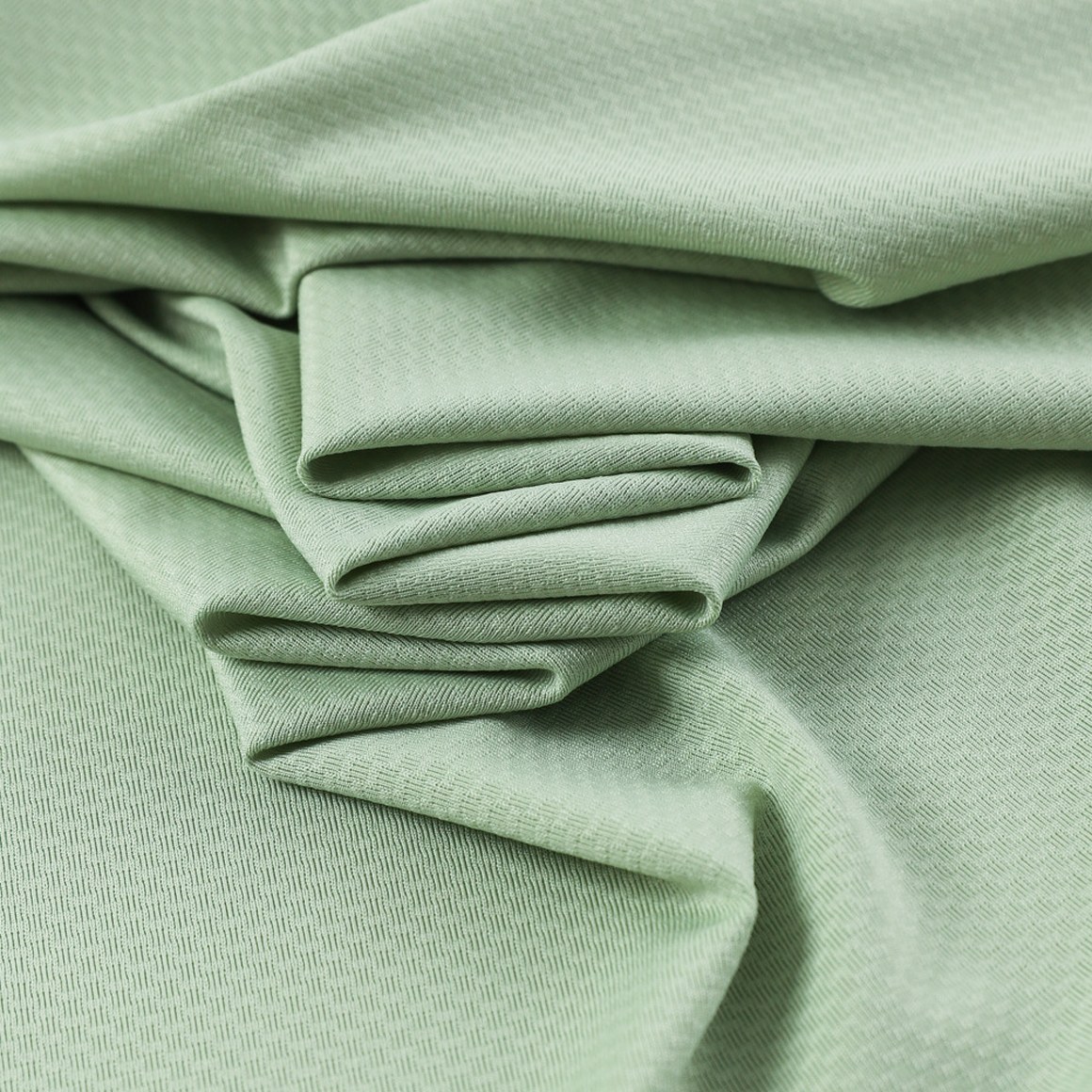
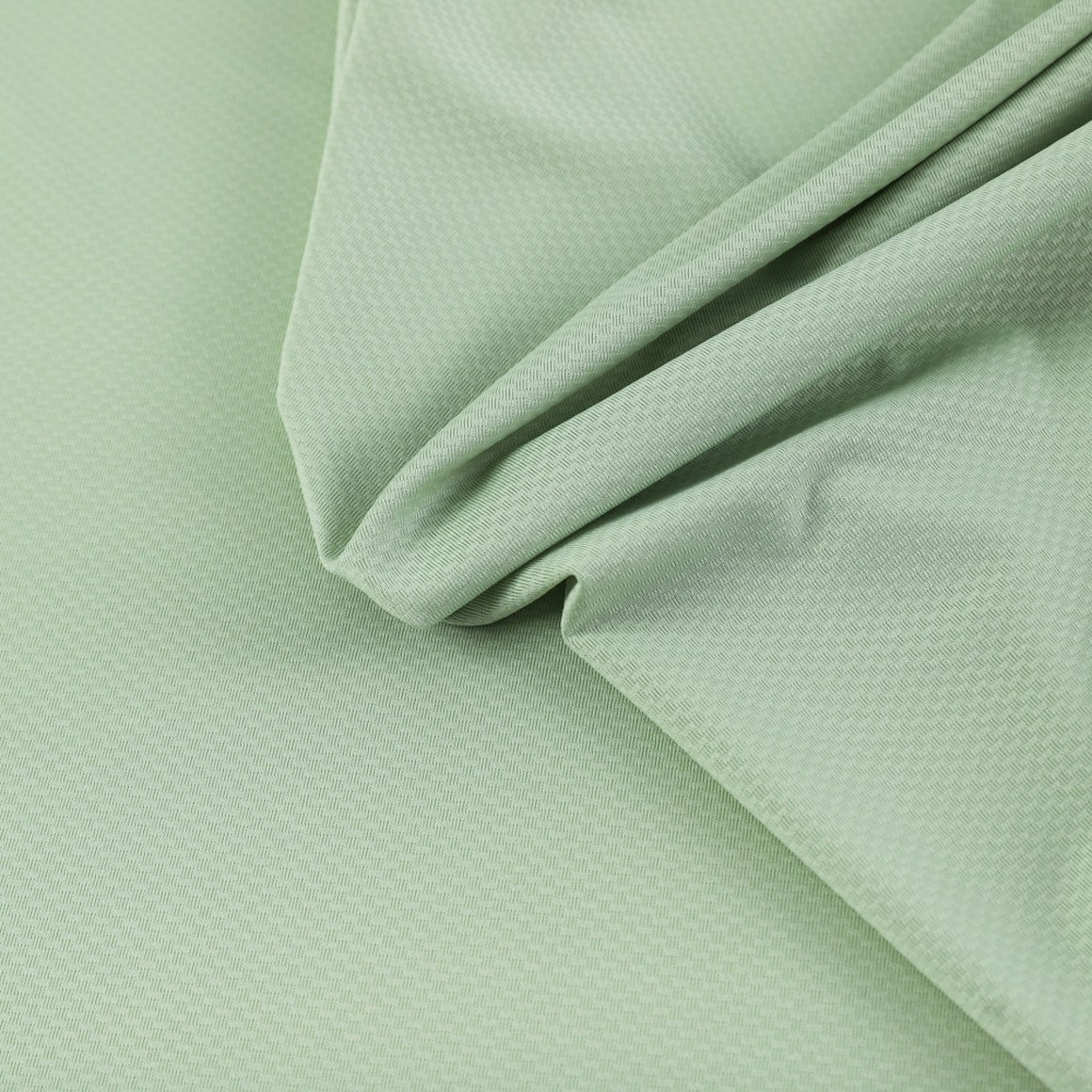
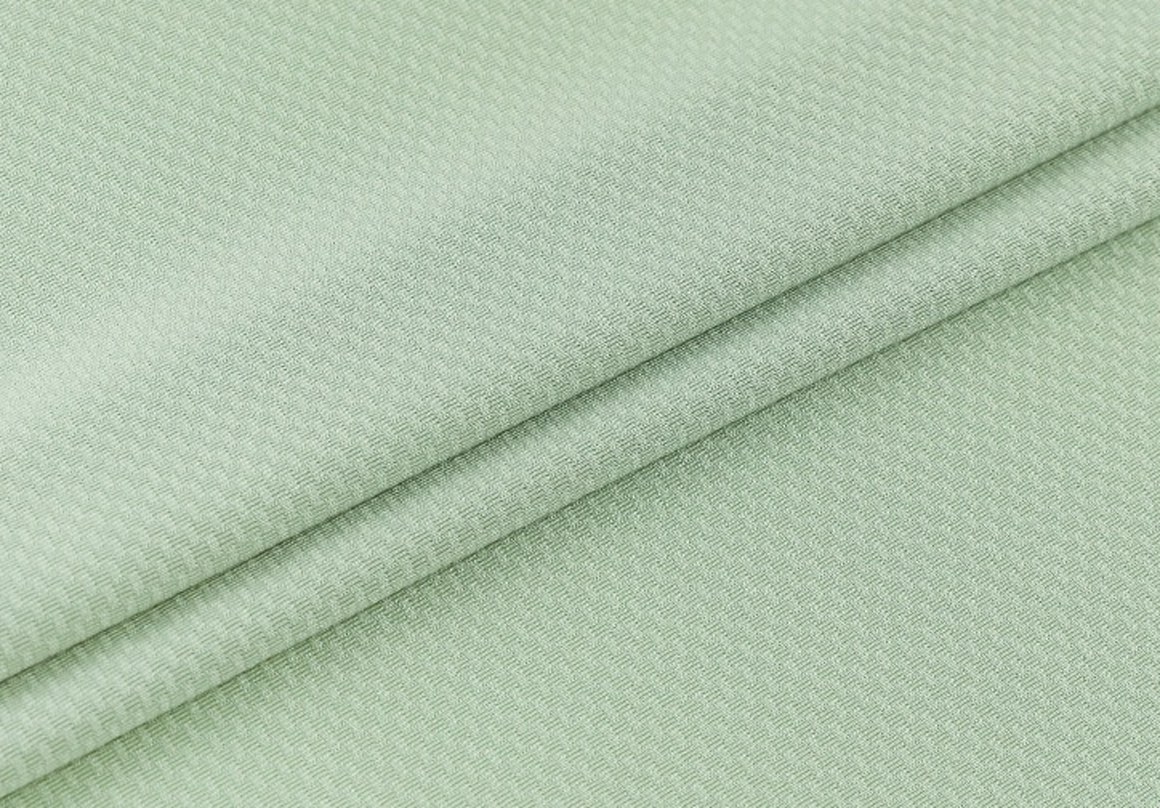
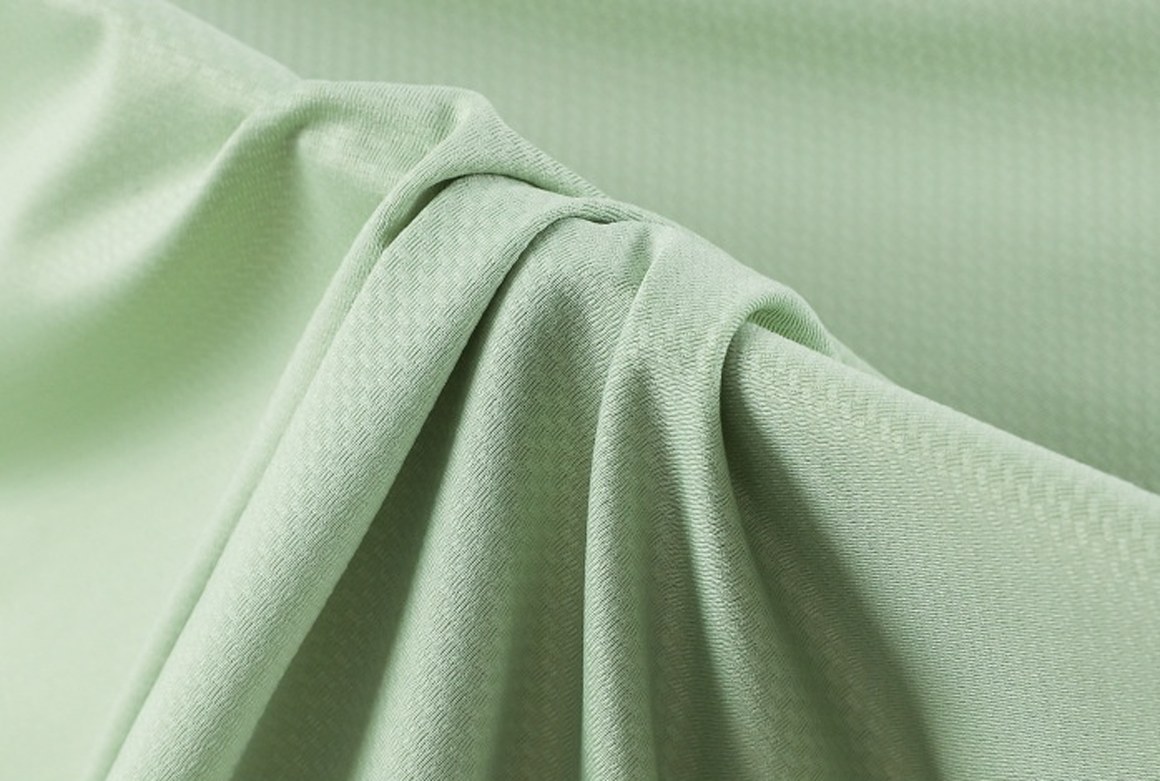
A 160 GSM jacquard knit on a 160 cm width, 90% polyester / 10% spandex. The figure in the cloth is a fine diagonal, and it is knitted in rather than printed on. But the number that decides what you can cut from it is the spandex: 10% is roughly double what a standard stretch jersey carries, and it moves this cloth out of the “stretch for comfort” bracket into “stretch as construction”.
In practice that means a zip-front jacket you can pull on over a head, a fitted top with no fastener at all, a hood that holds its shape instead of collapsing, and cuffs that stay at the wrist after a season of being stretched over a hand. What it does not mean is a compression cloth — for that we quote a different quality rather than overstate this one.
- Composition
- 90% Polyester10% spandex
- Weight
- 160 GSM4.7 oz/yd²
- Width
- 160 cm63 inch, open width
- Yarn count
- Set at orderknitted against 160 GSM on 160 cm
- MOQ
- 300 kg≈ 1,170 running metres
- Colour
- No.001 – No.096quote the shade number
Full specification
| Customization | Available — shade, weight, width and stretch confirmed at quotation |
|---|---|
| Knitting technics | Jacquard knit: the fine diagonal figure is selected needle by needle, so the pattern is part of the structure. Nothing is printed on the surface to crack, fade or sit out of register on a stretched panel |
| Composition | 90% polyester + 10% spandex |
| Weight | 160 GSM / 4.7 oz/yd² |
| Width | 160 cm / 63 inch, open width |
| Yarn count | Set at order. Send the count you already run and we knit this quality to it against 160 GSM on the 160 cm width; the price above is on our standard count |
| Dyeing | Piece dyed after knitting, so the shade is even from the first metre of the roll to the last |
| Colour | Our stock shade card, quoted by number (No.001–No.096); or dyed to order against an approved lab dip. Ask for the card with your enquiry |
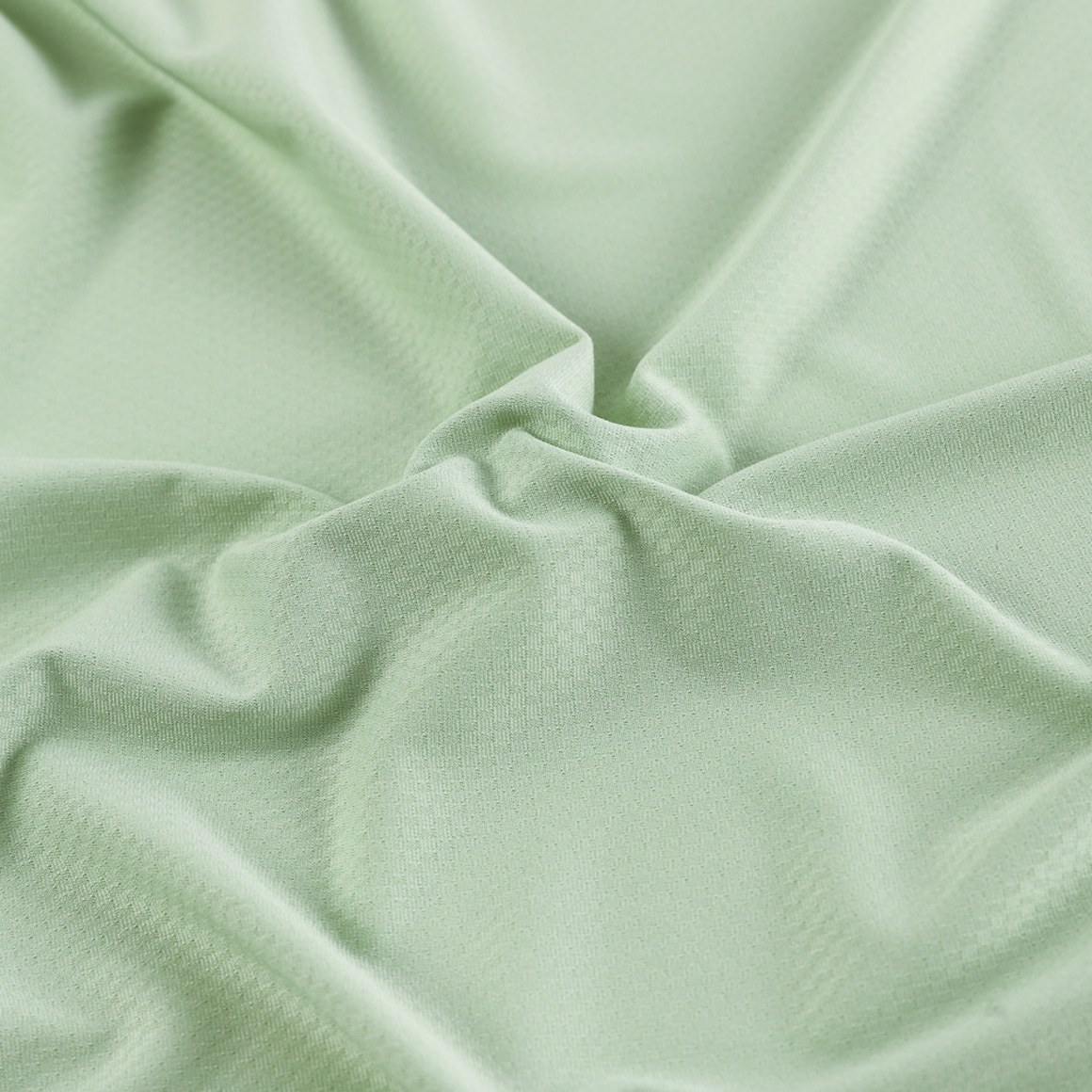
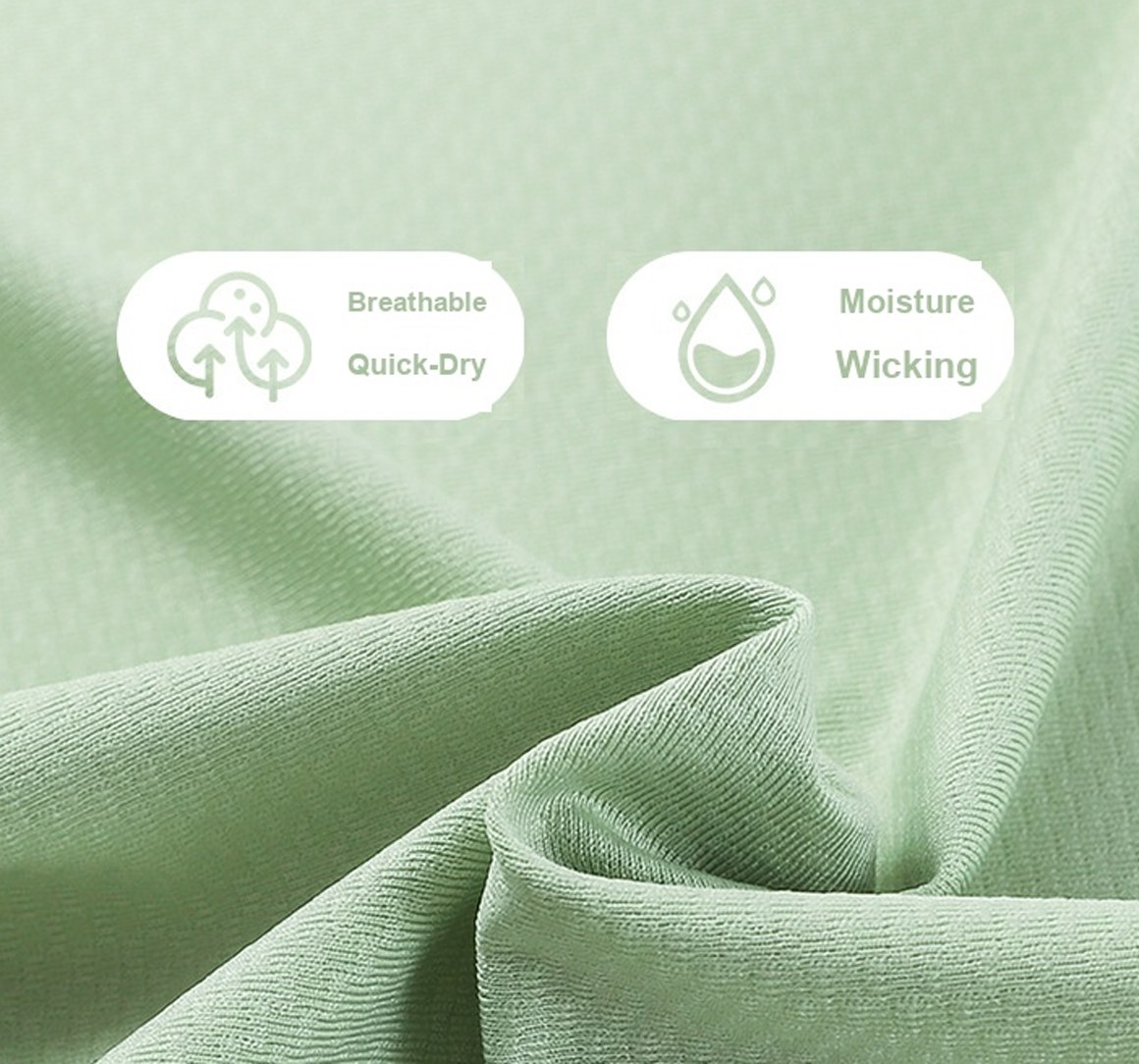
| Hand | Cool, smooth and dry to the touch, with a light fluidity in the drape — the spandex is what stops it feeling papery at this weight |
| Stretch | 10% spandex, four-way — roughly double what a standard stretch jersey carries. This is the number that separates it from the two other jacquards we knit at 5%: it is enough to pull a zip-front jacket on over a head, to cut a fitted top without a fastener, and to hold a yoga cover-up at the cuff and hem |
| Recovery | The cloth comes back to its cut width after stretching, which is what keeps a fitted panel from growing at the elbow and the seat by the end of a season |
| Stability | Polyester filament with spandex, so shrinkage in the wash is low and the garment keeps the measurement it was cut at |
| Pilling | There is no short staple in the yarn to work loose and ball up, which is what happens to a cotton jersey at the cuff and the underarm |
| Takes sublimation transfer and screen print. On a four-way stretch base, print the panel flat and keep the design off the highest-stretch zones, or the registration will move with the wearer | |
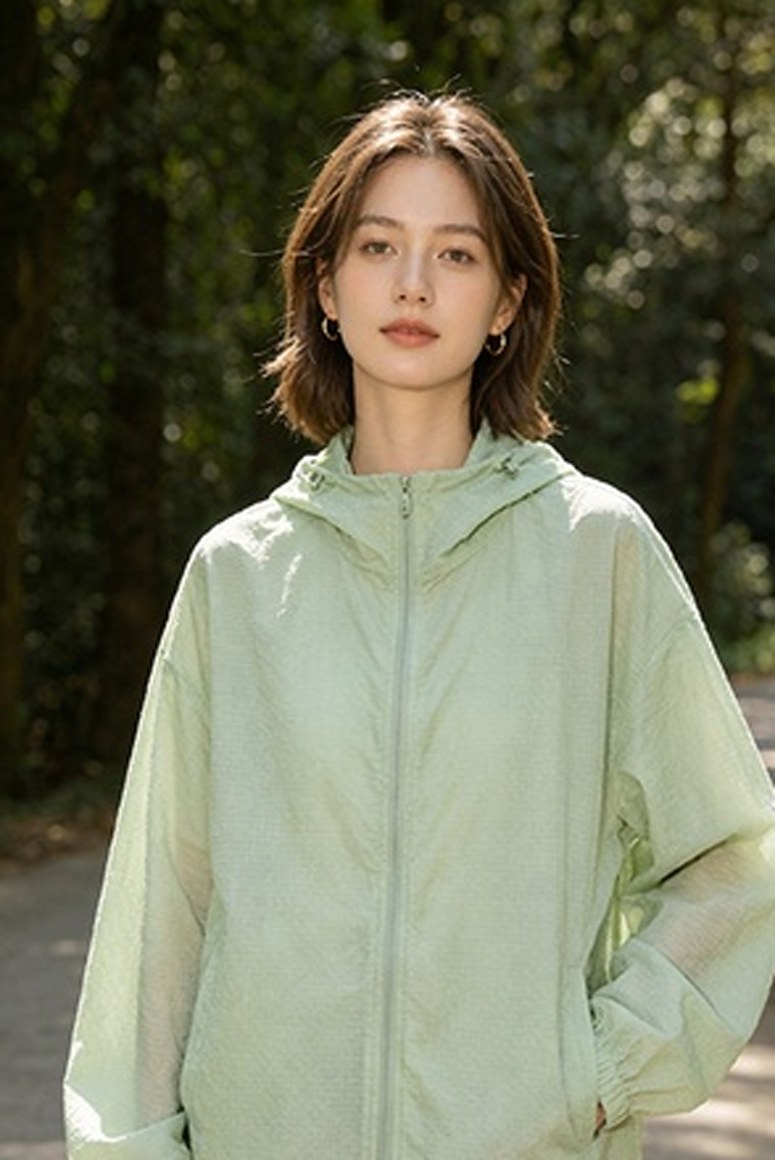
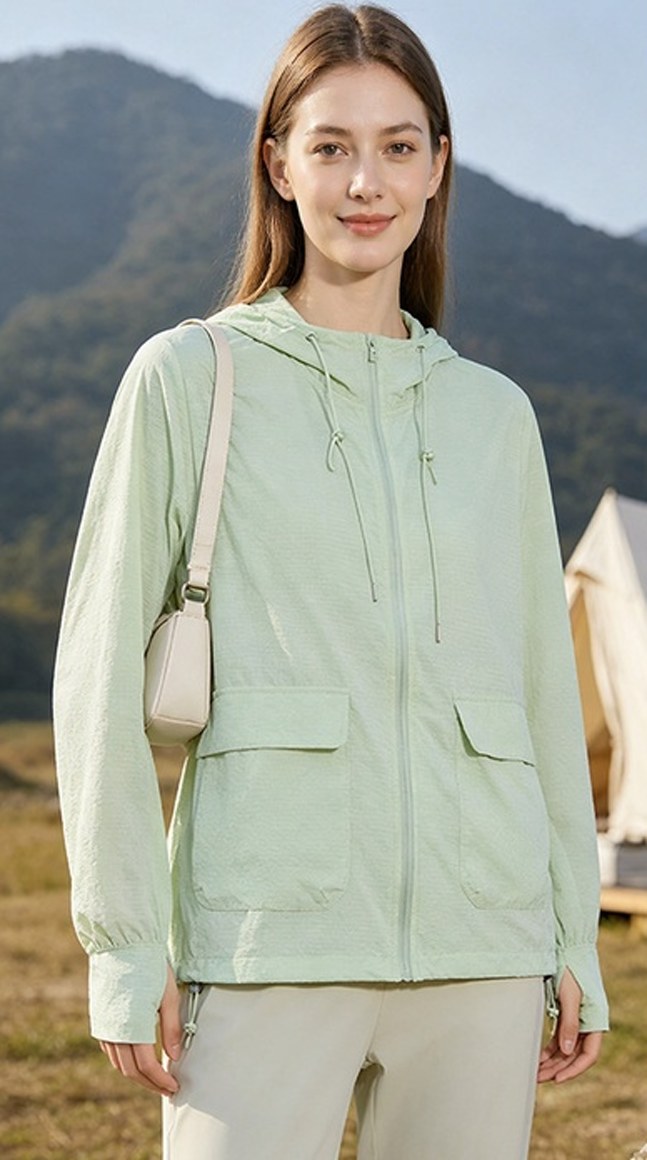
| Sun | Dense enough for a light cover-up jacket — the jackets in the photographs are cut from this quality. If your label carries a UPF claim, tell us the standard you need and we have the cloth tested rather than quoting a figure we cannot document |
| Origin | Shaoxing City, Zhejiang, China |
| MOQ | 300 kg per shade |
| Price | US$ 12.54 / kg (300–999 kg) · US$ 10.99 / kg (1,000 kg+) |
| Yield | ≈ 3.91 running metres per kg at 160 GSM × 160 cm (≈ US$ 3.21 per running metre, ≈ US$ 2.01 per m²) |
| Lead time | Stock shades ship from the dye lot on hand; dyed-to-order shades are confirmed at quotation |
| Packing | Roll-packed, roughly 20 kg per roll, poly bag inside a woven sack |
| Sample | Hanger swatch free; a 1 m cut of a stock shade charged at cost and credited against the bulk order |
| Documents | Invoice, packing list, B/L, certificate of origin; test reports on request |
| Care | Machine wash cold, do not bleach, no fabric softener, tumble low or dry flat in shade |
Why a stretch jacquard is harder than it looks
A jacquard machine selects needles to build a figure; spandex has to be fed under constant, low tension or it springs back unevenly and the figure goes wavy. Put the two together and you get a narrow process window — which is why most “stretch jacquard” on the market is a plain stretch jersey with a pattern printed over it. Printed, it looks right on the roll and gives itself away on the garment: the print sits on top of the stretch, so it drifts at the seams and goes pale wherever the cloth is pulled.
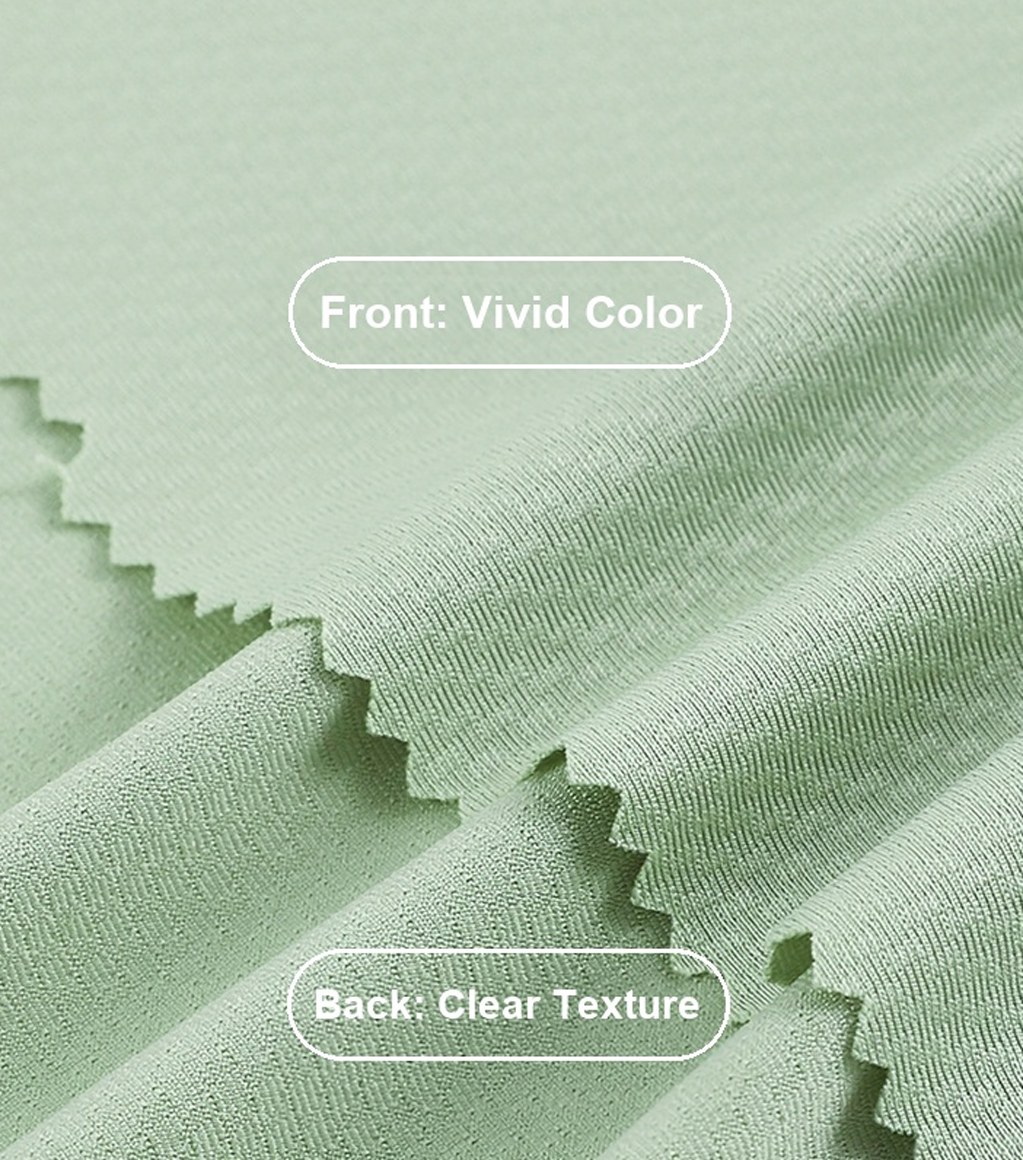
Here the figure is made of knit stitches. Stretch it and the pattern stretches with the cloth, in register, at the same rate — so a panel cut on the bias still reads as the same design. The reverse is a clean mirror of the face, which matters on an unlined hood or a turned-back cuff where the inside is on show.
10% spandex, and where it changes the pattern
Two-way stretch at 5% is enough for a hood, a cuff and a sleeve head, and it is what our other two jacquards carry. At 10% the cloth is four-way and it recovers, which changes what your pattern maker can do: a close-fitting body with no zip or button, a raglan with a stretch panel, a one-piece yoga cover-up. It also changes what you have to watch — a four-way base will show a seam that was sewn with the wrong tension, and a print placed across the highest-stretch zone will move under it.
Our advice, plainly: cut the first sample in the shade you actually intend to sell, not in optic white. Spandex-rich cloth reads slightly deeper in colour than a rigid one at the same recipe, and the difference shows up at the seam more than on the flat.
Colour, quoted by number
Our stock card runs to 96 shades. Pick the numbers you are choosing between and we dye this base to them; if what you need is not on the card, send a Pantone reference or a physical swatch. Quote the number — No.041, not “the sage” — so nothing is misread between your buying office and our dye house. Ask for the card with your enquiry and we send it, together with a lab dip of your shortlisted shades on this base cloth. MOQ is 300 kg per shade.
What a kilo buys you
At 160 GSM on a 160 cm width one kilo gives about 3.91 running metres, so the 300 kg minimum is roughly 1,170 metres — around 900 bodies at 1.3 m each, or nearer 1,100 on a sleeveless cut at 1.05 m. That works out at US$ 3.21 per running metre and US$ 2.01 per m². Light cloth goes further per kilo, which is why a 160 GSM quality often lands cheaper per garment than the price per kilo suggests.
Where it goes
Sun-protection jackets and hoodies, yoga and pilates cover-ups, fitted tops and leggings, sports polos, light softshell-style layering, womenswear with a stretch requirement. The jackets below are cut from this quality. Where it is not the right cloth: a structured jacket body, a tailored trouser, or anything that has to hold a hard crease — the spandex will not allow it, and we would rather quote you something else.
Being plain about two things. The 10% spandex figure is our standard recipe and it is what the price above is based on — if your pattern needs less stretch we knit this quality at 5%, and if it needs more we will say so only after we have run it. And the yarn count is set at order rather than fixed: send the count you already run and we knit to it against 160 GSM on the 160 cm width.
Ask for the shade card and a price
Send the shade numbers you are choosing between, the quantity in kilos and the garment you are cutting. We reply within one working day with the price, what is on the dye lot, the stretch figures we knit to, and a lab dip of your shortlisted shades on this base cloth.