Fabrics / Sports & activewear · Glossy ice-silk jersey
Glossy Ice-Silk Stretch Jersey 170 GSM — 165 cm
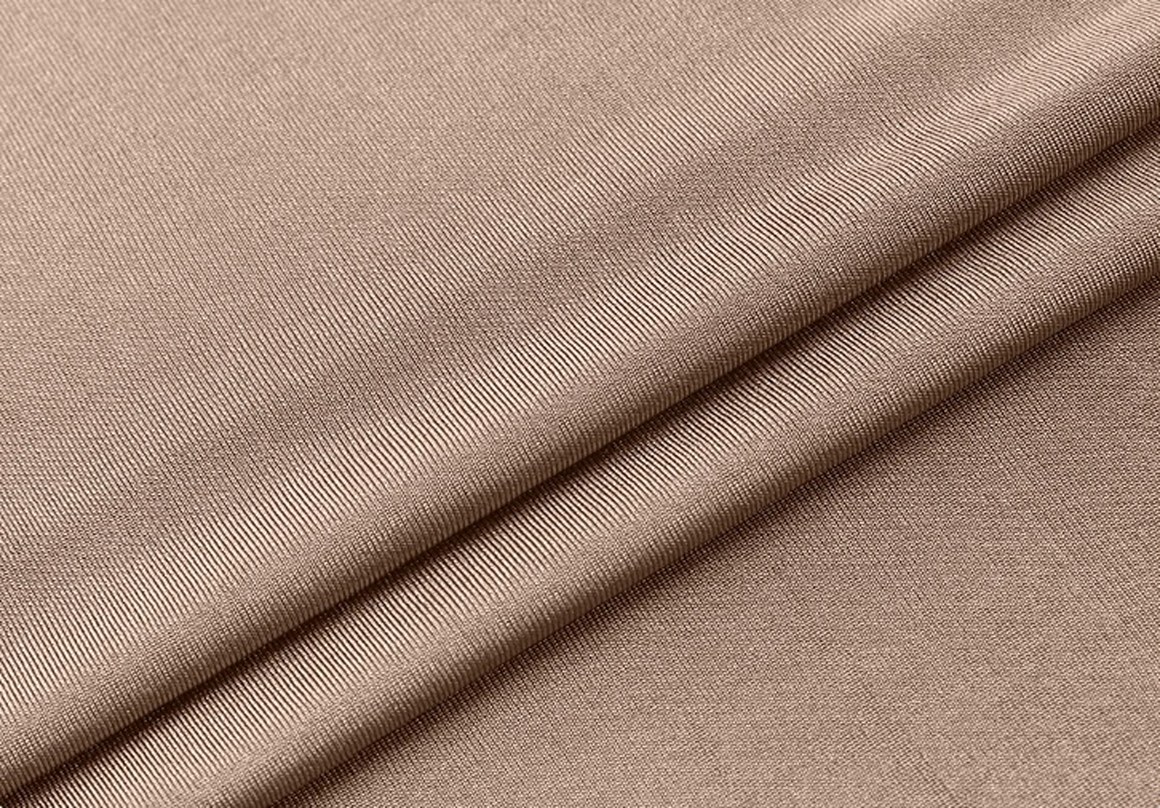
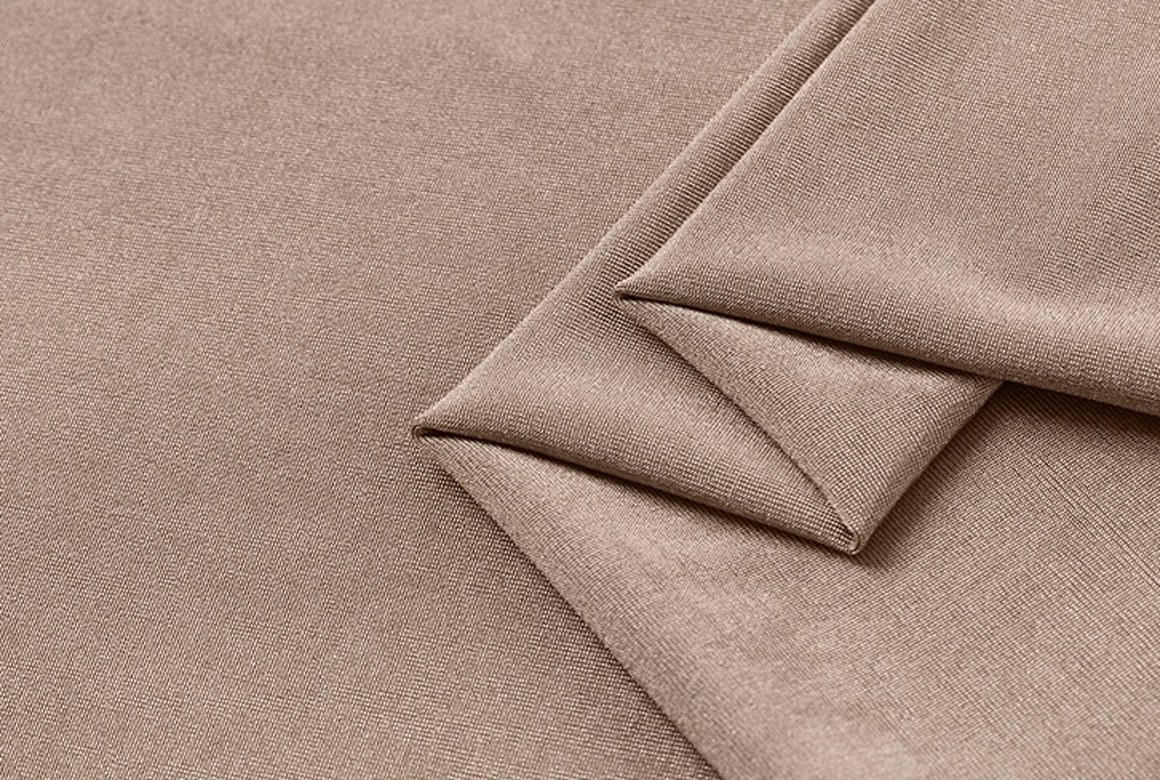
A 170 GSM single jersey on a 165 cm width, 95% polyester / 5% spandex, knitted from a bright yarn so the face carries a soft, moving sheen. It is the quality behind plain tees, base layers, sleepwear and loungewear that look more expensive than a matte jersey at the same price — and the one we send when a buyer asks for something that reads like silk without a silk price or a silk care label.
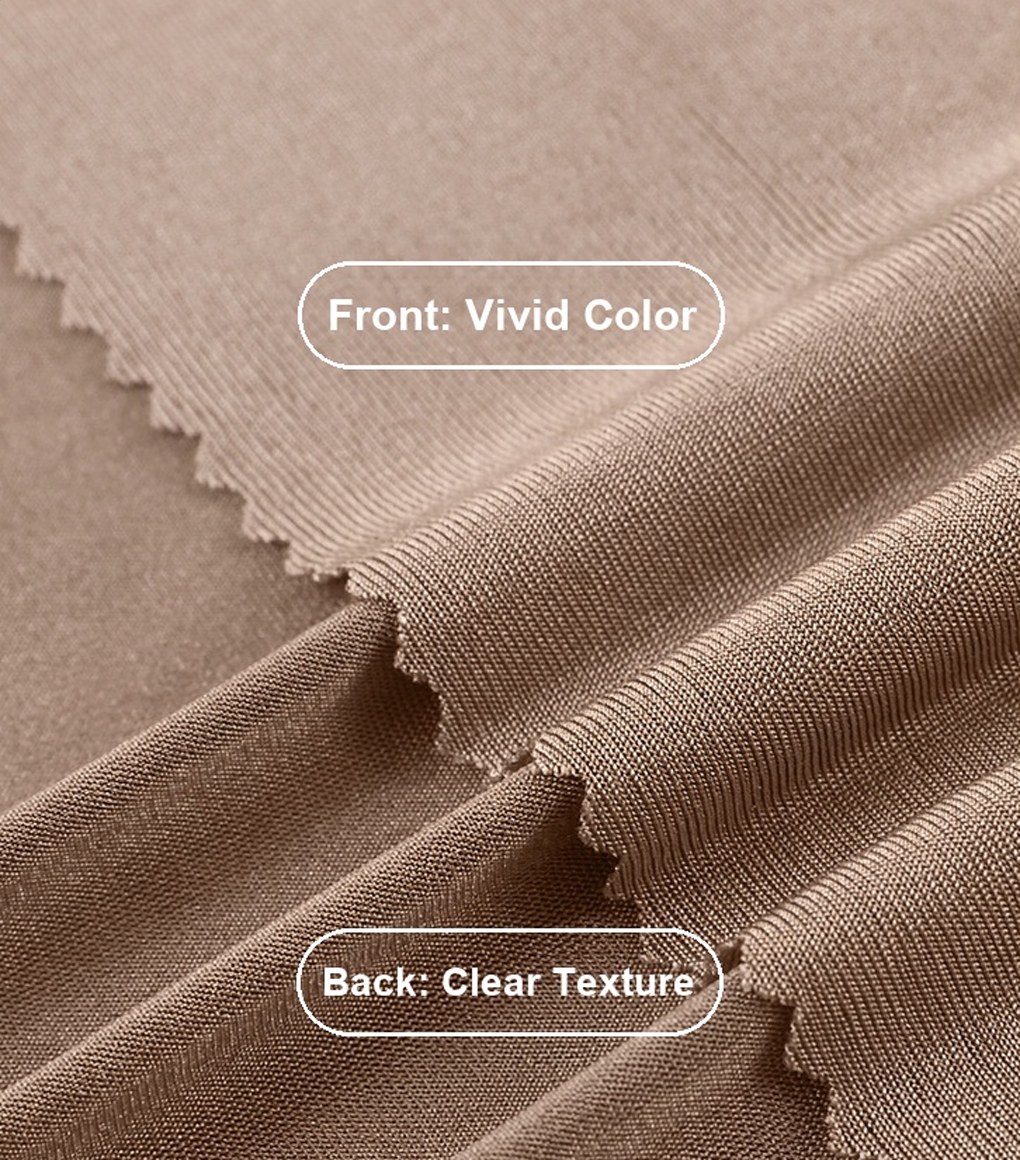
Two things are worth knowing before you specify it. The gloss is in the yarn, not on the surface: no calendering, no glazing, no coating, so it does not dull after ten washes or crack at a fold. And “ice silk” is a trade name, not a fibre — there is no silk in this cloth, and the label reads polyester and spandex, nothing else. What makes it feel cool is the flat continuous filament and the density of the knit, and that is a real, repeatable property rather than a chemical finish that washes away.
- Composition
- 95% Polyester5% spandex
- Weight
- 170 GSM5.0 oz/yd²
- Width
- 165 cm65 inch, open width
- Surface
- Bright, glossylustre in the yarn, not a coating
- MOQ
- 300 kg≈ 1,070 running metres
- Colour
- No.001 – No.096quote the shade number
Full specification
| Customization | Available — shade, weight and width confirmed at quotation |
|---|---|
| Knitting technics | Single jersey, weft knitted, then piece dyed. The lustre comes from a bright polyester yarn and the density of the knit — the cloth is not calendered, glazed, coated or laminated to make it shine |
| Composition | 95% polyester + 5% spandex |
| Yarn | Bright (semi-dull free) polyester filament with a fine count, knitted dense. This is where the gloss starts: a bright yarn reflects light from the filament itself, so the sheen is inside the cloth and cannot wash out |
| Weight | 170 GSM / 5.0 oz/yd² — light enough to sit under a shirt or to be the garment, dense enough to keep a clean face |
| Width | 165 cm / 65 inch, open width — a full tee body or a trouser leg without a side seam join |
| Yarn count | Set at order. Send the count you already run and we knit to it against 170 GSM on the 165 cm width; the price above is on our standard count |
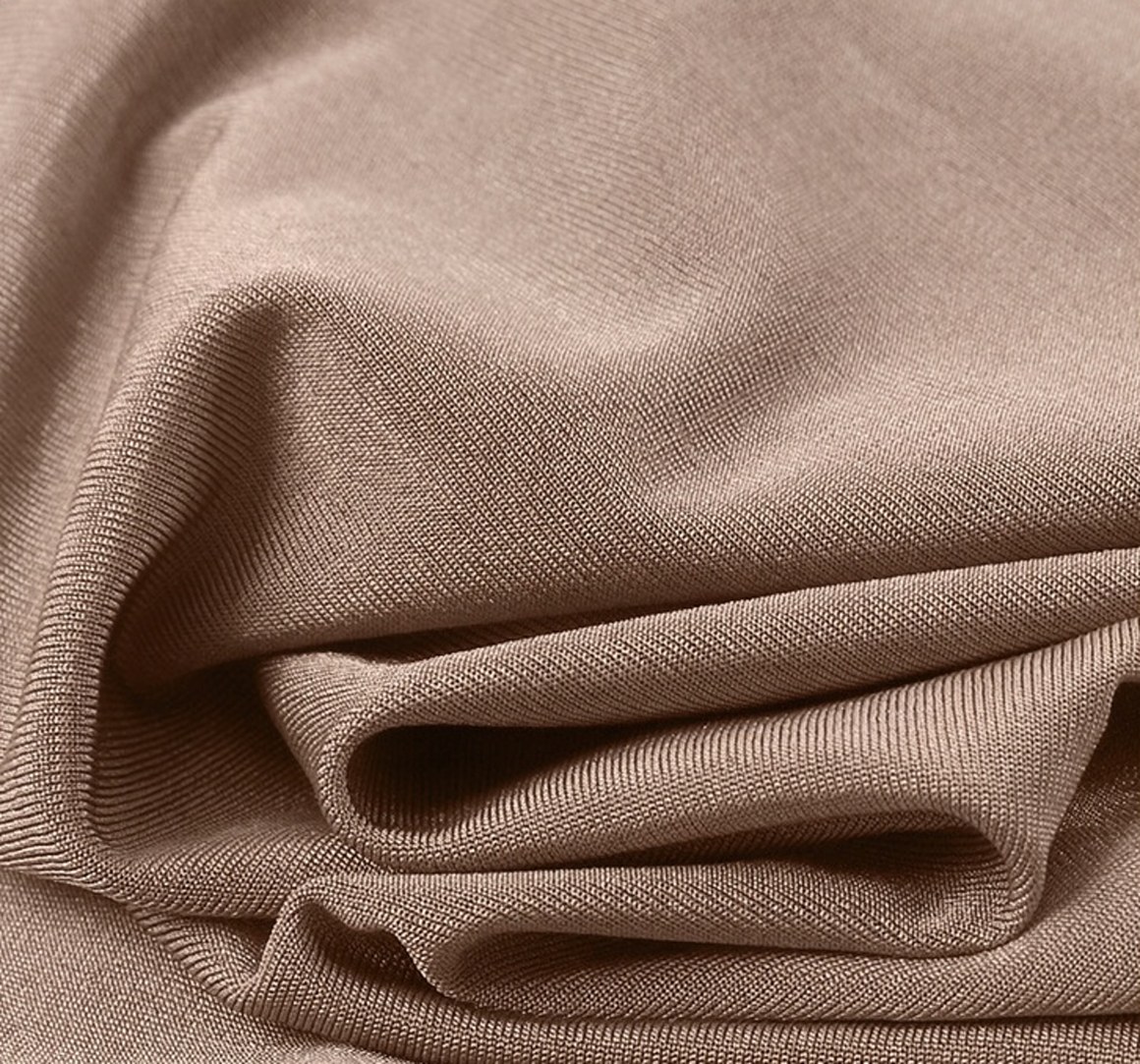
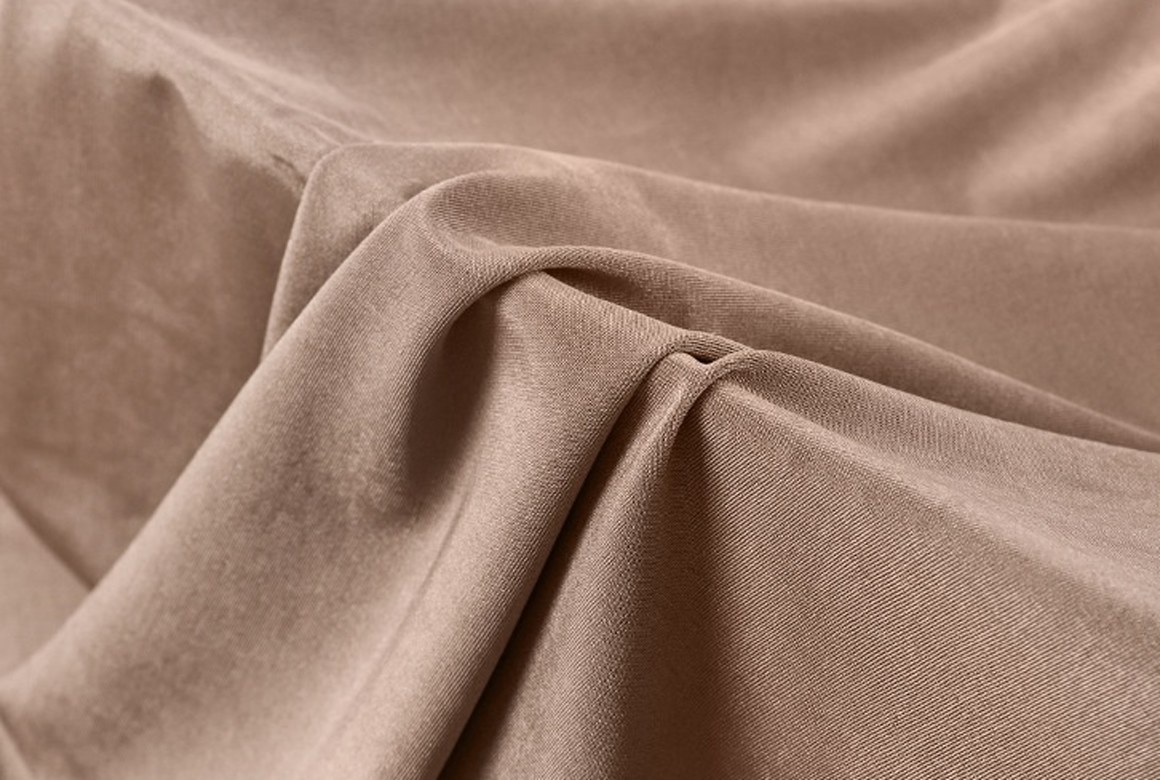
| Sheen | A moving, slightly liquid sheen across the panel, not a metallic or plastic highlight. It reads as depth in the colour under indoor light and close to matte in flat daylight — which is why the garment photographs stay quiet rather than shiny |
| Hand | Cool and smooth on first touch, with a light, dry slip rather than a slick one. It does not grab the skin the way a brushed or peach-finished jersey does |
| Stretch | 5% spandex, two-way, moderate. Enough for a fitted tee, a legging waistband or a slim sleeve; it is not a compression cloth and should not be specified as one |
| Recovery | The spandex is in the greige, so a stretched neckline or cuff returns instead of growing. Wash it and the garment comes back to the measurement it was cut at |
| Drape | Fluid and close: it follows the body and falls in narrow folds. At 170 GSM it will show the line of a seam or a pocket bag, so keep the inside clean |
| Cover | Dense enough to be opaque in mid and dark shades at this weight. Pale shades need a check against a hand before bulk — ask for a light and a dark lab dip together |
| Dyeing | Piece dyed after knitting. Bright polyester takes colour cleanly and holds it, which is why the mid-tones come out even across a roll |
| Colour | Our stock shade card, quoted by number (No.001–No.096), or dyed to order against an approved lab dip. On a glossy face, shade differences between lots are easier to see than on a matte cloth — keep one lot per garment and say so on the order |
| Stability | Polyester filament with spandex: low shrinkage in the wash, no ironing needed, and the colour does not fade out in normal wear |
| Pilling | No short staple in the yarn to work loose, so no pilling at the cuff or under the arm |
| Takes sublimation transfer well because the face is polyester and smooth. Screen print and transfer print both hold. On a glossy ground, matt inks read as a contrast and gloss inks disappear — decide which effect you want before the strike-off | |
| Making up | A fine needle (70–75), a small stitch and a light tension. Gloss shows every needle mark, every pucker and every heavy topstitch, so test on a scrap first. Do not press directly: a hot iron glazes bright polyester permanently — iron on the reverse, low heat, or steam only |
| Origin | Shaoxing City, Zhejiang, China |
| MOQ | 300 kg per shade |
| Price | US$ 15.15 / kg (300–999 kg) · US$ 13.77 / kg (1,000 kg+) |
| Yield | ≈ 3.57 running metres per kg at 170 GSM × 165 cm (≈ US$ 4.25 per running metre, ≈ US$ 2.58 per m²) |
| Lead time | Stock shades ship from the dye lot on hand; dyed-to-order shades are confirmed at quotation |
| Packing | Roll-packed, roughly 22 kg per roll, poly bag inside a woven sack |
| Sample | Hanger swatch free; a 1 m cut of a stock shade charged at cost and credited against the bulk order |
| Documents | Invoice, packing list, B/L, certificate of origin; test reports on request |
| Care | Machine wash cold, do not bleach, no fabric softener, cool iron on the reverse or steam only, dry flat in shade |
Where the shine comes from
A bright polyester filament reflects light along its own length. Knit it dense and flat, and the reflection lines up across the panel into a soft, even glow that shifts as the cloth moves. That is what you see in the photographs, and it is a property of the yarn — which is why it survives washing, dry cleaning and wear.
The alternative route to a shiny jersey is mechanical: calendering the cloth under heat and pressure, or padding on a resin. Both give a harder, flatter highlight, and both fade — the calendar effect relaxes after a few washes, and a resin can crack along a fold or turn chalky where it is abraded. If a supplier cannot tell you which route their “glossy jersey” takes, ask what happens to the sheen after five home washes. It is a fair question and it separates the two quickly.
“Ice silk”, honestly
In the Chinese market this quality is sold as 冰丝 — “ice silk”. It is a category name, not a fibre: there is no silk, no viscose and no bamboo in it. The cool feeling comes from three ordinary physical facts. Continuous filament has a smooth, high-contact surface, so heat leaves the skin quickly at the moment of touch. A dense flat knit spreads moisture sideways instead of holding it in one spot. And polyester filament does not swell with water, so the cloth does not stay damp against the body the way a cotton jersey does.
If your market tests cool-touch claims, the test is a q-max value (contact coolness, measured to GB/T 35263 or JIS L 1925). We do not print a number on this page, because a number is only worth anything with the test report behind it and the report belongs to a specific lot. Ask for it on the order you place and we will have the lot tested. What we will not do is put “cooling” on a swing tag and leave you to defend it.
170 GSM: what the weight decides
At 170 GSM this is a light jersey, and that is the point of it for a tee, a base layer or a sleep set: it drapes close, packs small and dries fast. The trade is that it will show what is underneath it in a pale shade, and it will show the outline of a seam or a pocket bag. Two practical answers: choose a mid or dark shade for a single-layer garment, or raise the weight. We knit a 200 GSM matte poly-spandex jersey in the same family — same 5% spandex, heavier, deliberately matte — if the job needs cover and a sportswear look rather than gloss.
The two are not interchangeable and it is worth being clear about which you want: gloss and lightness for loungewear, innerwear and fashion tees; matte and weight for training and compression-adjacent work. Ask for both swatches in the same shade number and put them side by side before you commit.
Where it goes
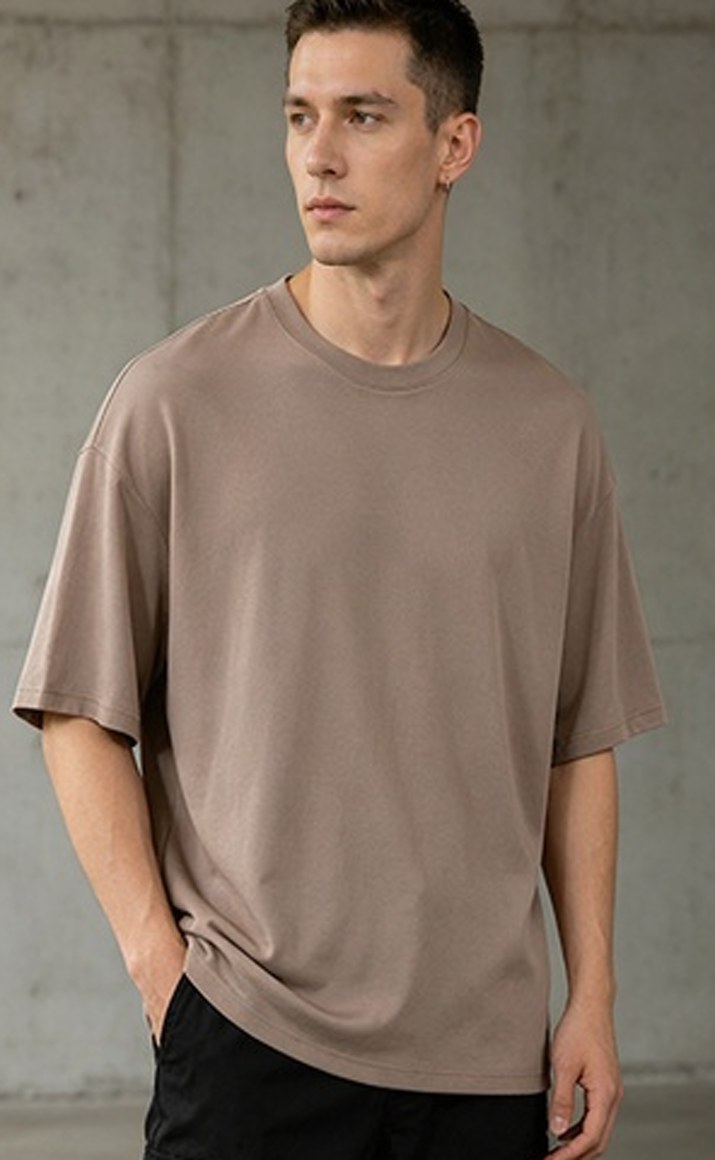
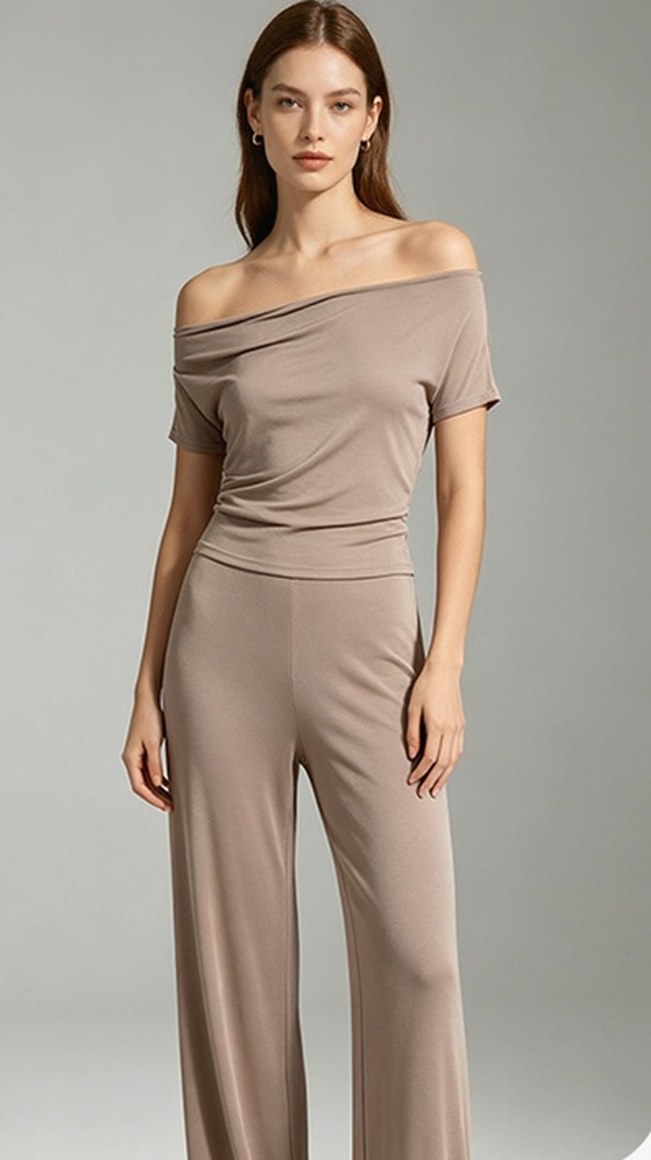
T-shirts and relaxed tees, base layers and second-skin tops, sleepwear and loungewear, summer dresses and wide-leg trousers, off-shoulder and drape-front pieces, and light linings where a soft sheen is wanted. It is also a sensible cloth for travel and resort ranges: it packs flat, needs no iron and dries overnight.
Four things that catch people out on a glossy jersey. Needle marks: a blunt needle or too large a stitch leaves a visible track on the face — use 70–75 and test on a scrap. Ironing: a hot iron glazes bright polyester permanently, and the mark does not come out — press on the reverse, low heat, or steam only. Shade across lots: gloss shows a lot-to-lot difference that matte hides, so keep one lot per garment and state it on the order. Print contrast: on a glossy ground, matt ink shows and gloss ink vanishes — decide before the strike-off, not after.
Ask for the shade card and a price
Send the shade numbers you are choosing between, the quantity in kilos and what you are cutting. We reply within one working day with the price, what is on the dye lot, and a light-plus-dark lab dip so you can judge the cover and the sheen on the shade you actually intend to run.