Fabrics / Sports & activewear · Sun-protection jacquard knit
Sun-Protection Jacquard Knit 130 GSM — 150 cm
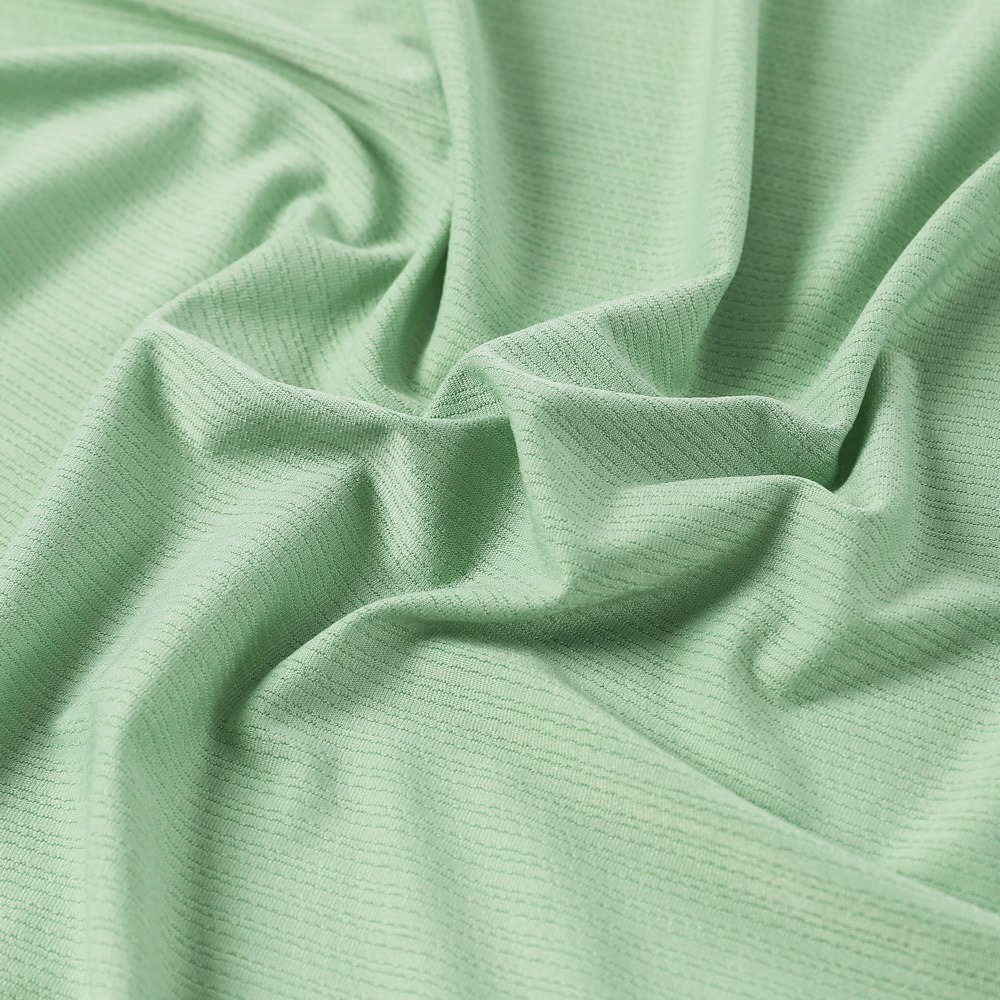
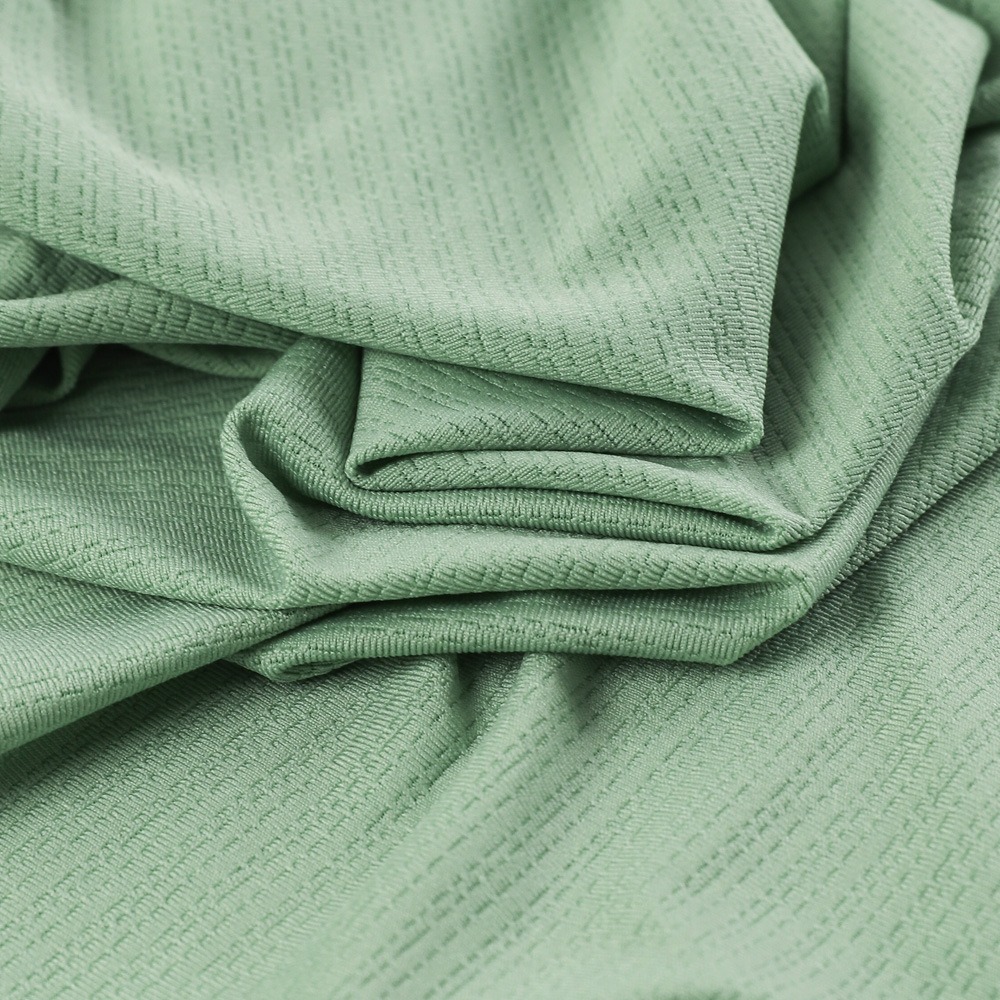
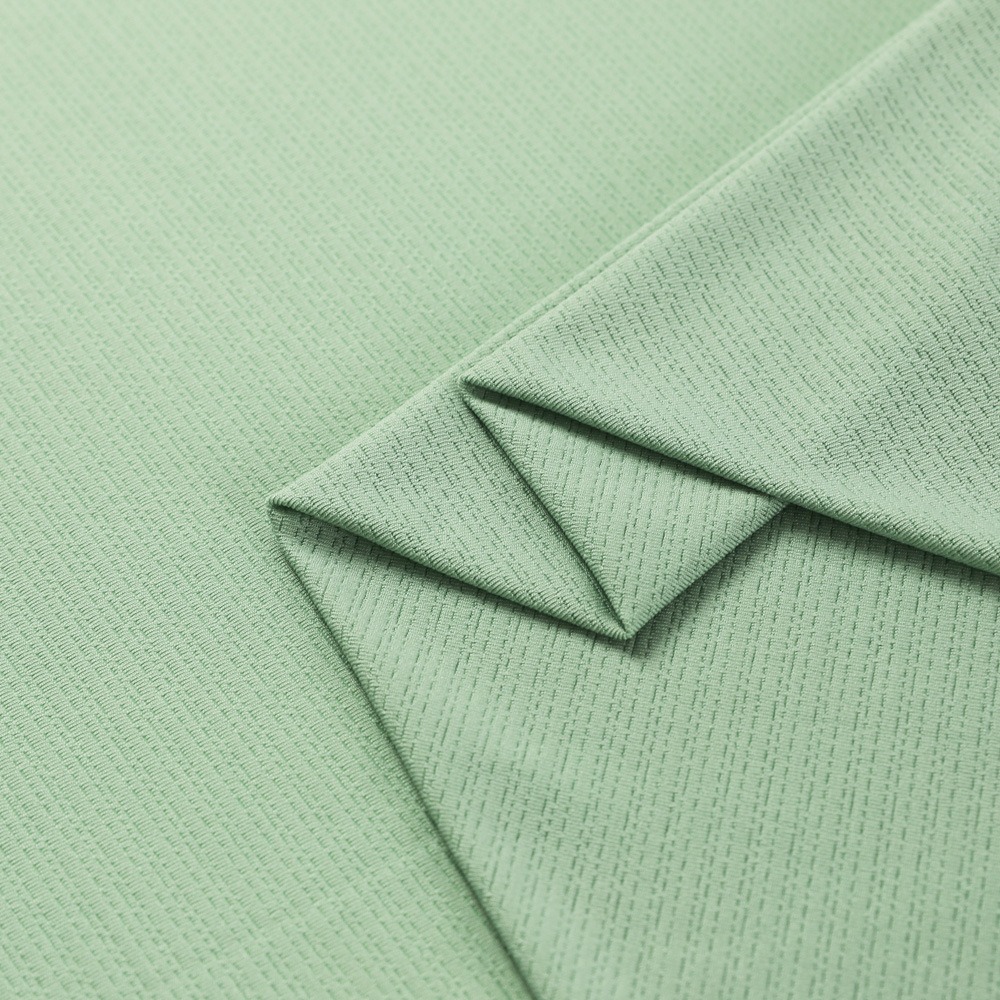
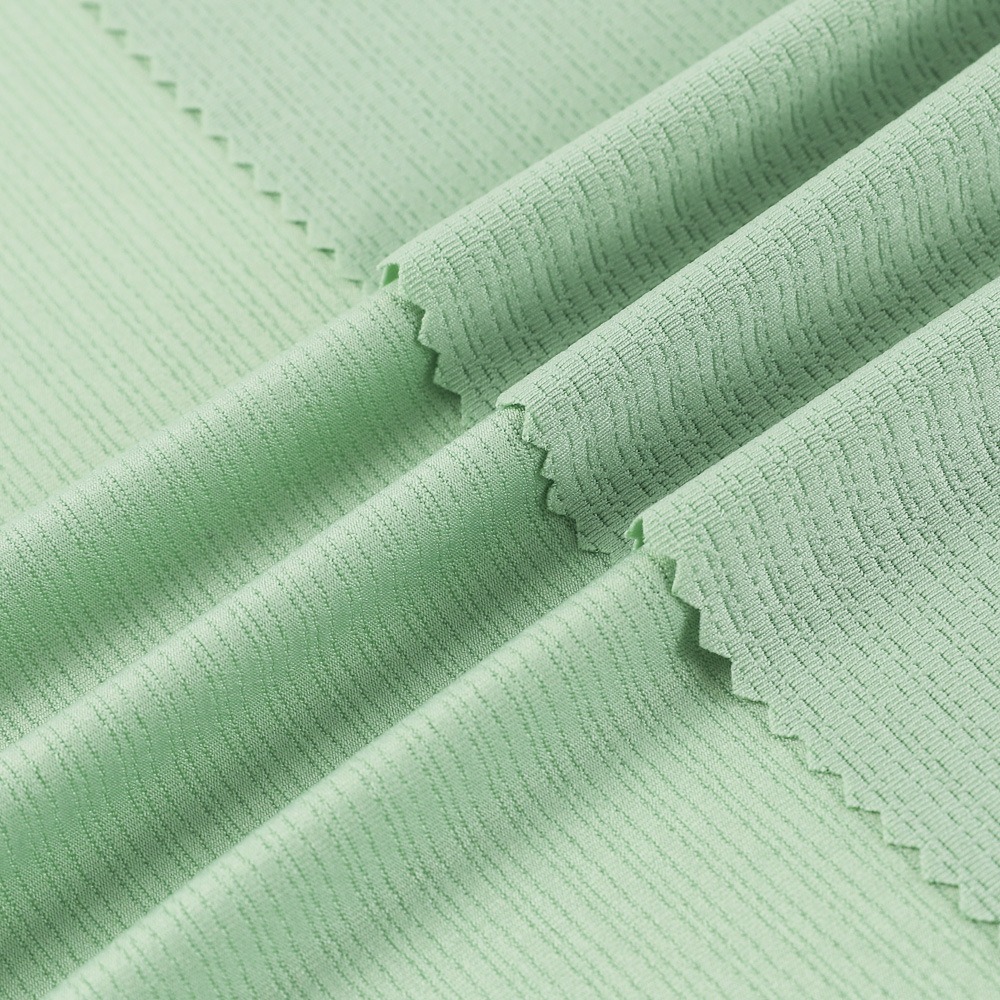
A 130 GSM jacquard knit on a 150 cm width, 95% polyester / 5% spandex. The grid you can see on the surface is not a print and not an emboss: it is knitted in, stitch by stitch, by a jacquard machine that selects needles row by row. That is why it survives washing, folding and a carton in a way a surface effect never does — there is nothing on this cloth to rub off, because the pattern is the cloth.
At 130 GSM this is the lightest quality we knit for the sun-protection side of the range: light enough for a summer shell, a T-shirt, a shirt or kidswear, and still dense enough at the needle to hold its shape on a hanger. The 5% spandex is what keeps a garment this light from growing at the elbow and the hem over a season — it recovers quietly and the cloth goes back to the width it was cut at.
- Composition
- 95% Polyester5% spandex
- Weight
- 130 GSM3.8 oz/yd²
- Width
- 150 cm59 inch, open width
- Yarn count
- Set at orderknitted against 130 GSM on 150 cm
- MOQ
- 300 kg≈ 1,540 running metres
- Colour
- No.001 – No.096quote the shade number
Full specification
| Customization | Available — shade, weight and width confirmed at quotation |
|---|---|
| Knitting technics | Jacquard knit: the grid is formed on the machine by needle selection, row by row. It is not printed, not embossed and not glued on, so it cannot wash off, iron flat or delaminate |
| Composition | 95% polyester + 5% spandex |
| Weight | 130 GSM / 3.8 oz/yd² |
| Width | 150 cm / 59 inch, open width |
| Yarn count | Set at order. Tell us the count you already run and we knit this quality to it against 130 GSM on the 150 cm width; the price above is quoted on our standard count |
| Dyeing | Piece dyed after knitting, so the shade is even from the first metre of the roll to the last |
| Colour | Our stock shade card, quoted by number (No.001–No.096); or dyed to order against an approved lab dip. Ask for the card and we send it with the quotation |
| Stretch | 5% spandex, moderate two-way stretch — enough to stop an elbow or a hem growing, not enough to make the cloth a compression fabric |
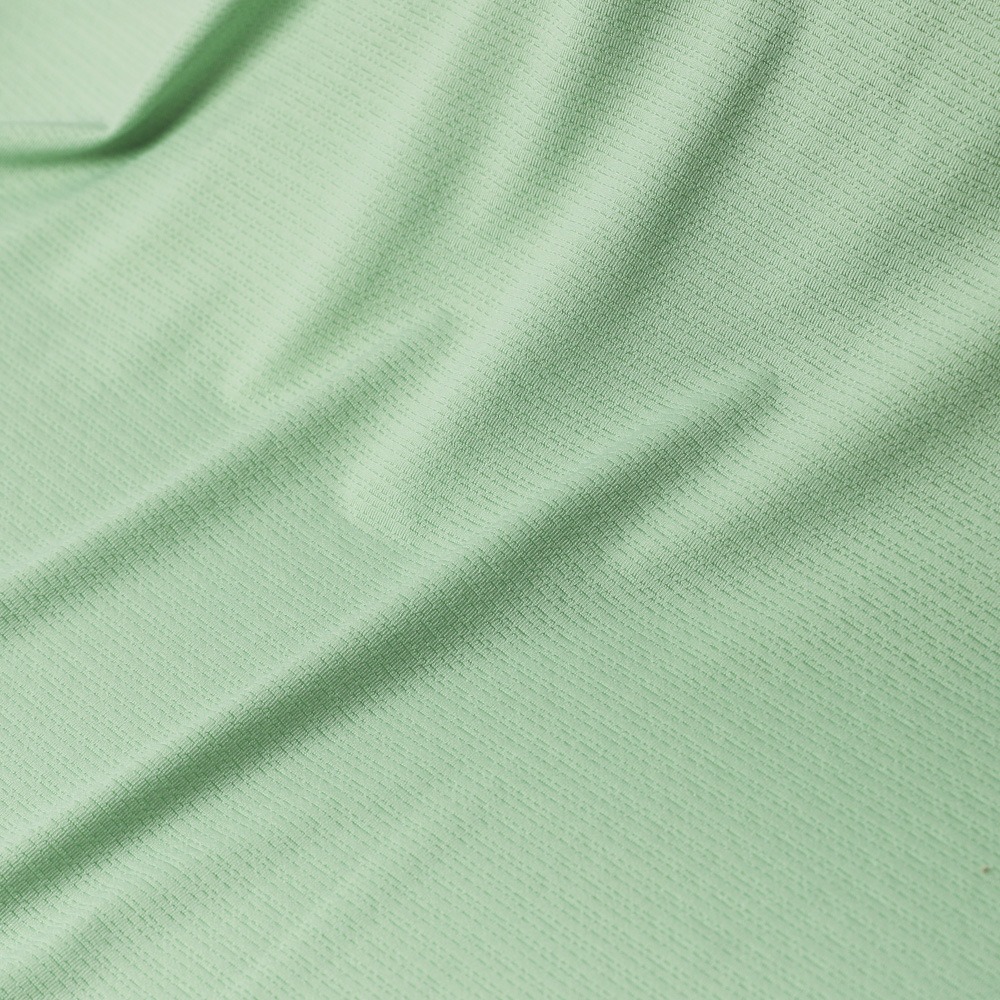
| Surface | A fine raised grid over a smooth ground, matte rather than shiny; the relief catches light at a low angle and reads almost flat at arm’s length |
| Sun | The density of the knit is what does the work, and shade matters more than people expect: the same quality in navy blocks noticeably more UV than in a pale mint. If your label carries a UPF claim, tell us the standard you need — we have the cloth tested rather than quoting a figure we cannot document |
| The polyester base takes sublimation transfer and screen print. A full-coverage photographic print will lose some detail in the relief, so it works best as a solid shade, a tonal effect or a light placement print | |
| Hand | Dry, cool and light; it does not cling the way a fine 100 GSM jersey does, and it hangs away from the body |
| Origin | Shaoxing City, Zhejiang, China |
| MOQ | 300 kg per shade |
| Price | US$ 12.14 / kg (300–999 kg) · US$ 10.69 / kg (1,000 kg+) |
| Yield | ≈ 5.13 running metres per kg at 130 GSM × 150 cm (≈ US$ 2.37 per running metre, ≈ US$ 1.58 per m²) |
| Lead time | Stock shades ship from the dye lot on hand; dyed-to-order shades are confirmed at quotation |
| Packing | Roll-packed, roughly 20 kg per roll, poly bag inside a woven sack |
| Sample | Hanger swatch free; a 1 m cut of a stock shade charged at cost and credited against the bulk order |
| Documents | Invoice, packing list, B/L, certificate of origin; test reports on request |
| Care | Machine wash cold, do not bleach, no fabric softener (it blocks the wicking), dry flat in shade |
A grid that is knitted in, not printed on
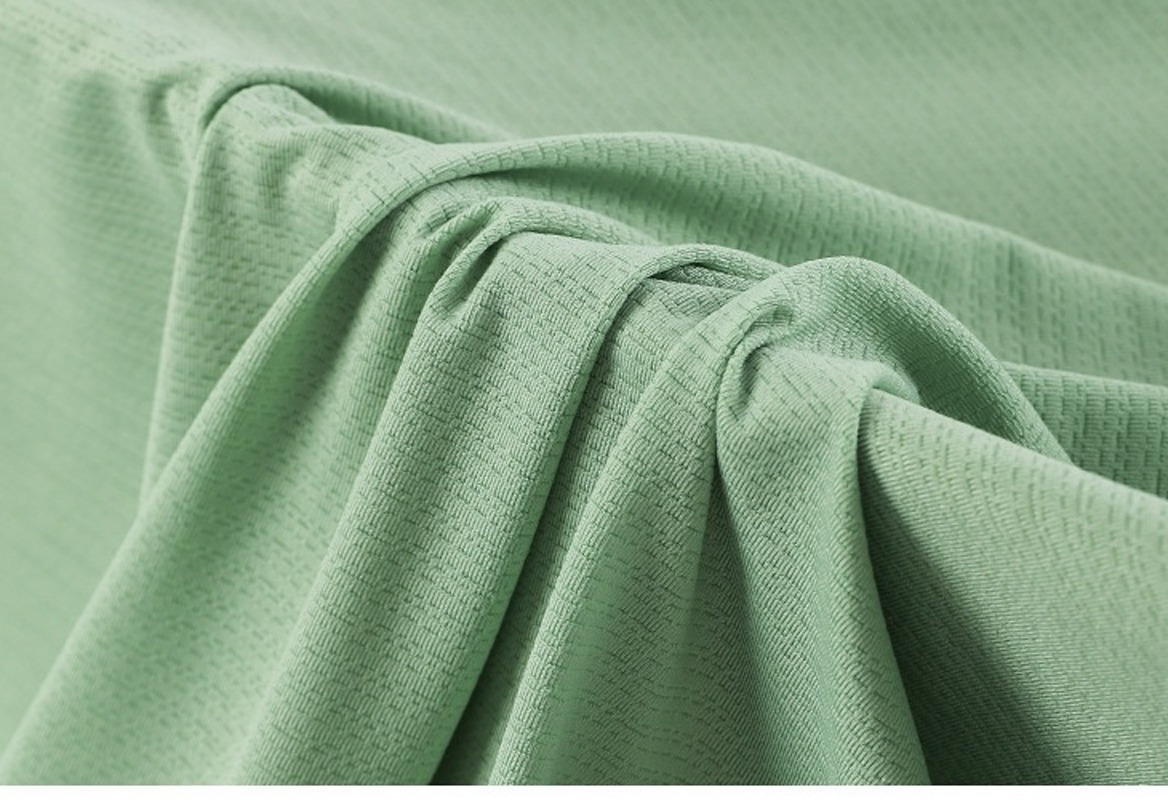
Most “jacquard look” fabric on the market is a plain knit with a print, an emboss or a film on top. It photographs well and it fails in the wash, in the press, or both. This one is built differently: two sets of needles work the same row, so the relief and the ground are the same yarn in the same piece of cloth. You can pull it, boil it, tumble it and iron it — the grid is still there, because there is nowhere for it to go.
Two practical consequences. The reverse is clean. An unlined shell shows its inside at the hem, the cuff and the hood — a printed or coated face gives that away immediately, and this cloth does not. The relief holds air. The raised rows sit away from the skin, so the cloth does not go flat and clammy against the back the way a smooth 100 GSM jersey does on a warm day.
What 130 GSM is good for, and where it stops
Light cloth is a choice with two sides, so here is the honest one. At 130 GSM on a pale shade the cloth is not fully opaque against strong backlight — if your shell has to be a single layer with no lining and no underlayer, put it in a mid or dark shade, or step up to our 200 GSM poly-spandex jersey. In exchange you get a garment that weighs very little, packs into nothing, dries fast and does not feel like a jacket in the sun.
On sun protection, be careful with numbers. What blocks UV is the density of the knit, the shade, and whether a UV absorber goes into the finishing bath — and a pale mint at 130 GSM is at the thin end of the range. We can go two ways: keep the shade light and specify a UV absorber at finishing, or move the style to a deeper shade. Either is a decision to make before the dye lot, not after, so raise it in the enquiry.
Colour, quoted by number
Our stock card runs to 96 shades. Pick the numbers you are choosing between and we dye this base to them; if what you need is not on the card, send a Pantone reference or a physical swatch. Quote the number — No.041, not “the mint” — so nothing is misread between your buying office and our dye house. Ask for the card with your enquiry and we send it, together with a lab dip of your shortlisted shades on this base cloth. MOQ is 300 kg per shade.
The relief changes how a shade reads: on this cloth a mid tone looks a step deeper than the same number on a flat jersey, because the raised rows cast their own small shadow. Judge the lab dip on the jacquard, never off the paper chip.
What a kilo buys you
At 130 GSM on a 150 cm width one kilo gives about 5.13 running metres, so the 300 kg minimum is roughly 1,540 metres — around 1,180 bodies at 1.3 m each. That works out at US$ 2.37 per running metre and US$ 1.58 per m². Because the cloth is light, a kilo goes a long way; budget by the metre for cutting, not by the kilo, and you will not be surprised at the end of the run.
Where it goes
Sun-protective shells and cover-ups, summer T-shirts and polos, camp and resort shirts, kidswear, light track tops and warm-up jackets, linings for a quilted piece, and the panels of a soft-shell where a print would look cheap. It takes sublimation transfer, screen print, bonding and welding, and it cuts and sews like a jersey rather than like a woven. Where it is not the right cloth: a single-layer legging or a structured jacket body — for those we quote a heavier quality rather than talk you into this one.
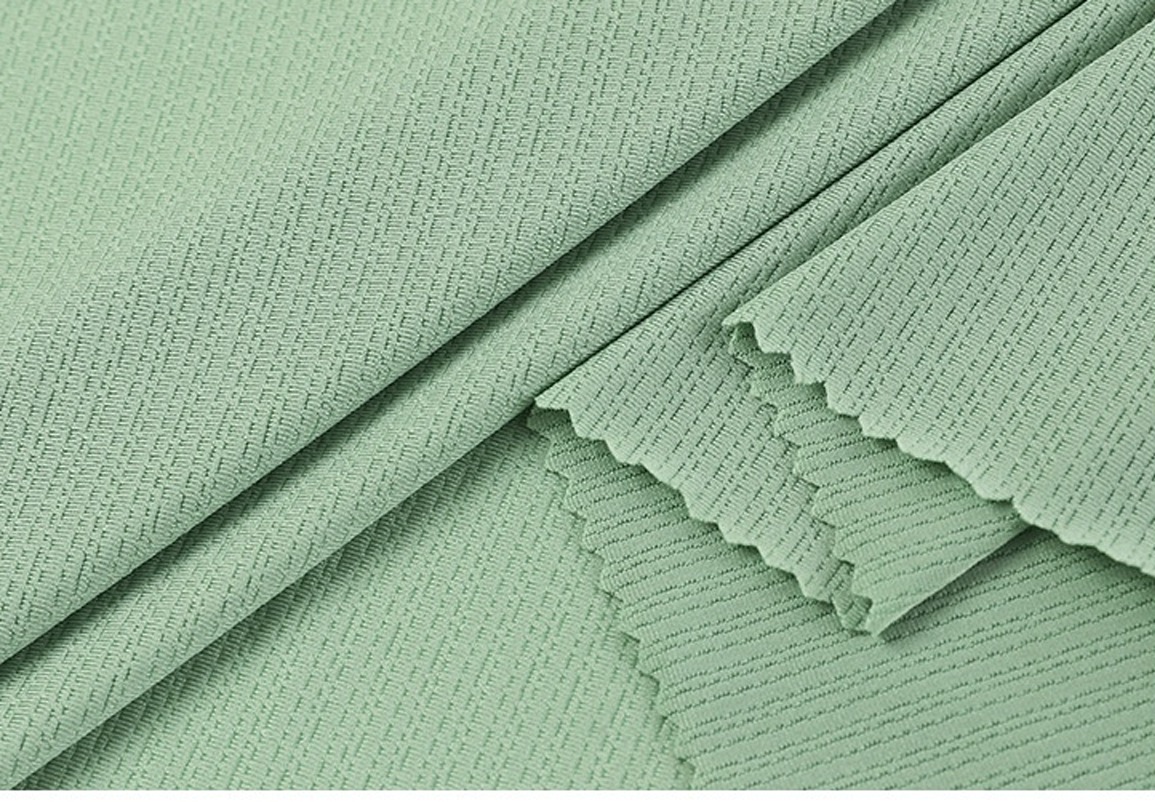
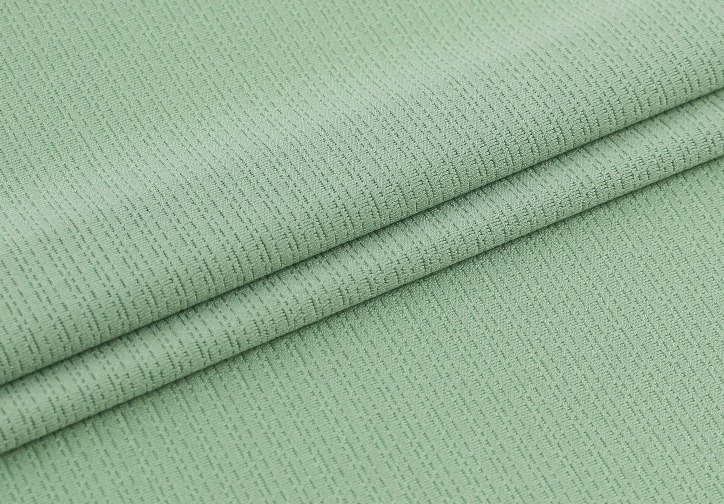
Two things worth being plain about. Jacquard describes how the cloth is knitted, not who makes it — the pattern, the weight and the stretch differ from mill to mill, so check the composition and the GSM on this page rather than the name. And the yarn count is quoted on request rather than fixed: we knit this quality against your count and the 130 GSM weight, and the price above is on our standard count.
Ask for the shade card and a price
Send the shade numbers you are choosing between, the quantity in kilos and the garment you are cutting. We reply within one working day with the price, what is on the dye lot, and a lab dip of your shortlisted shades on this base cloth.