Fabrics / Fleece · Printed plaid
Vintage Plaid Print 150 GSM, 160 cm
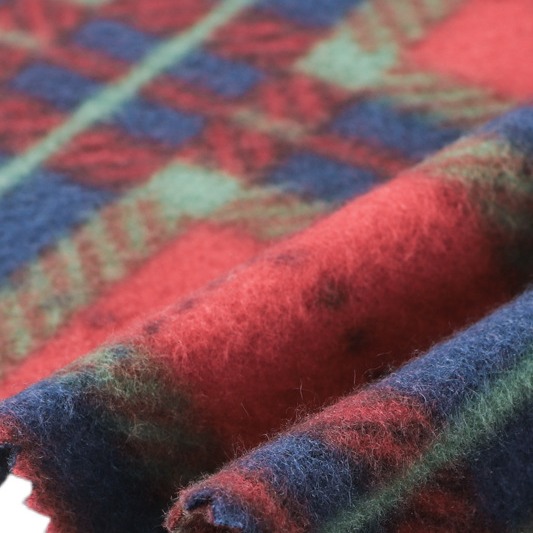
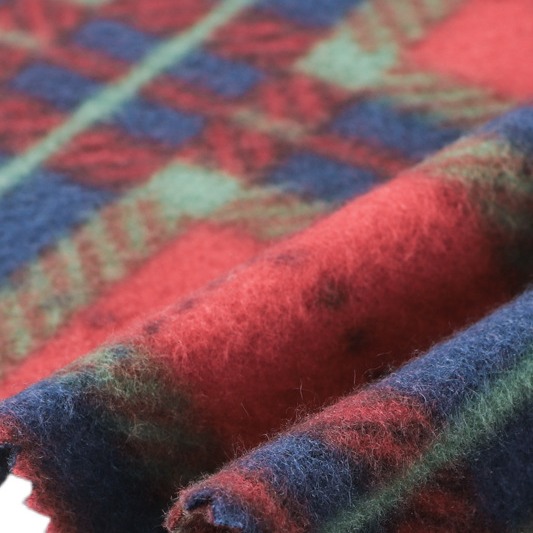
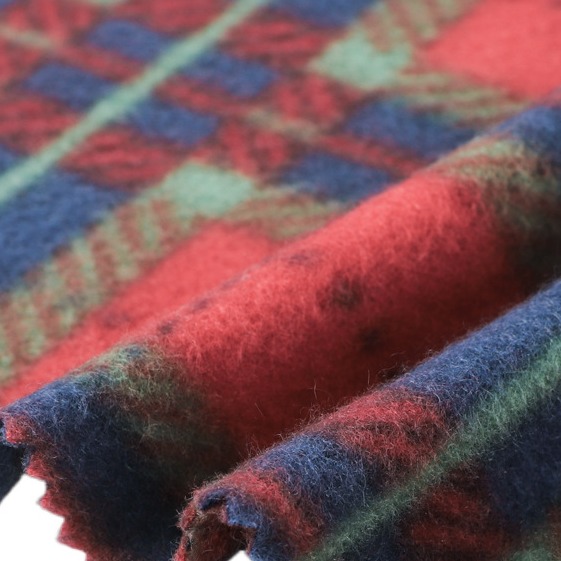
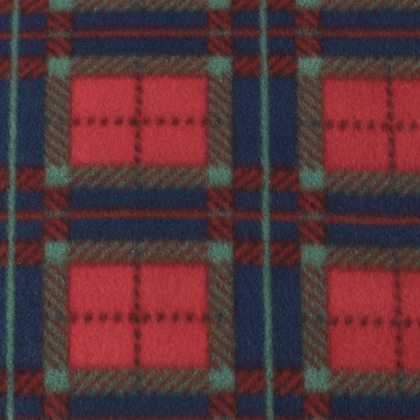
A printed plaid in 100% polyester, 150 GSM on a 160 cm width. The check is a print laid on after weaving — a soft, faded vintage palette that reads as a shirtdress or an outerwear cloth. It is a light woven: a dress cloth, a shirt cloth, a childrenswear cloth, with the easy care of a polyester ground.
- Composition
- 100% polyestereasy-care, colourfast ground
- Weight
- 150 GSM4.4 oz/yd² — a light dress weight
- Width
- 160 cm63 inch — a shirting-adjacent width
- Structure
- Printed plaid (woven)check is printed, not yarn-dyed
- MOQ
- 300 kgper design, dyed to match available
- Colour
- No.001–No.096 or your artworkvintage red check shown
Full specification
| Customization | Available — the check scale, the ground shade and the plaid colours are confirmed at quotation. Send artwork (AI / PDF / a high-res jpg) or pick a stock shade and we print to it. |
|---|---|
| Weaving | A plain-weave polyester cloth, printed after weaving. The ground is a smooth woven polyester; the plaid is a surface print, not a yarn-dyed construction. It is a woven cloth, so it does not stretch and it presses like a shirting. |
| Composition | 100% polyester. No spandex, no natural fibre — which is why it is cheap, colourfast and easy-care, and why it needs the synthetic care (none, really). |
| Yarn | Polyester filament, woven; counts are set at order. |
| Yarn count | Other |
| Weight | 150 GSM / 4.4 oz/yd². A light dress-weight woven — a shirtdress, a shirt, a childrenswear top, a light jacket lining. |
| Width | 160 cm / 63 inch. A shirting-adjacent width; the check repeats across it. |
| Colour | Stock shades quoted by number (No.001–No.096), or printed to your own artwork. On a print the “shade” is really the artwork — send the file and the ground colour and we match both. |
| Print method | Digital direct-to-garment from 300 kg, rotary screen from about one tonne. Digital is the fast, low-volume route (a lab strike-off in days); rotary is the route once the volume justifies the screen cost. Both lay the colour on the polyester face. |
| Hand | Smooth and a little dry from the polyester; the vintage print gives it a soft, faded fashion read rather than a crisp one. |
| Creasing | Polyester creases far less than cotton — it hangs out and travel-friendly, a real advantage over a natural shirting. |
| Shrinkage | Minimal — under 2% on a woven polyester. |
| Pilling | Minimal — a woven polyester surface pills barely at all. |
| Fastness | Wash and light fastness standard. On a print the one to watch is wet rubbing — a bold print on polyester can transfer a little colour when rubbed hard while wet, so keep the care label simple: cool wash, short cycle, wash inside out. |
| Wet strength | Strong — polyester is stronger wet than dry, the opposite of cotton, so it is forgiving to handle wet. |
| Making up | A sharp universal needle; a straight stitch holds because there is no stretch. Press each seam as you go. |
| Cutting | Lay single-ply and match the check across the front and at the pockets; a printed check is forgiving of small shifts but a centred placket wants the check aligned. The 160 cm width is enough for most shirting lays. |
| Pressing | Medium-high is fine — synthetics take heat; press on the right side for a crisp face, or through a cloth to keep it matte. |
| Abrasion | Good for a shirting; the woven polyester surface wears well and the print does not rub off in normal wear. |
| Origin | Shaoxing City, Zhejiang, China |
| MOQ | 300 kg per design / shade. |
| Price | US$ 15.15 / kg (300–999 kg) · US$ 13.77 / kg (1,000 kg+) |
| Yield | ≈ 4.2 running metres per kg at 150 GSM × 160 cm (≈ US$ 3.64 per running metre, ≈ US$ 2.27 per m²). At the 1,000 kg+ price that is ≈ US$ 3.30 per running metre, ≈ US$ 2.07 per m². |
| Lead time | Stock shades ship from the lot on hand; a printed strike-off adds 5–7 days for your approval, then bulk (digital) or screen engraving (rotary) before bulk. |
| Packing | Roll-packed, about 20 kg per roll, poly bag inside a woven sack. |
| Sample | Hanger swatch and shade card free; a printed strike-off against your artwork charged at cost and credited against the bulk order. |
| Documents | Invoice, packing list, B/L, certificate of origin; test reports on request. |
| Care | Machine wash cool (30°C), short cycle, mild detergent, wash inside out, line dry or tumble low; press medium. Polyester — no special care beyond the print’s wet-rub note. |
The check is printed, not yarn-dyed
The thing to know is that this is a print, applied after the cloth is woven. The plaid is a surface design, not a yarn-dyed construction — which is why you can run a custom check or a vintage palette at 300 kg, where a yarn-dyed check would never be worth the yarn dye lot.
The cost of the print is one fastness: wet rubbing. A bold print on polyester, rubbed hard while wet, can transfer a little colour. It is not a fault you see in normal wear — it shows up in a lab rub test and in a careless hot wash — so the care label does the work: cool, short, inside out. The print also does not penetrate: the back is lighter than the face, so this is a one-way cloth.
100% polyester means easy care
One hundred percent polyester means the care story is the opposite of a cotton shirting: it barely creases, it does not shrink, and it keeps its colour through washing. For a shirtdress or a childrens top that gets washed hard, that is a real advantage, and it costs less than a natural-fibre check.
The honest limit is the synthetic hand: a polyester plaid does not have the dry, natural breath of a cotton, and it will not feel like a wool check. For a fashion shirtdress with easy care it is exactly right; for a premium natural hand-feel, that is a different cloth and we will point you to it.
150 GSM is a light dress weight
One hundred and fifty GSM is lighter than a shirting twill and lighter than a denim — it is the band where a printed plaid can be a finished dress or shirt on its own. With a faded vintage palette it reads as a designed cloth rather than a blank one, so it carries a simple silhouette without looking plain.
Spec it for shirtdresses, shirts, childrenswear and light jacket linings, not for anything structured or heavy. The 160 cm width is a shirting-adjacent width, so cost the marker for a wide programme as you would for any narrower cloth.
Three things that go wrong on a printed plaid. Wet rub: wash cool, short, inside out — a bold print on polyester transfers a little colour when rubbed hard while wet. One-way: the print is on the face only, the back is lighter, so cut and place it one-way. Shade: send the artwork and the ground colour, not a paper chip.
Send artwork or pick a shade
Tell us the garment, the artwork and the quantity — or take a stock shade and we will send the shade card and a hanger swatch. For a custom vintage check, send the file and we come back with a strike-off and a price at your volume.
The printed cloths sit next to the Rayon Spandex Floral Print 220 GSM for a heavier floral print, and the Cotton Yarn-Dyed Check 120 GSM for a true yarn-dyed check. The rest of the range is on the fabrics page.