Fabrics / Sports & activewear · Poly-spandex high-stretch mesh
Poly-Spandex High-Stretch Mesh 210 GSM — 160 cm
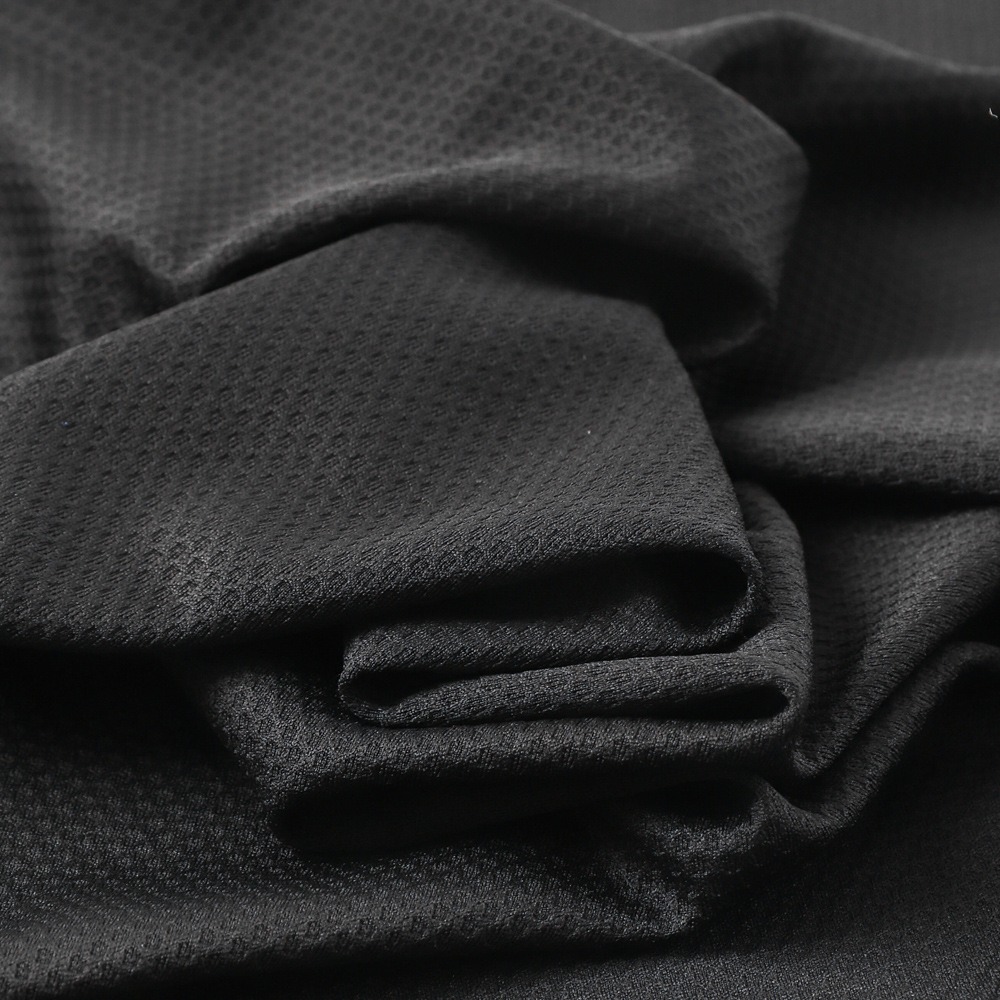
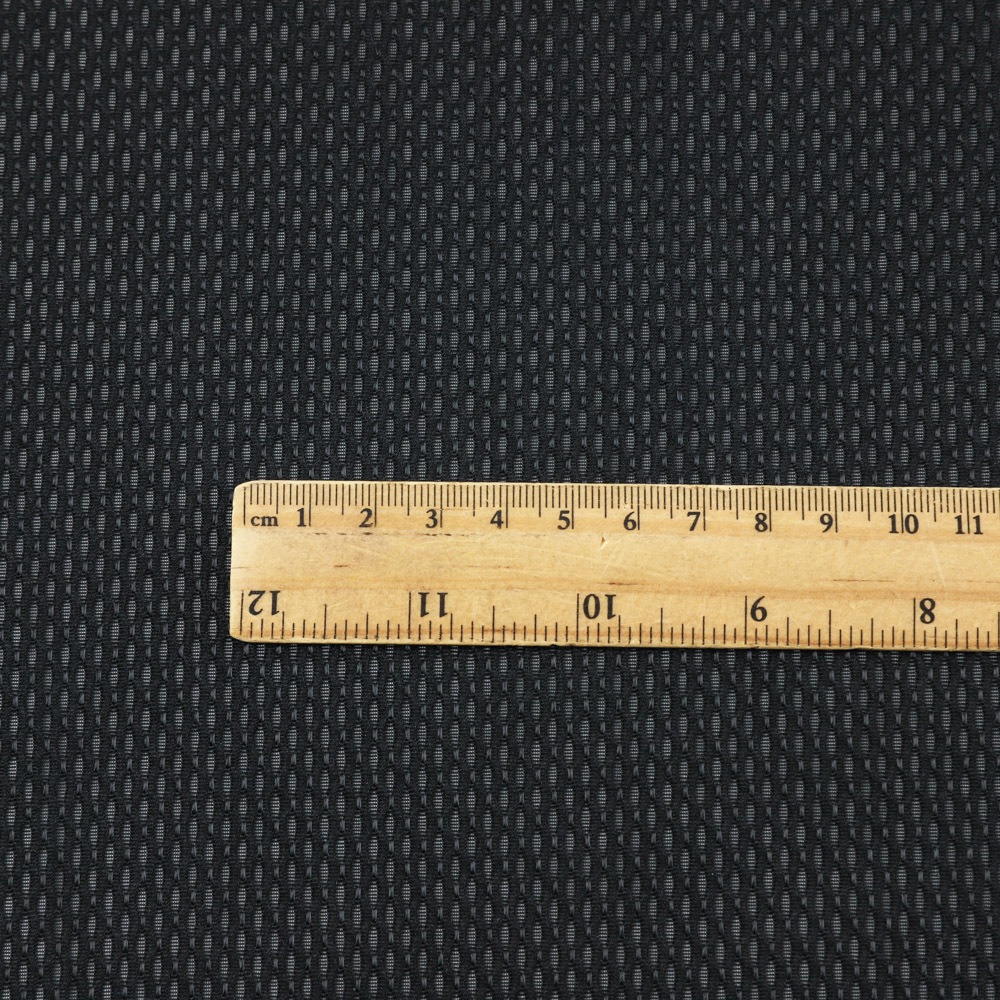
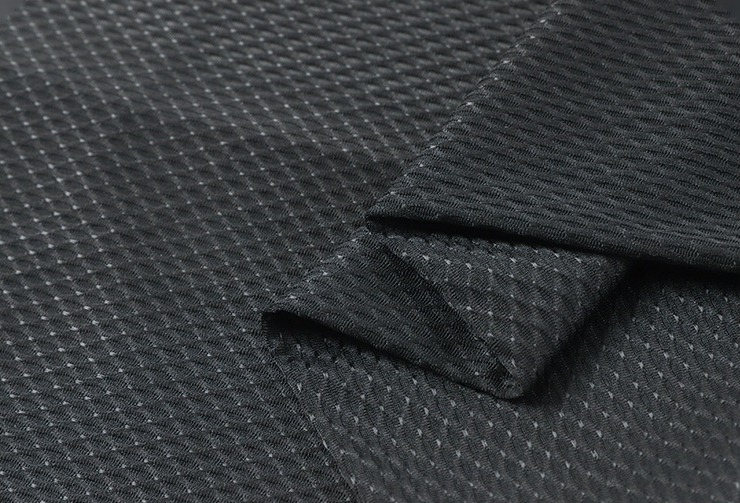
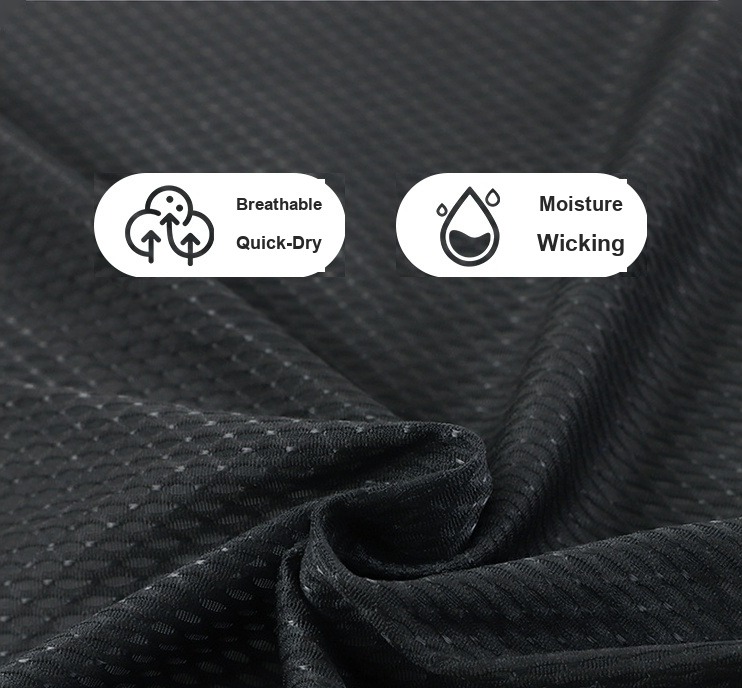
A 210 GSM knitted mesh on a 160 cm width, 87% polyester / 13% spandex. It is the heaviest mesh we knit, and the weight is doing two jobs at once: it makes the cloth opaque enough to wear as the outer layer of a legging or a skirt, and it gives the perforations something to sit in, so the open points read as a fine texture from a metre away and only show up as holes when you look closely.
The 13% spandex is deliberate. A 5% mesh stretches and slowly gives; a 22% mesh is a different cloth at a different price. Thirteen per cent recovers properly from a hip, a knee and a waistband without paying for stretch the garment never uses. And because the base is polyester rather than nylon, it takes a sublimation print — which is the reason most printed activewear mesh is built on this fibre and not on the other.
- Composition
- 87% Polyester13% spandex
- Weight
- 210 GSM6.2 oz/yd²
- Width
- 160 cm63 inch, open width
- Yarn count
- Set at orderbuilt against 210 GSM on 160 cm
- MOQ
- 300 kg≈ 890 running metres
- Colour
- No.001 – No.096quote the shade number
Full specification
| Customization | Available — shade, weight and width confirmed at quotation |
|---|---|
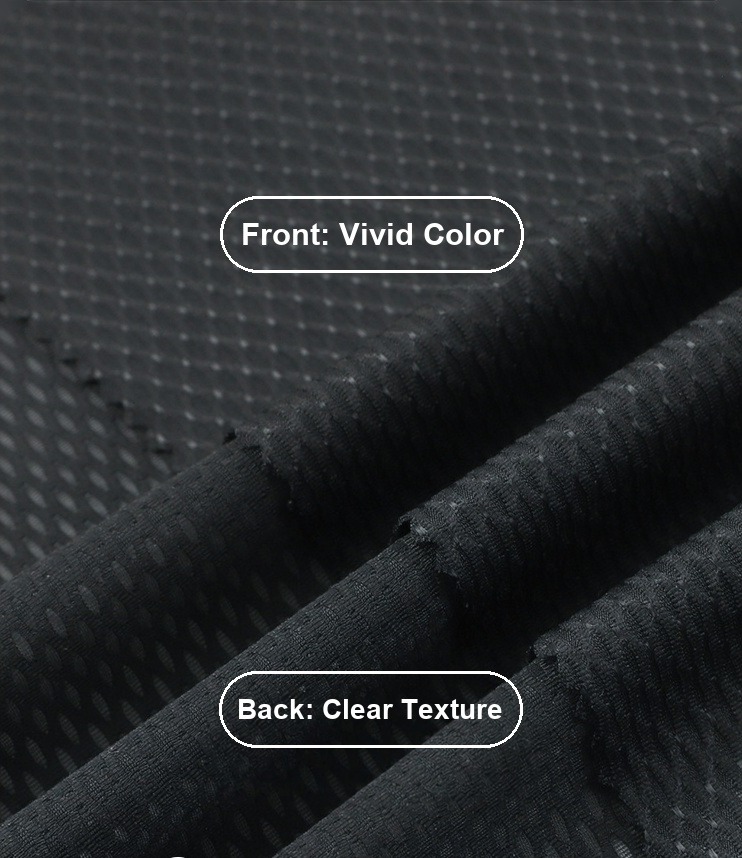
| Knitting technics | Knitted mesh: a fine single-knit ground with the open points formed on the machine, not punched or burnt out afterwards. No melted edge, no dust in the roll, and the reverse side is as clean as the face |
| Composition | 87% polyester + 13% spandex |
| Weight | 210 GSM / 6.2 oz/yd² |
| Width | 160 cm / 63 inch, open width |
| Yarn count | Set at order. Send the count you already run and we knit this quality to it against 210 GSM on the 160 cm width; the price above is quoted on our standard count |
| Dyeing | Piece dyed after knitting, so the shade runs even from the first metre of the roll to the last |
| Colour | Our stock shade card, quoted by number (No.001–No.096); or dyed to order against an approved lab dip. Ask for the card and we send it with the quotation |
| Stretch | 13% spandex, stretch both ways. The middle of our range: more recovery than a 5% mesh, less than the 22% nylon quality — and noticeably less costly than the latter |
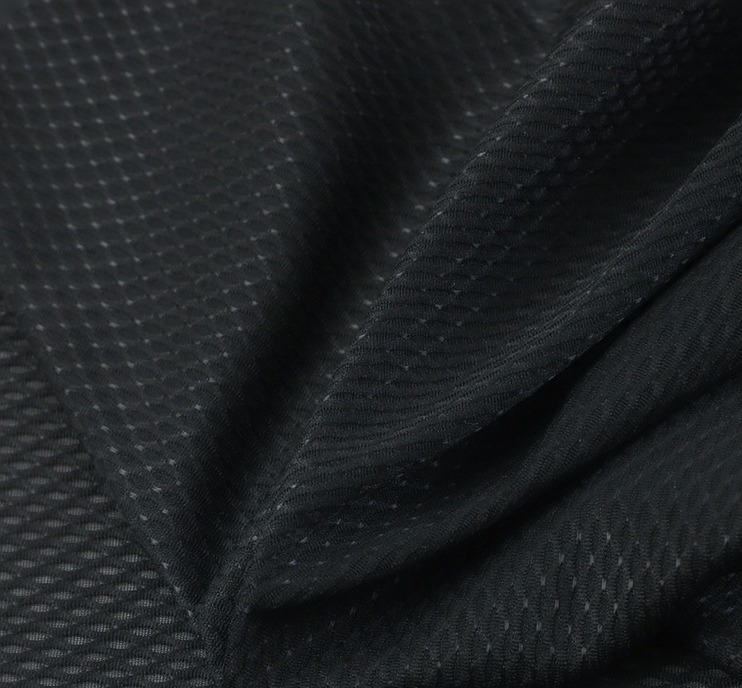
| Surface | Smooth and dense enough to read as a solid black at arm’s length; the open points show as a fine texture rather than as netting |
| The polyester base takes sublimation transfer and screen print. Nylon mesh will not hold a sublimation print the same way, so if the design is printed rather than dyed, start here | |
| Hand | Cool, dry and slightly firm from the weight; it does not cling the way a thin 100 GSM mesh does |
| Origin | Shaoxing City, Zhejiang, China |
| MOQ | 300 kg per shade |
| Price | US$ 12.14 / kg (300–999 kg) · US$ 10.69 / kg (1,000 kg+) |
| Yield | ≈ 2.98 running metres per kg at 210 GSM × 160 cm (≈ US$ 4.07 per running metre, ≈ US$ 2.55 per m²) |
| Lead time | Stock shades ship from the dye lot on hand; dyed-to-order shades are confirmed at quotation |
| Packing | Roll-packed, roughly 20 kg per roll, poly bag inside a woven sack |
| Sample | Hanger swatch free; a 1 m cut of a stock shade charged at cost and credited against the bulk order |
| Documents | Invoice, packing list, B/L, certificate of origin; test reports on request |
| Care | Machine wash cold, do not bleach, no fabric softener (it blocks the wicking), dry flat in shade |
Where 13% sits, and why it is the useful number
We knit three meshes and they are not interchangeable, so it is worth saying plainly what each one is for. A 95/5 polyester-spandex is a light sports mesh: fine for a panel, a lining, a quick-dry tee. A 78/22 nylon-spandex is swimwear cloth: it pulls over a body and comes back hard, and it is priced accordingly. This one, 87/13 at 210 GSM, is the middle and in practice the busiest of the three — it holds a waistband, it holds a knee, and it does both without the garment feeling like a compression piece.
Three things follow from the weight. It is opaque. At 210 GSM you can cut a single-layer legging or a skirt without a lining behind it, which saves a whole second fabric and its labour. It holds a crease-free shape. The mass in the cloth keeps a pleat and a panel edge where a 100 GSM mesh would collapse. It blocks sun. A dense 210 GSM ground over a body gives real shade for a sun shell or a rash guard — if you need a certified UPF rating for your market, say so and we have it tested rather than quoting a figure we cannot document.
Colour, quoted by number
Our stock card runs to 96 shades. Pick the numbers you are choosing between and we dye this base to them; if what you need is not on the card, send a Pantone reference or a physical swatch. Quote the number — No.041, not “the navy” — so nothing is misread between your buying office and our dye house. Ask for the card with your enquiry and we send it, together with a lab dip of your shortlisted shades on this base cloth. MOQ is 300 kg per shade.
Because the ground is fine and dense, dark shades read deeper on this cloth than on an open mesh of the same number — less of the base white comes through. Judge the lab dip on the mesh, never off the paper chip.
What a kilo buys you
At 210 GSM on a 160 cm width one kilo gives about 2.98 running metres, so the 300 kg minimum is roughly 890 metres — around 680 bodies at 1.3 m each. That works out at US$ 4.07 per running metre and US$ 2.55 per m². Compare it against a lighter mesh by the metre, not by the kilo: a 150 GSM cloth gives you two and a half times the metres per kilo, but you then pay for a lining to go behind it.
Where it goes
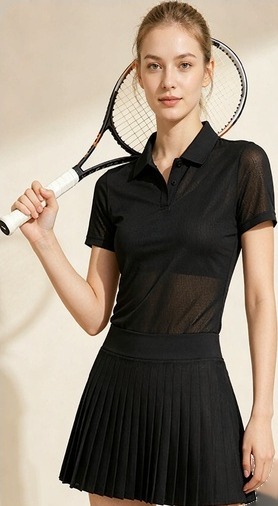
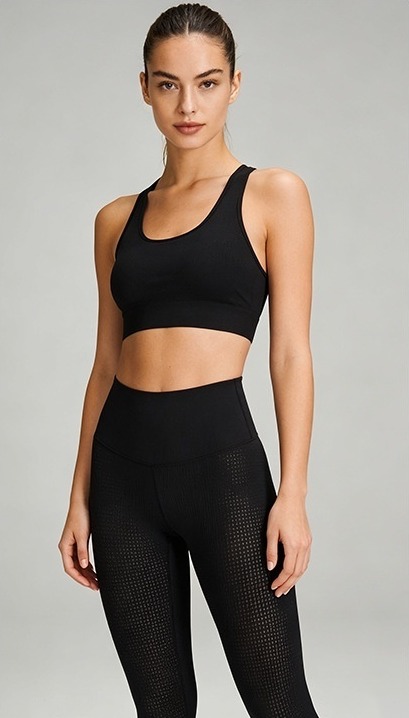
Yoga and studio wear, running and cycling panels, tennis and golf polos, leggings and skirts cut single-layer, sports bras and crop tops, sun-protective shells and rash guards, and mesh uppers on footwear. It takes sublimation transfer and screen print, bonds and welds, and it can be cut on a laser without the edge curling. Where it is not the right cloth: swimwear that has to survive chlorine season after season (take the 22% nylon quality), or a style that needs a matte cotton hand — for those we quote something else rather than talk you into this one.
Two things worth being plain about. Mesh describes the structure and high stretch describes the spandex content — neither is a brand, and the numbers differ from mill to mill, so check the composition on the page rather than the name. And the yarn count is quoted on request rather than fixed: we knit this quality against your count and the 210 GSM weight, and the price above is on our standard count.
Ask for the shade card and a price
Send the shade numbers you are choosing between, the quantity in kilos and the garment you are cutting. We reply within one working day with the price, what is on the dye lot, and a lab dip of your shortlisted shades on this base cloth.