Fabrics / Fashion & occasion · Twisted two-tone knit
Twisted Two-Tone Knit 236 GSM — 165 cm
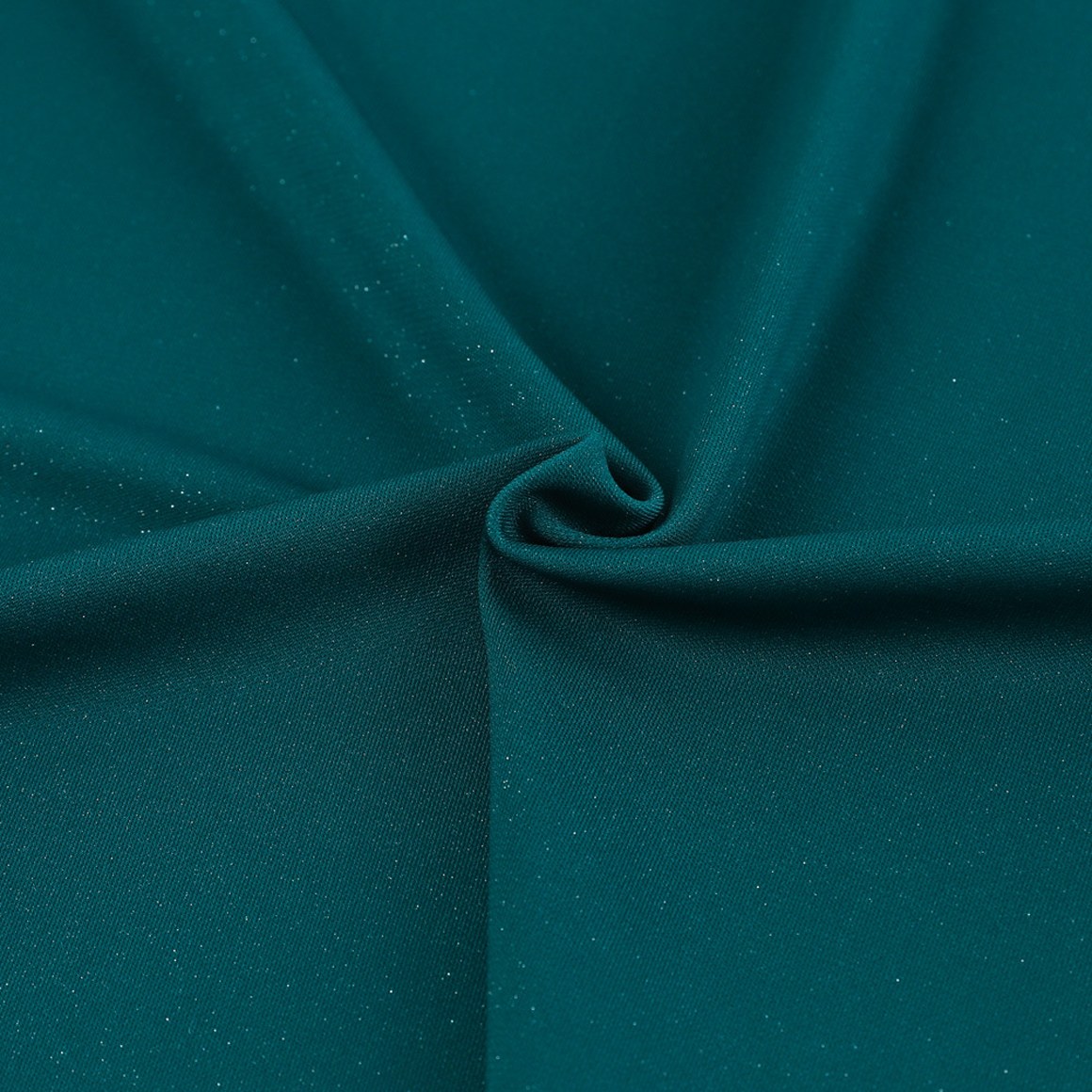
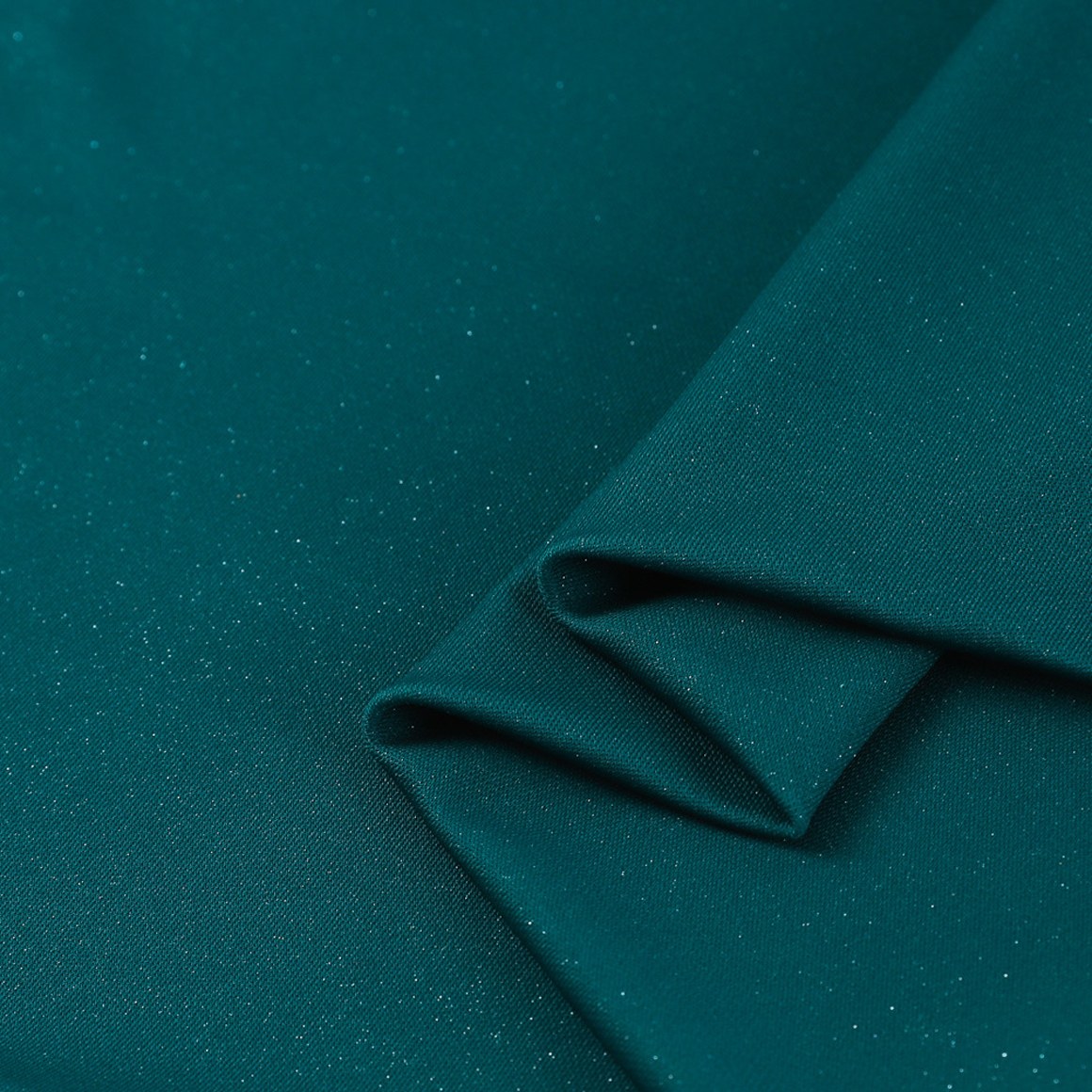
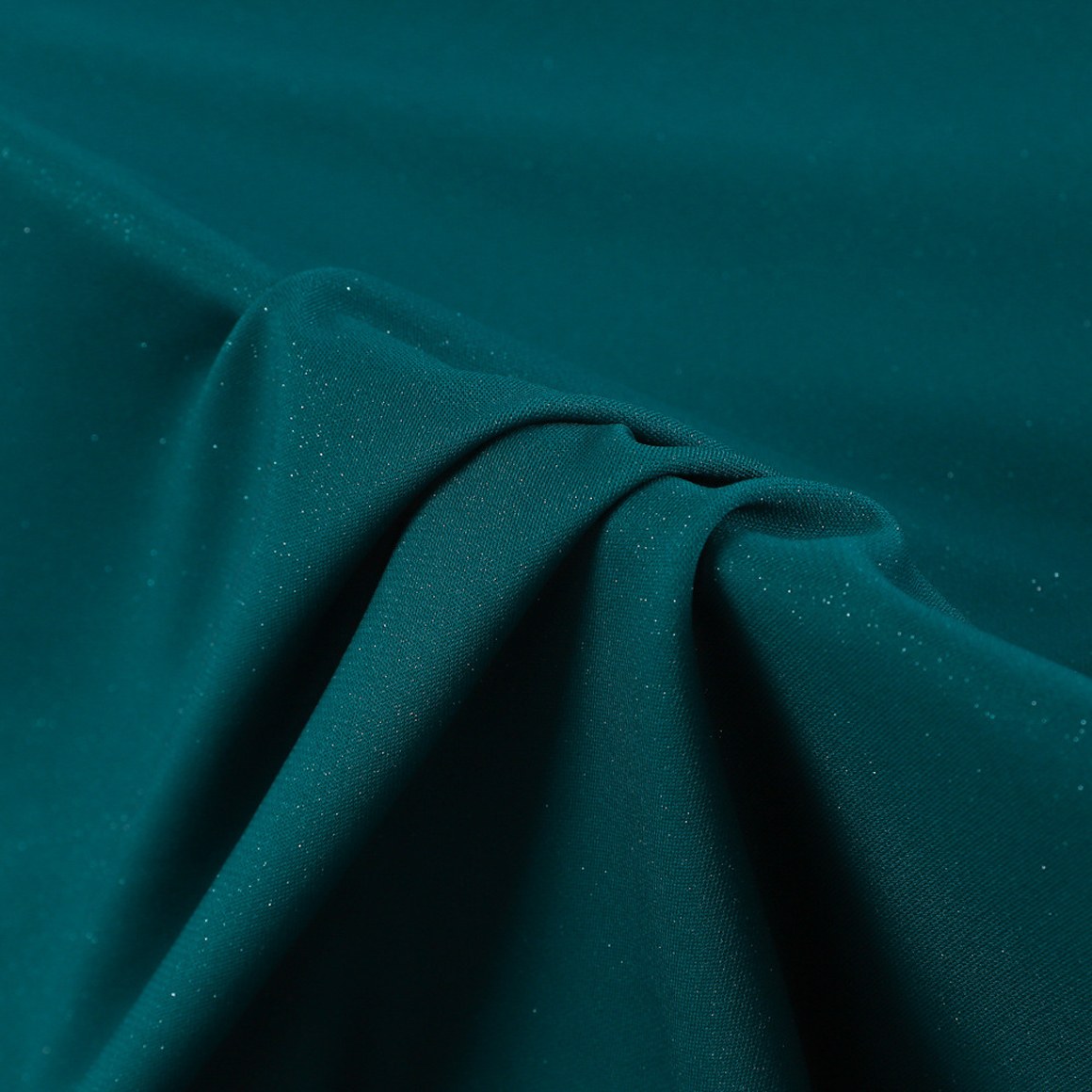
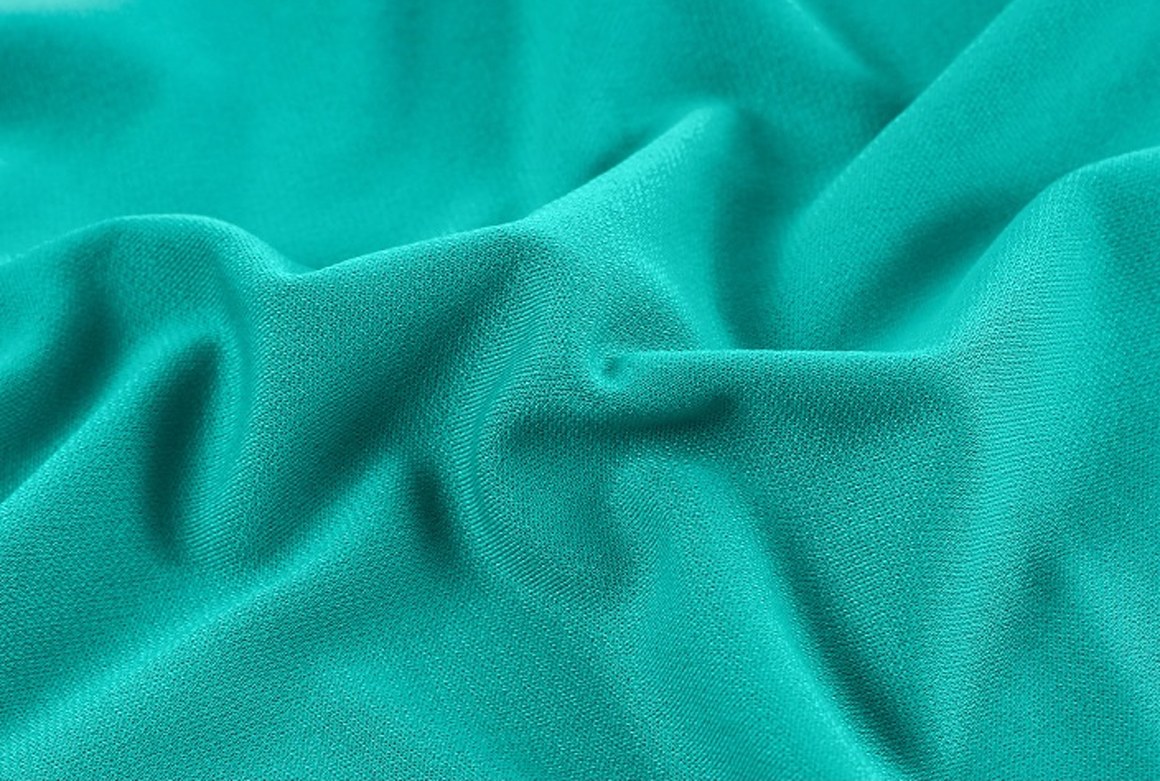
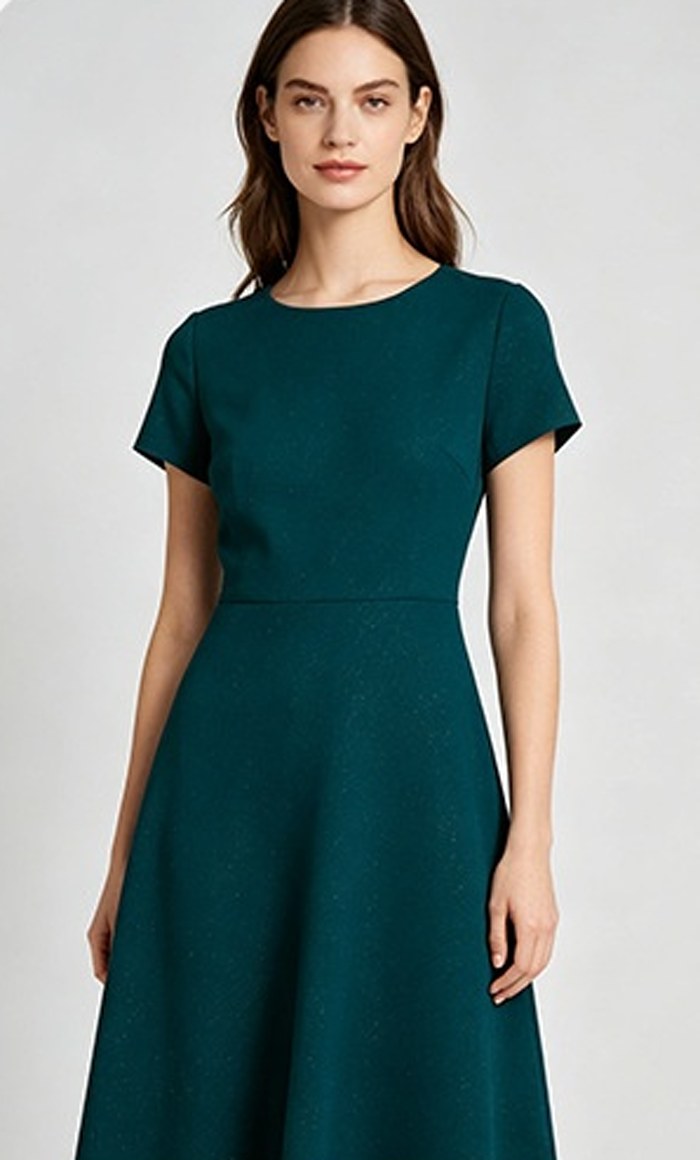
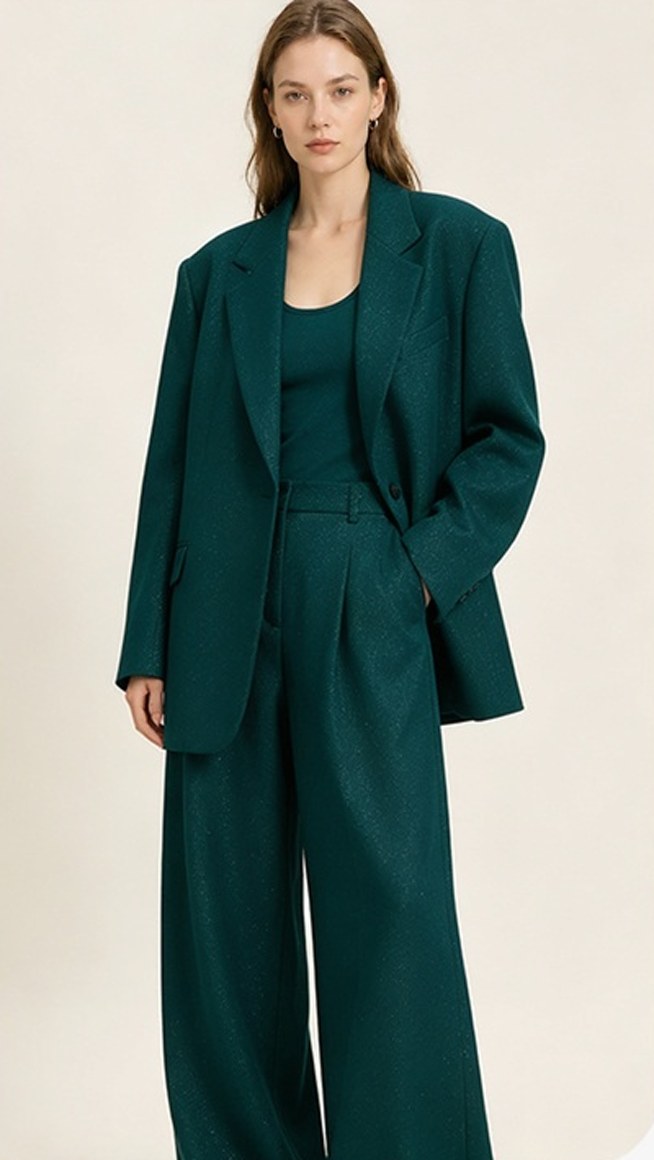
A 236 GSM twisted knit on a 165 cm width, 95% polyester / 5% spandex, with a different tone on each face. This is not a sports cloth that happens to look good — it is dress fabric. The pieces in the photographs below are an A-line dress and a soft blazer with a wide-leg trouser, and that is the range it is built for.
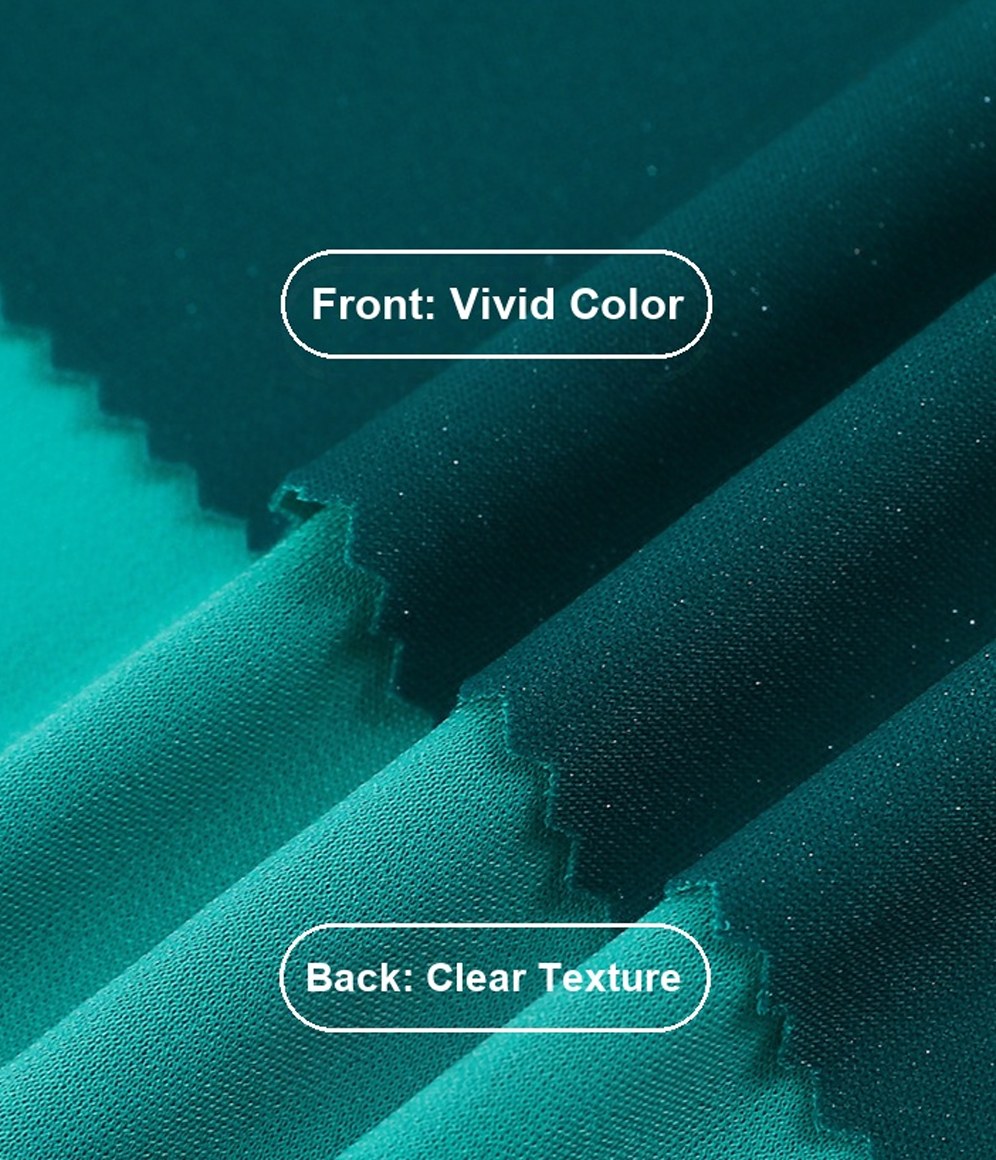
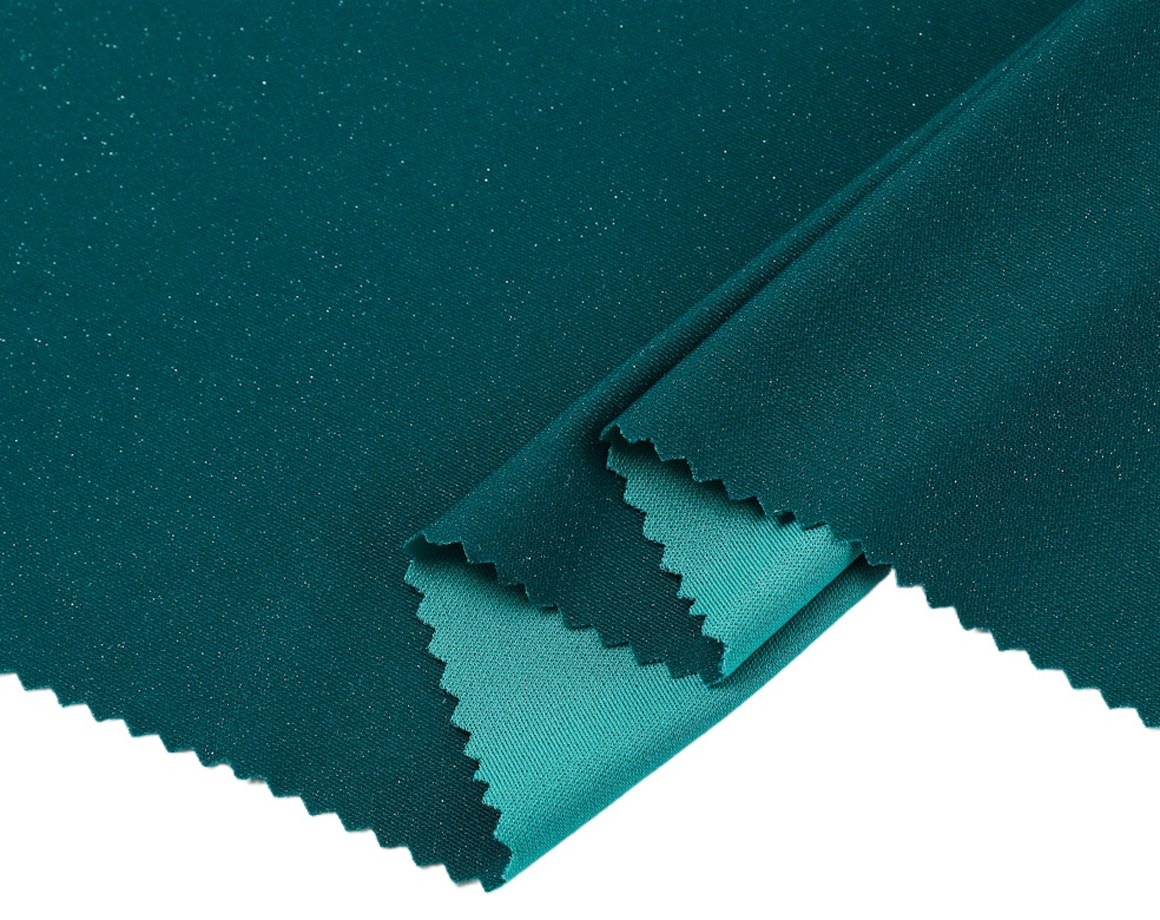
Two things make it worth its price. The yarn is twisted before it is knitted, which gives the surface a fine diagonal grain and a dry hand instead of the flat, slightly slick look of ordinary filament. And the cloth is two-tone by dye, not by print: two yarns that take dye at different rates go through one bath, so the face comes out deep and the reverse comes out clear. Turn a cuff and you get a second colour, not a raw edge.
- Composition
- 95% Polyester5% spandex
- Weight
- 236 GSM7.0 oz/yd²
- Width
- 165 cm65 inch, open width
- Faces
- Two-tonedifferent shade on each side
- MOQ
- 300 kg≈ 770 running metres
- Colour
- No.001 – No.096quote the shade number
Full specification
| Customization | Available — shade, weight, width and the two-tone pairing confirmed at quotation |
|---|---|
| Knitting technics | Twisted two-tone knit. Two yarns that take dye at different rates are knitted together and dyed in one bath, so the face and the reverse come out in two tones of the same colour family. Nothing is printed, coated or bonded to get the effect |
| Composition | 95% polyester + 5% spandex |
| Yarn | Twisted yarn, not flat filament. The twist is what gives the surface its fine diagonal grain and its dry, slightly grainy hand — a flat yarn at the same weight reads smoother and flatter |
| Weight | 236 GSM / 7.0 oz/yd² — one of the heavier qualities we knit, which is what lets an A-line skirt or a soft blazer hold its line |
| Width | 165 cm / 65 inch, open width |
| Yarn count | Set at order. Send the count you already run and we knit this quality to it against 236 GSM on the 165 cm width; the price above is on our standard count |
| Two-tone | The face and the reverse differ in tone, not in quality: both sides are finished, both take wear. Where a garment turns back — a cuff, a lapel, a hem slit, an open collar — the second tone shows as a design line rather than a raw edge |
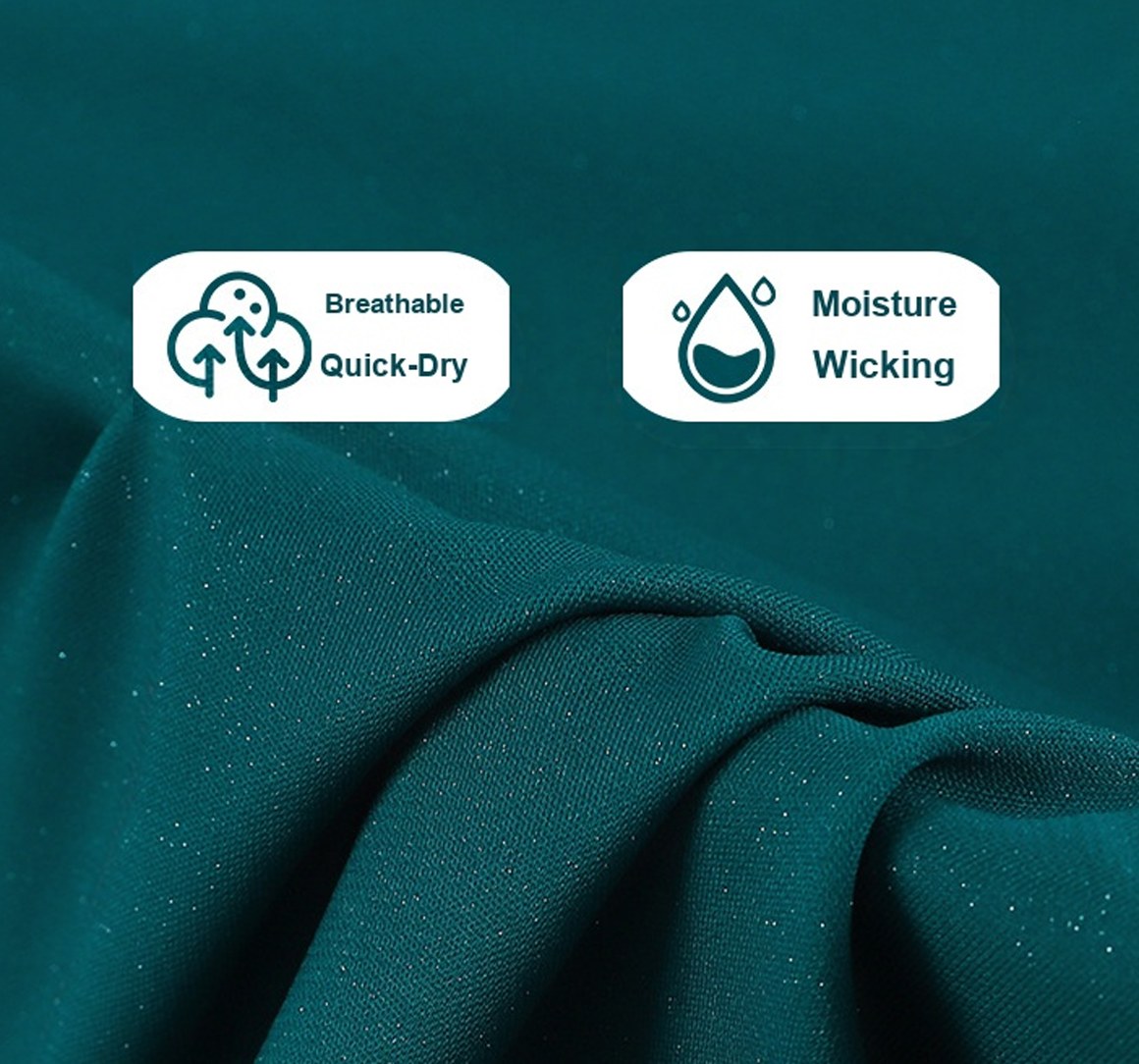
| Hand | Dry and cool with a light grain, and enough body to stand away from the body at 236 GSM. It does not cling and it does not collapse |
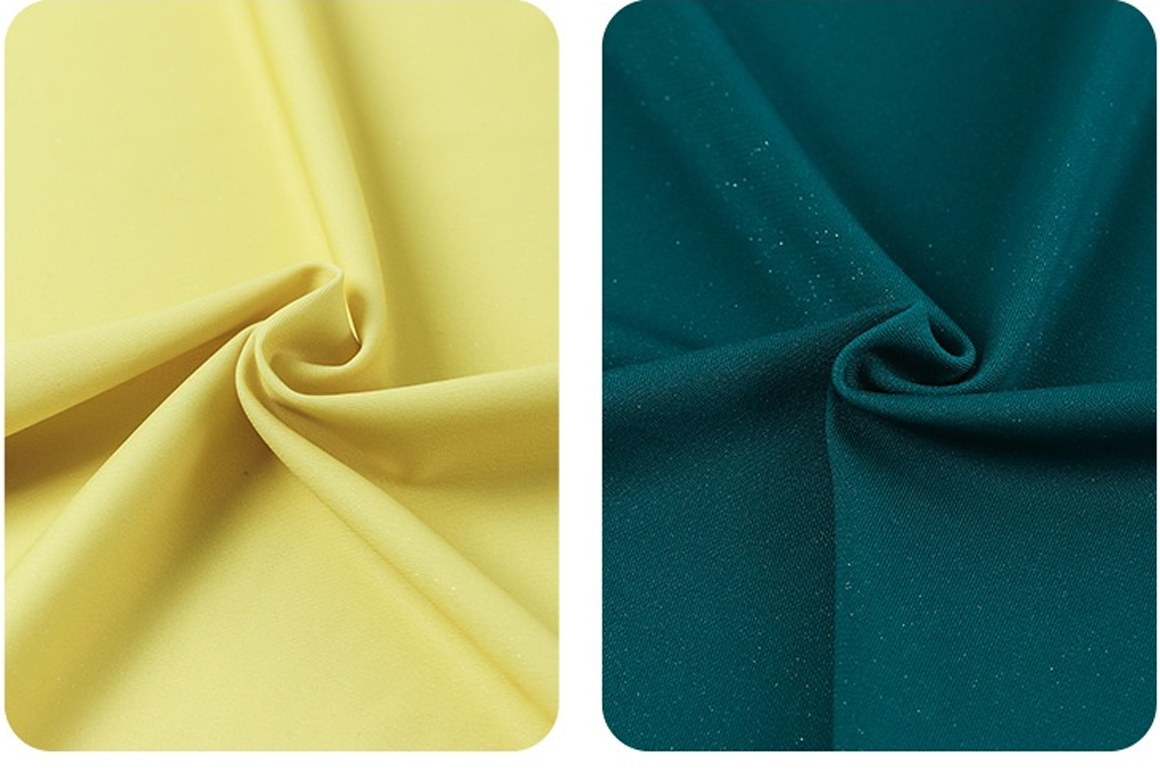
| Drape | Fluid but weighted: it falls in long folds instead of bunching, which is why the dresses and the wide-leg trouser in the photographs can be cut from it |
| Stretch | 5% spandex, moderate two-way — enough for a fitted bodice, a sleeve head and a seated wearer, not a compression cloth |
| Sheen | A fine, close sheen that moves with the light rather than a flat lustre. Under stage or evening light it reads as depth in the colour; in daylight it reads almost matte |
| Dyeing | Piece dyed after knitting, one bath for both faces |
| Colour | Our stock shade card, quoted by number (No.001–No.096); or dyed to order against an approved lab dip. Because the two faces are a dye effect, a new shade is developed as a pair — send the reference and we come back with both tones |
| Stability | Polyester filament with spandex, so shrinkage in the wash is low and the garment keeps the measurement it was cut at |
| Pilling | There is no short staple in the yarn to work loose and ball up |
| Takes sublimation transfer and screen print, but the two-tone face is usually the point — a full print covers it. If you do print, print the panel flat and keep the design off the highest-stretch zones | |
| Making up | Sew with a fine needle and a light tension; a heavy seam flattens the grain and shows on the face. Line it where the garment will be worn against the skin for long periods |
| Origin | Shaoxing City, Zhejiang, China |
| MOQ | 300 kg per shade |
| Price | US$ 20.08 / kg (300–999 kg) · US$ 18.36 / kg (1,000 kg+) |
| Yield | ≈ 2.57 running metres per kg at 236 GSM × 165 cm (≈ US$ 7.82 per running metre, ≈ US$ 4.74 per m²) |
| Lead time | Stock shades ship from the dye lot on hand; dyed-to-order shades are confirmed at quotation |
| Packing | Roll-packed, roughly 20 kg per roll, poly bag inside a woven sack |
| Sample | Hanger swatch free; a 1 m cut of a stock shade charged at cost and credited against the bulk order |
| Documents | Invoice, packing list, B/L, certificate of origin; test reports on request |
| Care | Machine wash cold, do not bleach, no fabric softener, cool iron on the reverse, dry flat in shade |
How one cloth comes out in two colours
The mechanism is in the dye bath, not on the surface. Two polyester yarns with different dye uptake are knitted into the two faces of the cloth, and both go through the same bath at the same time. One takes the dye deeply, the other takes it lightly, so the faces finish a tone apart in the same colour family. Because it is a dye effect, it cannot peel, crack or wear off the way a bonded or coated two-tone can — and because both sides are the same yarn family, both sides take wear the same way.
What that gives a pattern maker is a free second colour at every reversal: the inside of a cuff, the underside of a collar, the facing of a hem slit, the turn-back of a sleeve. Handled deliberately, it reads as a design line. Handled carelessly, it reads as a mistake — so decide at the pattern stage which reversals you want to show.
Why the twist matters
Flat filament polyester is smooth and slightly glassy; at 236 GSM it can also read heavy and lifeless. Twisting the yarn first puts a small, regular spiral into every thread, and that does three things: the surface picks up a fine diagonal grain, the hand goes from slick to dry, and the cloth gains body without gaining stiffness. It is also the reason the sheen here is close and quiet rather than a flat lustre across the panel.
The weight does the rest. At 236 GSM there is enough substance for an A-line skirt to swing instead of clinging, and enough for a soft blazer to hold a shoulder line without a heavy interlining. The same weight in a flat yarn would hang heavier and look cheaper under light.
Colour, quoted by number
Our stock card runs to 96 shades. Because the two faces are a dye effect, a new shade is developed as a pair — send the reference or a physical swatch and we come back with both tones for your approval before anything is knitted. Quote the number — No.041, not “the green” — so nothing is misread between your buying office and our dye house. Ask for the card with your enquiry. MOQ is 300 kg per shade.
What a kilo buys you
At 236 GSM on a 165 cm width one kilo gives about 2.57 running metres, so the 300 kg minimum is roughly 770 metres — around 590 bodies at 1.3 m each. That works out at US$ 7.82 per running metre and US$ 4.74 per m². It is the dearest cloth on this site, and the reason is on the roll: two yarn qualities, an extra twisting step, and a heavier greige than anything else we knit. If your range cannot carry it, say so and we will quote a single-tone quality at a lower weight instead of talking you into this one.
Where it goes
Dresses and A-line skirts, soft tailoring and wide-leg trousers, occasion and evening pieces, stage and performance wear, statement outerwear, and interior or costume work where a two-tone face is the point. Where it is not the right cloth: a technical sports garment (the weight and the two tones both work against it), or anything that has to be seam-sealed or bonded.
Two things worth being plain about. The two-tone effect is a dye result, so the exact gap between the two faces is set at the lab dip and cannot be held to a number on a screen — approve it on a physical swatch. And the yarn count is set at order rather than fixed: send the count you already run and we knit to it against 236 GSM on the 165 cm width.
Ask for the shade card and a price
Send the shade numbers you are choosing between, the quantity in kilos and the garment you are cutting. We reply within one working day with the price, what is on the dye lot, and a lab dip of your shortlisted shades showing both faces.