Fabrics / Sports & activewear · Knit birdseye mesh
Knit Birdseye Mesh 160 GSM — 180 cm
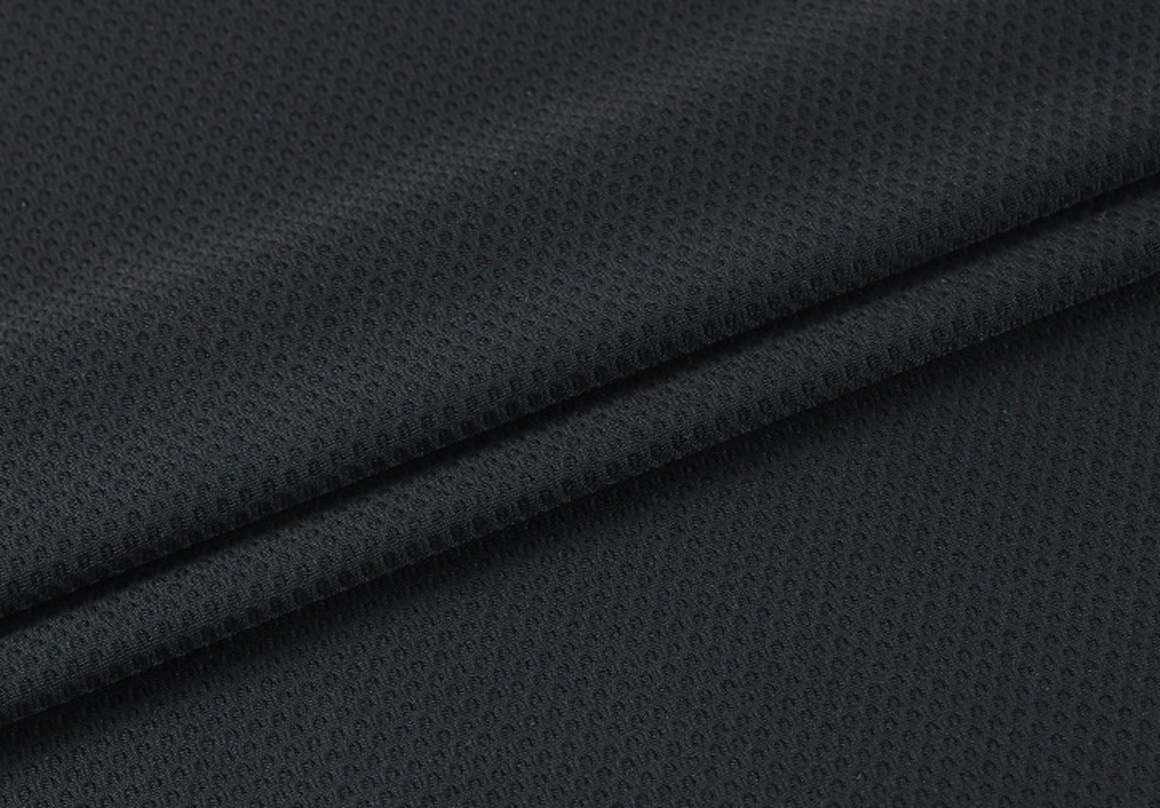
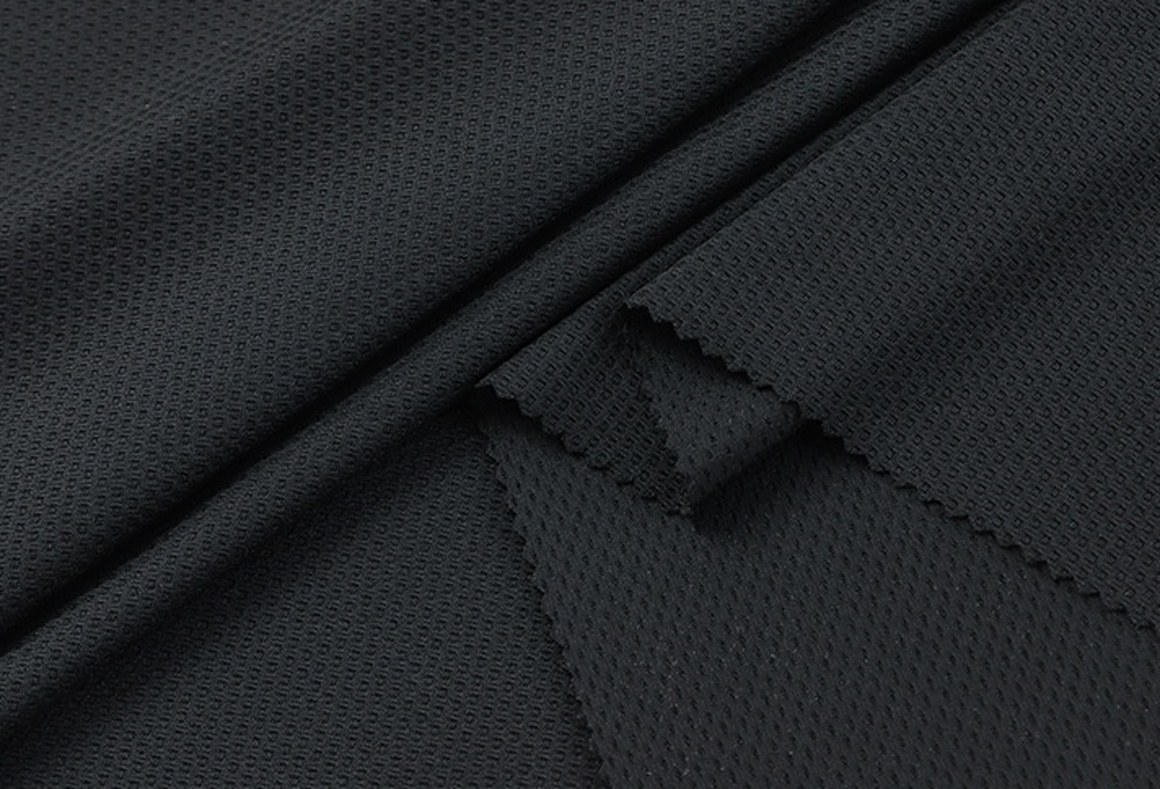
A 160 GSM birdseye mesh on a 180 cm width, 100% polyester, with the eyelets knitted into the structure rather than punched through it. It is the cloth behind polo shirts, sun-protection layers, kids’ tees and uniform tops that have to breathe in a hot climate and still look tidy at a front desk — small holes, not sportswear mesh.
Two things decide whether this quality is right for you. It is a single material with no spandex, which buys stability and a clean sublimation print but gives up stretch. And it is 180 cm wide, which sounds like a detail until you lay a marker out: on this width you fit three 60 cm tee bodies across, where a 160 cm roll fits two. That is a cutting-room saving, not a marketing line, and it is worth checking against your own pattern before you compare prices per kilo.
- Composition
- 100% Polyesterno spandex — stable, not elastic
- Weight
- 160 GSM4.7 oz/yd²
- Width
- 180 cm71 inch, open width
- Surface
- Mini birdseyeknitted eyelets, not punched or coated
- MOQ
- 300 kg≈ 1,040 running metres
- Colour
- No.001 – No.096quote the shade number
Full specification
| Customization | Available — shade, weight and width confirmed at quotation |
|---|---|
| Knitting technics | Double-knit (interlock family) weft knit on a circular machine, with the eyelets formed by tuck stitches at fixed intervals. The holes are a loop structure, not a mechanical punch, a laser burn or a coating — so they do not fray at the rim, they do not close up when the cloth is stretched, and they cannot wash shut |
| Composition | 100% polyester |
| Yarn | Polyester filament, spun to our standard count and set at 160 GSM on the 180 cm width. This is a single-material cloth on purpose — see the two sections below on sublimation print and on recyclability |
| Weight | 160 GSM / 4.7 oz/yd² — a light mesh, cut for tees, polo shirts, sun-protection layers and uniform tops rather than for outerwear |
| Width | 180 cm / 71 inch, open width — 20 cm wider than a standard 160 cm roll, and that difference is worth real money in the cutting room (see below) |
| Yarn count | Set at order. Send the count you already run and we knit to it against 160 GSM on the 180 cm width; the price above is on our standard count |
| Stretch | None. There is no spandex in this quality, so it does not stretch and does not need to: what it gives instead is dimensional stability, a flat surface that stays flat through washing, and a cloth that can take a high-temperature print or a hot wash without losing its memory |
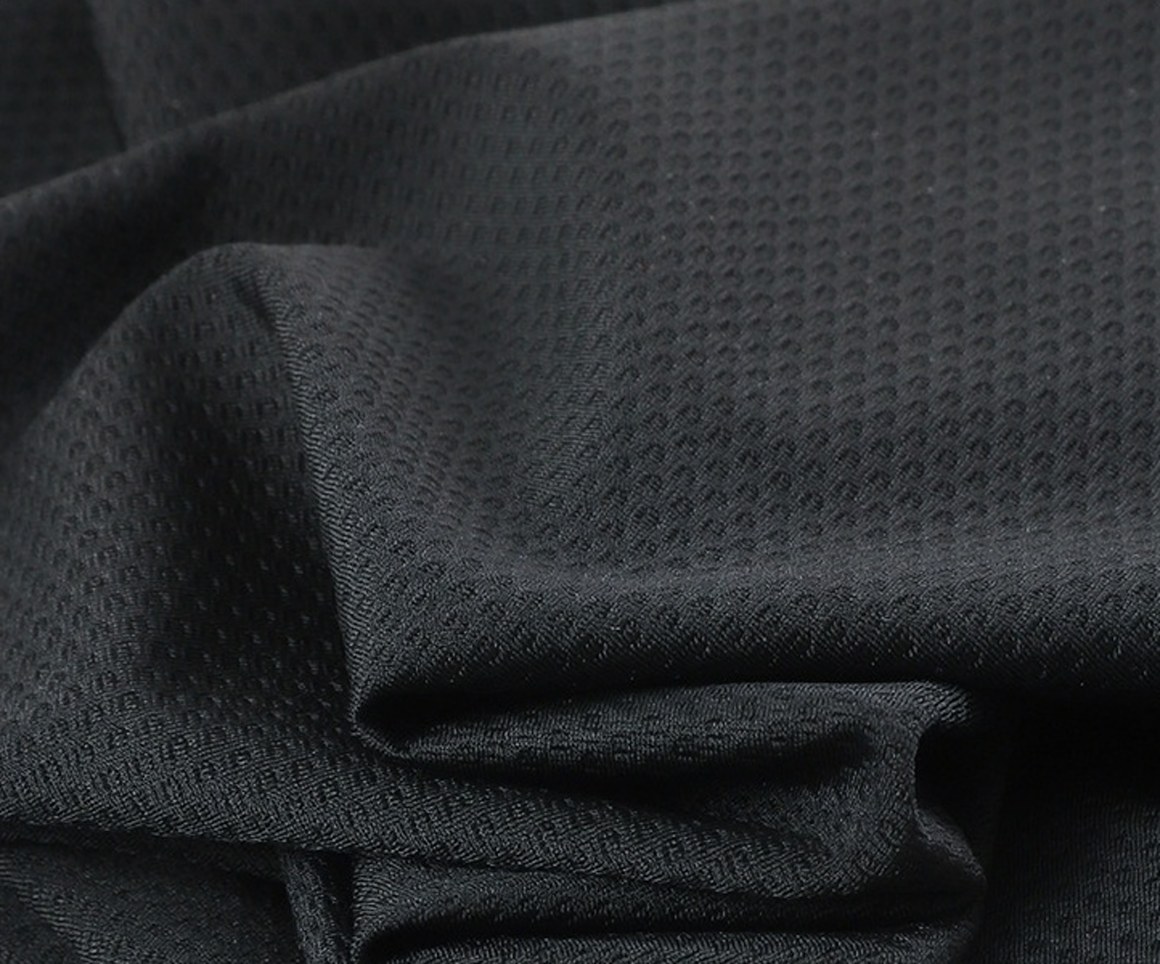
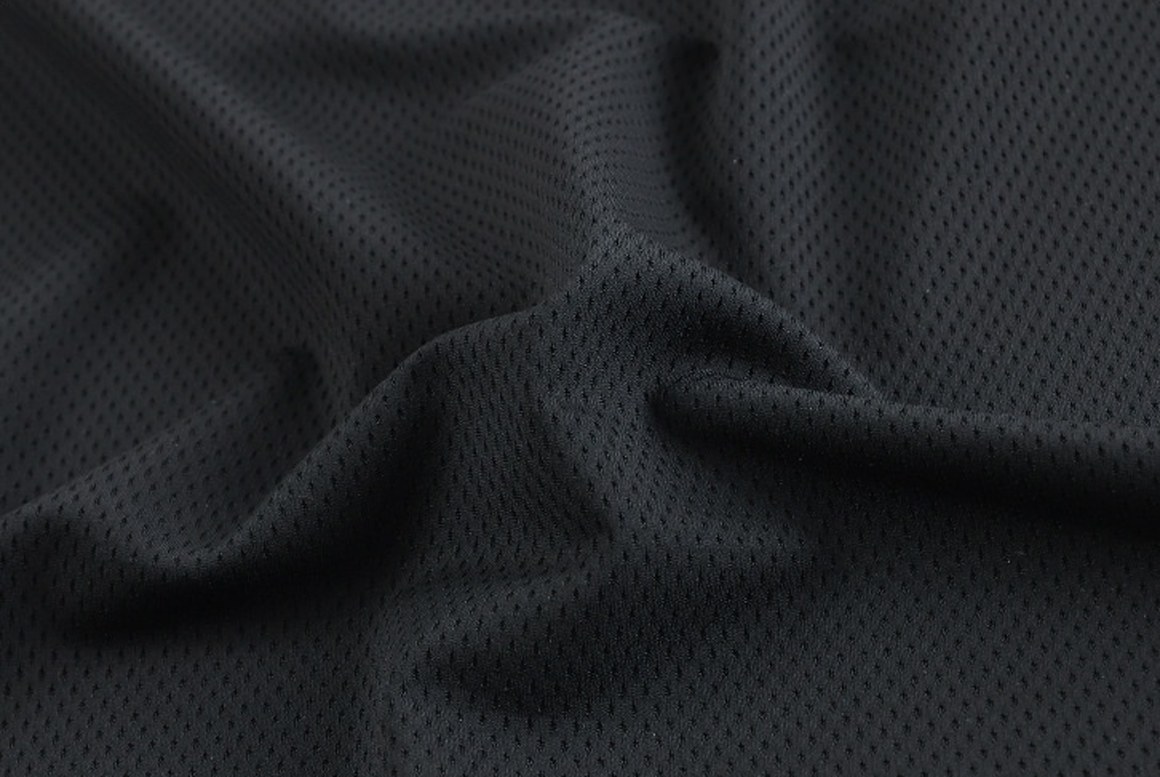
| Structure | Mini birdseye: eyelets around 1–1.5 mm, spaced tightly. From a metre away it reads as a plain knitted face; at arm’s length the holes are visible. Standard birdseye runs 2–3 mm and reads as sportswear from across a room — this one is the quieter option for polo shirts, kidswear and uniform programmes |
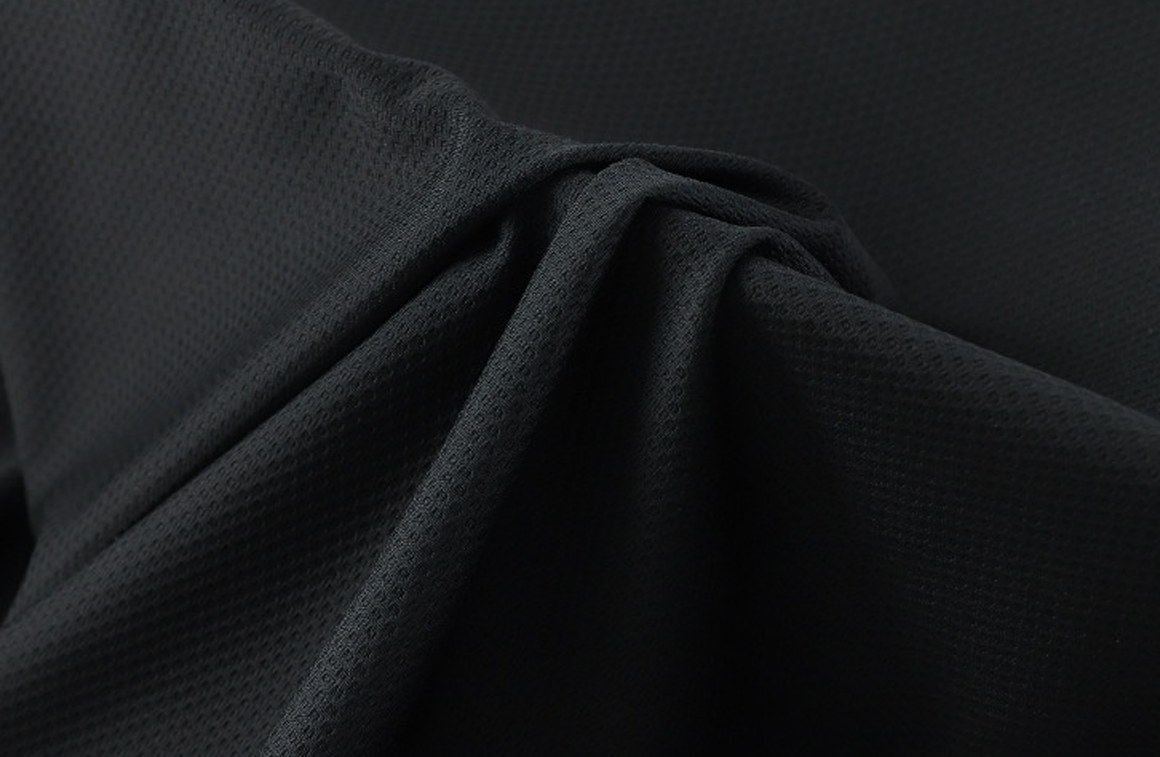
| Hand | Dry, lightly textured and slightly crisp — the tuck stitches give the surface a faint grain rather than a slick one. It does not cling, which is most of why it works next to skin in hot weather |
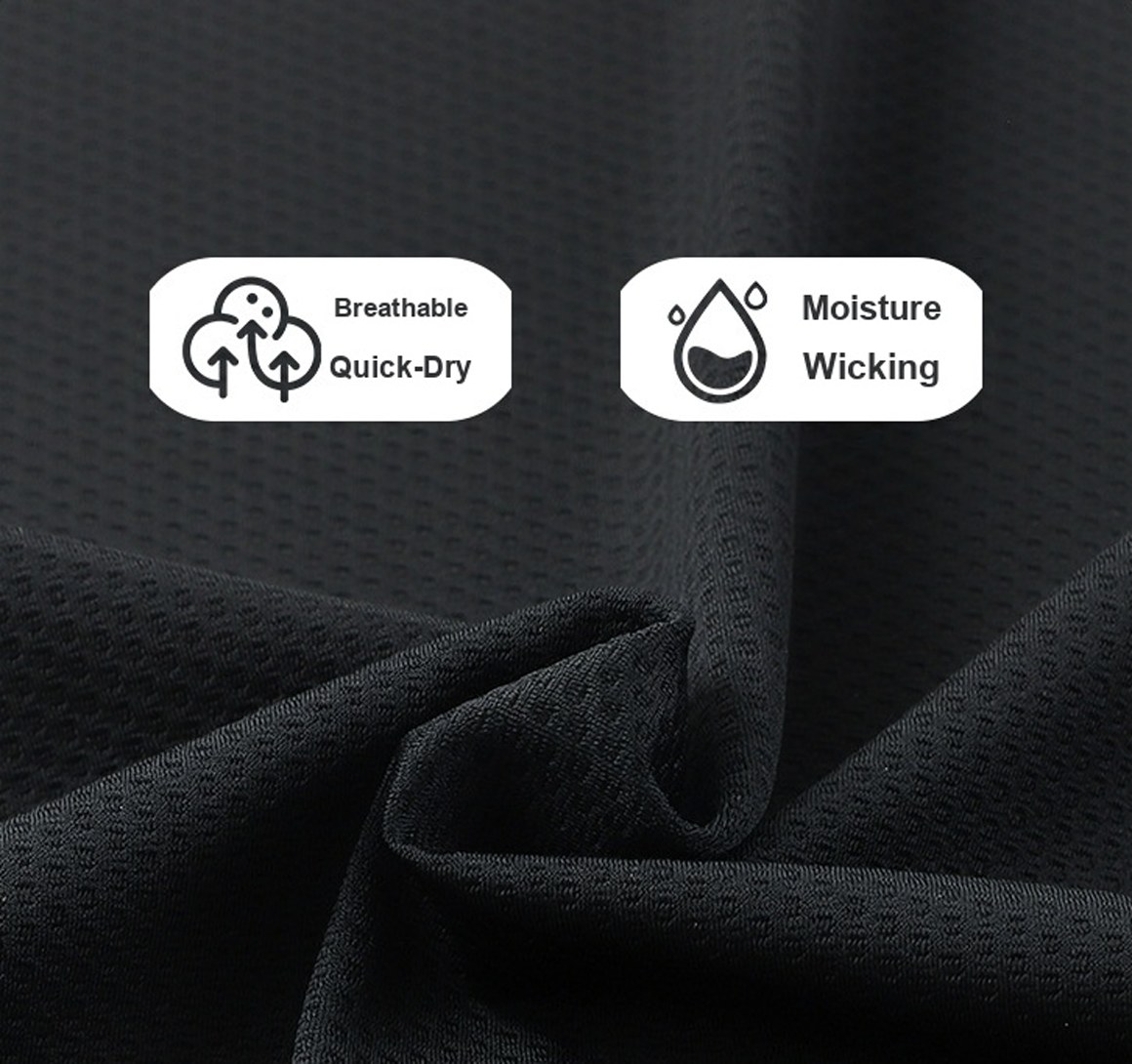
| Breathability | Air passes through the eyelets in both directions, and the open structure lets moisture vapour out rather than trapping it. Because the holes are knitted in, that property is permanent — it does not depend on a coating that can block up or a finish that can wash out |
| Cover | At 160 GSM in a pale shade, a single layer against strong backlight will show what is behind it. Two honest answers: choose a mid or dark shade, or line the front panel. The eyelets are small, so the cloth photographs as opaque even where it is not fully so — test on a light box before bulk if cover matters to the garment |
| Dyeing | Piece dyed after knitting. Polyester takes and holds the shade evenly; the eyelet structure gives a slight optical depth to mid-tones, so a shade can read a touch darker on the cloth than on the paper card |
| Colour | Our stock shade card, quoted by number (No.001–No.096), or dyed to order against an approved lab dip |
| Stability | No spandex means nothing to age: the cloth does not go slack in storage, does not lose recovery after repeated washing, and holds its cut width. Shrinkage after the first wash is low, but relax the roll before cutting anyway (see the note below) |
| Pilling | No short staple in the yarn to work loose, so no pilling at the cuff, the collar edge or under the arm |
| The strongest reason to choose a 100% polyester mesh: sublimation transfer goes straight onto it with no spandex to yellow or lose power at transfer temperature (around 190–200°C). All-over photographic prints, engineered panels and small logos all hold. Screen print and transfer print work too. Pre-shrink before printing — polyester relaxes a little at that temperature, and a print that is registered before the shrink will not register after it | |
| Making up | Ball-point needle, 75–80, and a stitch length that does not crowd the eyelets — a sharp needle cuts the tuck loops and leaves a run. Do not over-stretch the cloth at the machine: with no spandex to pull it back, whatever you stretch stays stretched. Cut edges can be left raw on this quality (see the pinked-edge photograph) which is why it is popular for unhemmed tees and raw-edge kidswear |
| Origin | Shaoxing City, Zhejiang, China |
| MOQ | 300 kg per shade |
| Price | US$ 12.54 / kg (300–999 kg) · US$ 10.99 / kg (1,000 kg+) |
| Yield | ≈ 3.47 running metres per kg at 160 GSM × 180 cm (≈ US$ 3.61 per running metre, ≈ US$ 2.01 per m²) |
| Lead time | Stock shades ship from the dye lot on hand; dyed-to-order shades are confirmed at quotation |
| Packing | Roll-packed, roughly 22 kg per roll, poly bag inside a woven sack |
| Sample | Hanger swatch free; a 1 m cut of a stock shade charged at cost and credited against the bulk order |
| Documents | Invoice, packing list, B/L, certificate of origin; test reports on request |
| Care | Machine wash warm, do not bleach, tumble dry low or dry flat, cool iron if needed, do not dry clean |
The holes are knitted, not punched
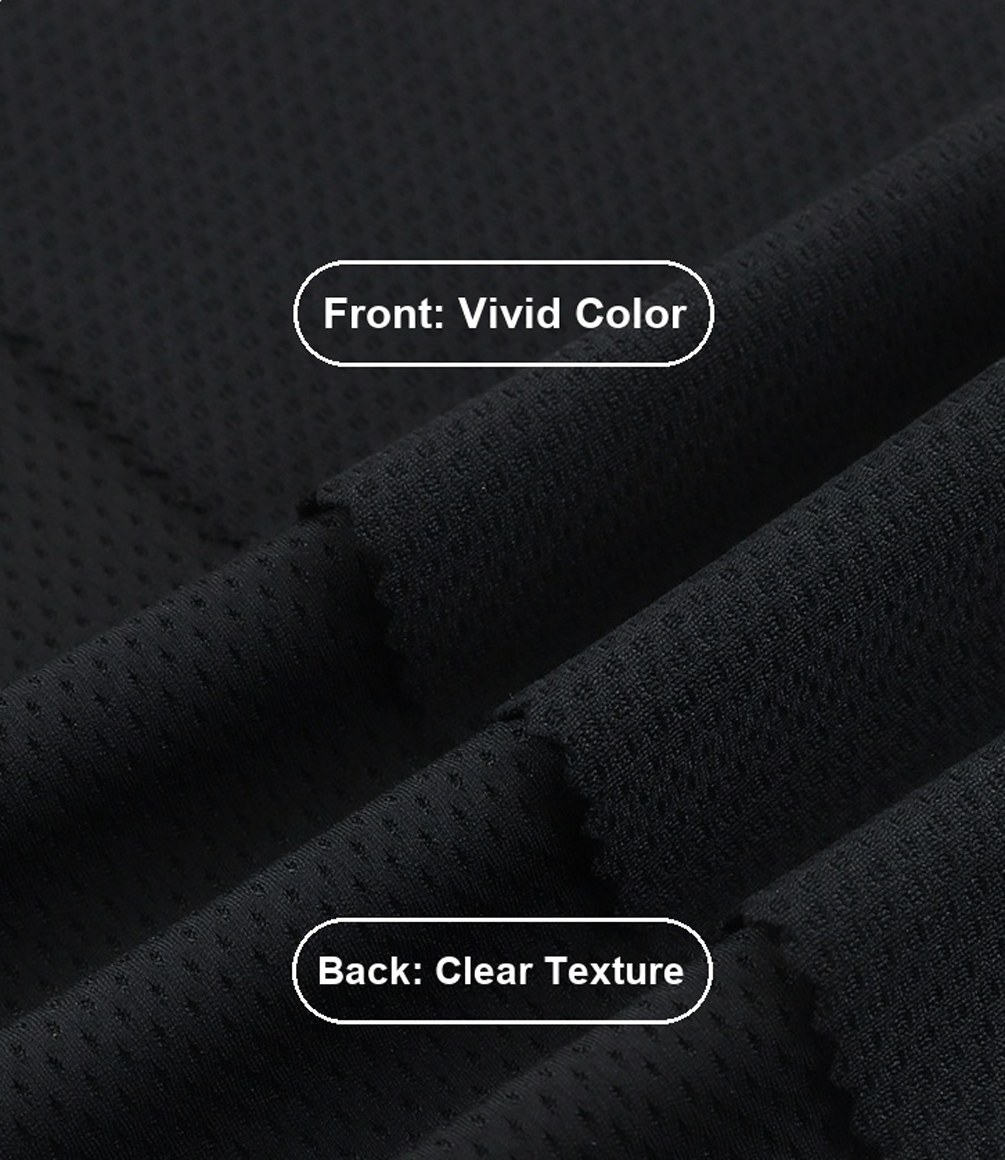
There are three ways to put holes in a piece of cloth and they behave very differently. Knitted eyelets, which is what this is, are made on the machine: at fixed intervals the needles tuck and the loops pull apart, leaving a small round opening with a clean, stable rim. Punched holes are cut mechanically after the cloth is finished — the rim frays, the hole distorts when the fabric is stretched, and the edge can curl. Coated “mesh” is a solid cloth with a print of dots on it: no air moves through it at all, and you find out the first time a customer wears it in July.
The photographs above show the two tests that separate them. Gathered in the hand, a knitted eyelet stays open; a punched one narrows and a printed one does nothing. And on a cut edge, a knitted mesh holds its loops — which is why this quality is often used with a raw or pinked edge and no hem at all.
Why 100% polyester, and what it costs you
Most mesh in this market carries 5% spandex. Taking it out is a deliberate choice with a real trade, and you should know both sides of it before you specify.
What you gain. Stability: nothing in the cloth ages, so it does not go slack in the warehouse or lose recovery after fifty washes, and the cut width holds. A clean sublimation print: spandex yellows and loses power at transfer temperature, which is why all-over photographic prints are usually put on 100% polyester. A hot wash: 60°C industrial laundering, which is what uniform and hospitality programmes actually run. And a single material — easier to recycle, and easier to declare under the material-disclosure and digital-passport rules that are coming into force in the EU.
What you give up. Stretch, and with it the easy fit. A slim tee or a fitted polo has to be cut with ease rather than relying on the cloth to move, and a neckline needs rib or a self-fabric band rather than a plain turned edge. If the garment is meant to hold the body, this is the wrong quality — our stretch birdseye mesh (95% polyester / 5% spandex, 180 GSM, 175 cm) is the one to look at instead. Same eyelet family, elastic, a little heavier, a little narrower.
Between the two, the choice is usually made by the print and the fit rather than by the price: all-over sublimation or a hot industrial wash points to this 100% quality; a close-fitting garment that has to move with the body points to the stretch one. Ask for both swatches and put them on the same marker drawing.
180 cm: the width is the saving
Width is the least discussed number on a fabric spec sheet and the one that moves the garment cost most. Take a plain adult tee: the body panel is roughly 58–60 cm wide including seam allowance. On a 160 cm roll you lay two panels and have about 40 cm left over — not enough for a third. On this 180 cm roll you lay three, and the leftover is 0–6 cm. Same fabric, same weight, and a third more body panels out of every running metre.
Whether that lands for you depends on your marker, so do the arithmetic on your own pattern rather than on ours. Two things to keep in mind: at 180 cm a roll is heavier and wider to handle, and some cutting rooms are set up for 160–170 cm tables. If yours is one of them, tell us at quotation — we can supply this quality slit to 170 cm, and the price per kilo changes because the yield per kilo changes with it.
Where it goes
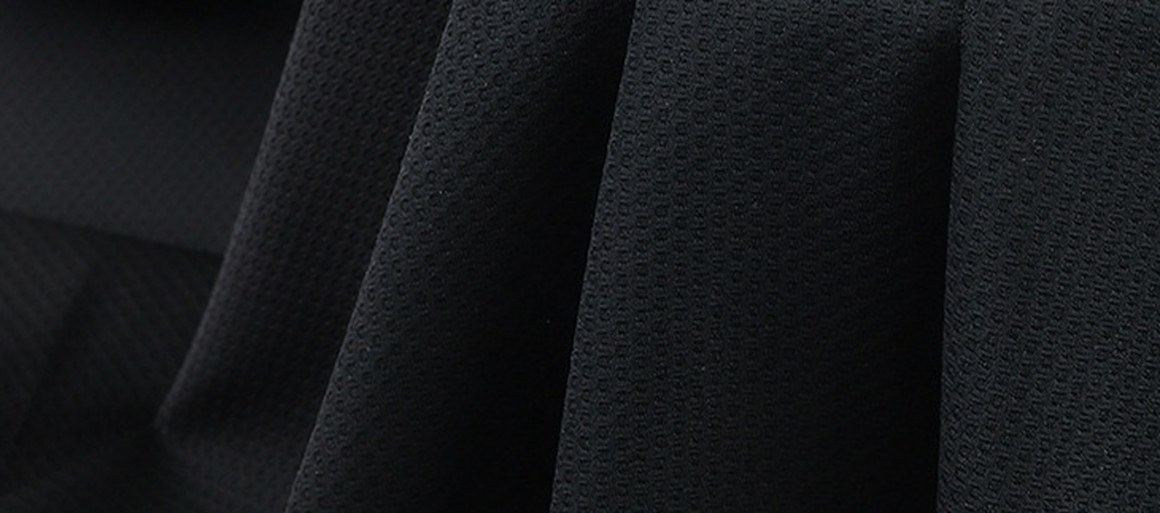
Polo shirts and golf shirts, sun-protection and fishing tops, kids’ tees and shorts, school and club uniforms, hotel and hospitality workwear, sports bibs and training tops, and any tee where an all-over print has to sit on a breathable ground. Also a sensible lining or second layer under a light shell, where you want air movement without bulk.
It is not the right cloth for compression, for swim, or for a garment that has to hold the body. Worth saying plainly rather than letting a buyer find out after the first sample.
Four things that catch people out on a mesh like this. Relax before cutting: a knitted roll comes off the machine under tension and will shrink back after a day unrolled — cut it the same day and the panels come out small. Ball-point needles: a sharp needle splits the tuck loops and leaves a run, and on an eyelet structure a run is visible immediately. Do not stretch at the machine: with no spandex to pull it back, whatever you stretch stays stretched, and the panel will not match its pattern piece. Pre-shrink before sublimation: polyester relaxes at 190–200°C, so a print registered before the shrink will not register after it.
Ask for the shade card and a price
Send the shade numbers you are choosing between, the quantity in kilos and what you are cutting. We reply within one working day with the price, what is on the dye lot, and a swatch you can put through your own wash and print trial before you commit.