Fabrics / Cotton & rayon · TR knit
Wool-Touch TR Stretch Knit 215 GSM — 165 cm
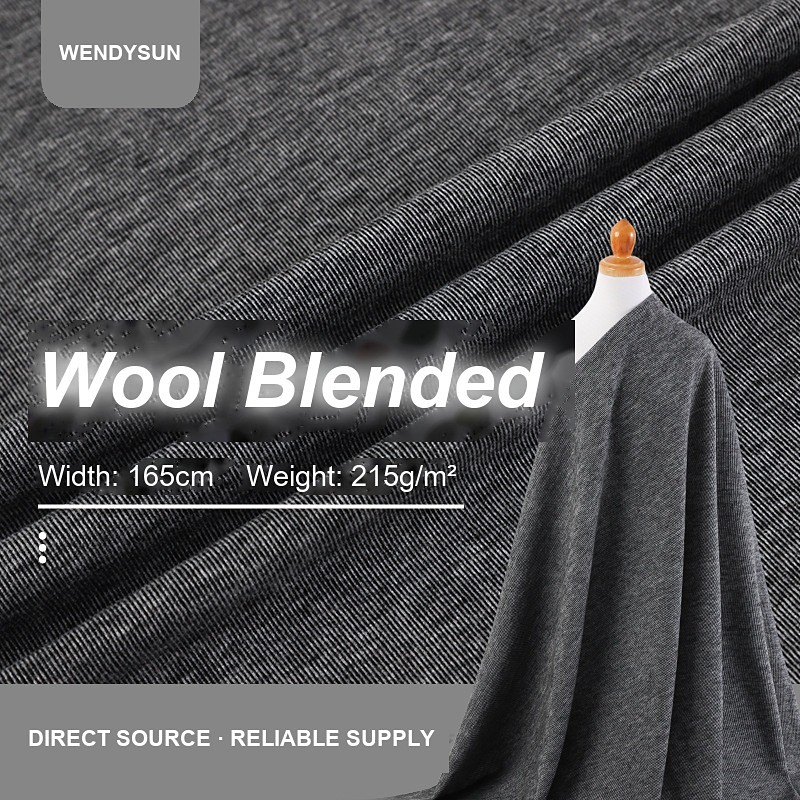
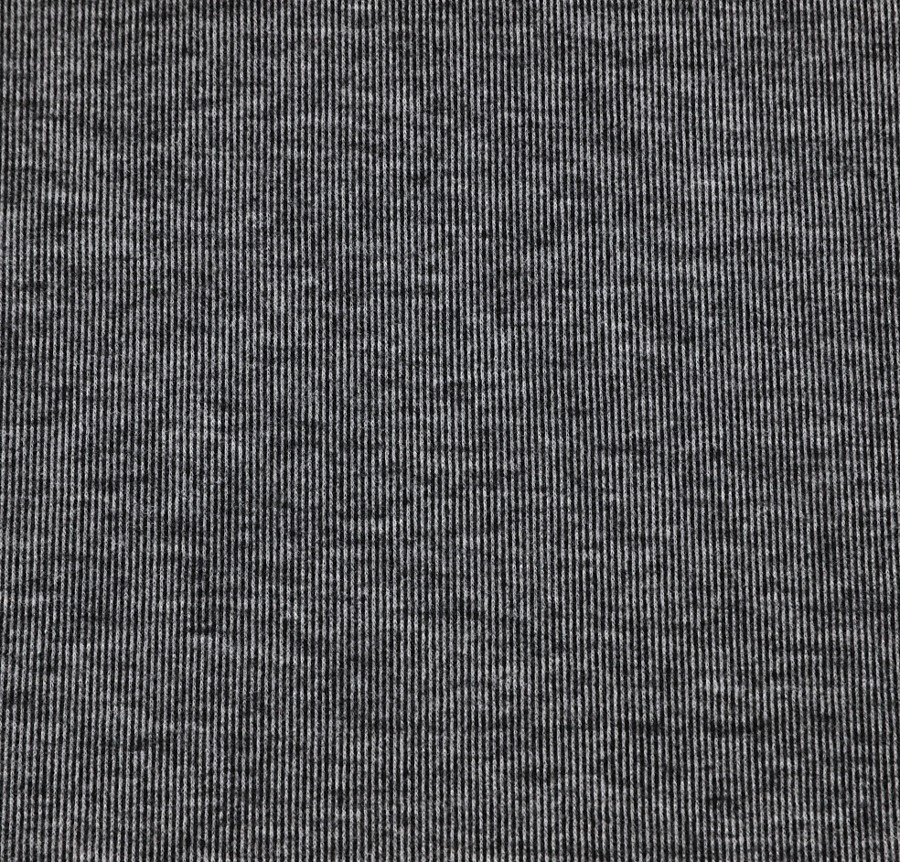
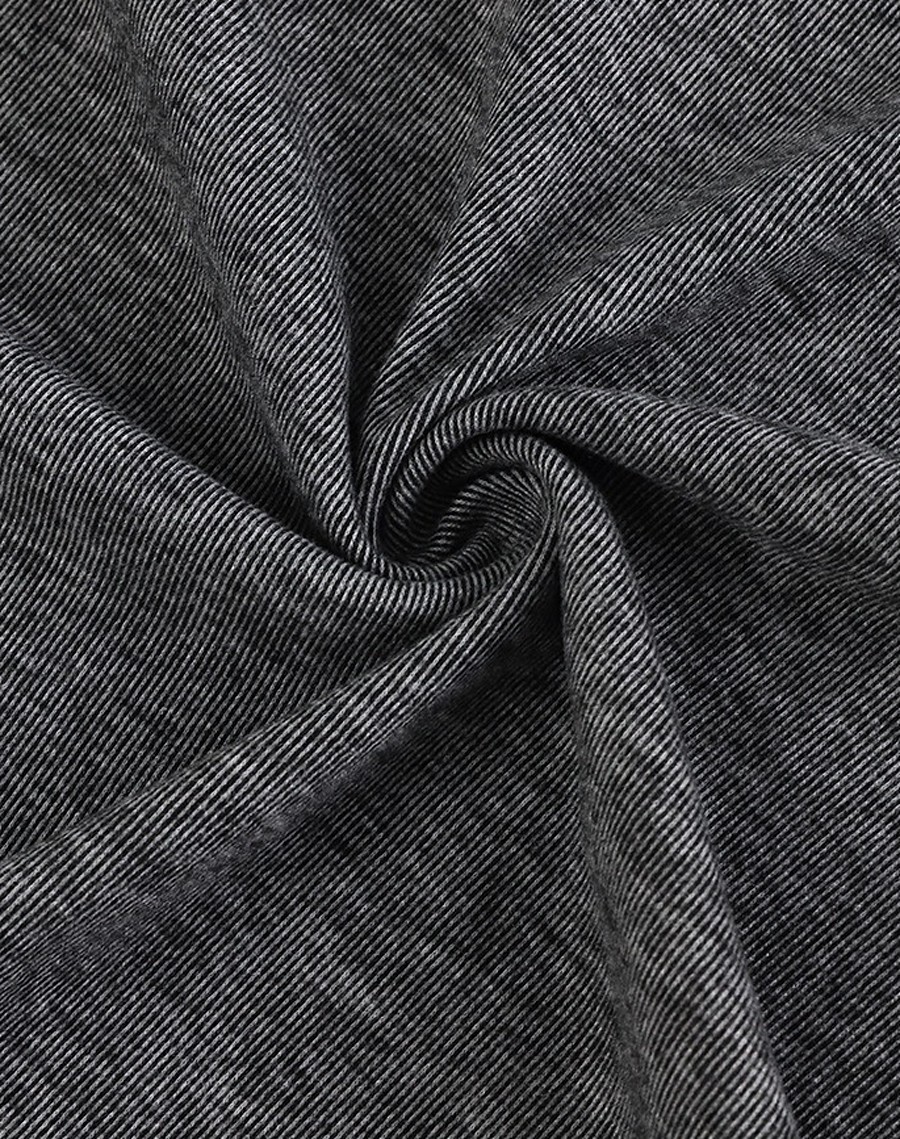
A 215 GSM knit in 45% rayon, 52.5% polyester and 2.5% spandex, on a 165 cm width, finished in a fine diagonal rib that reads as a wool flannel. Dry, warm, slightly fuzzy in the hand, heather through the body of the cloth — and stable enough to cut a trouser leg from.
First, the name. This quality is sold across the market as “wool blended”, and our own factory poster carries that label. There is no wool fibre in it. The wool is a look: the diagonal rib, the dry hand, the heather. We call it wool-touch because that is what it is — buy it for the surface, and if your label or your customer needs a wool content, this is the wrong cloth and we will say so before you order it.
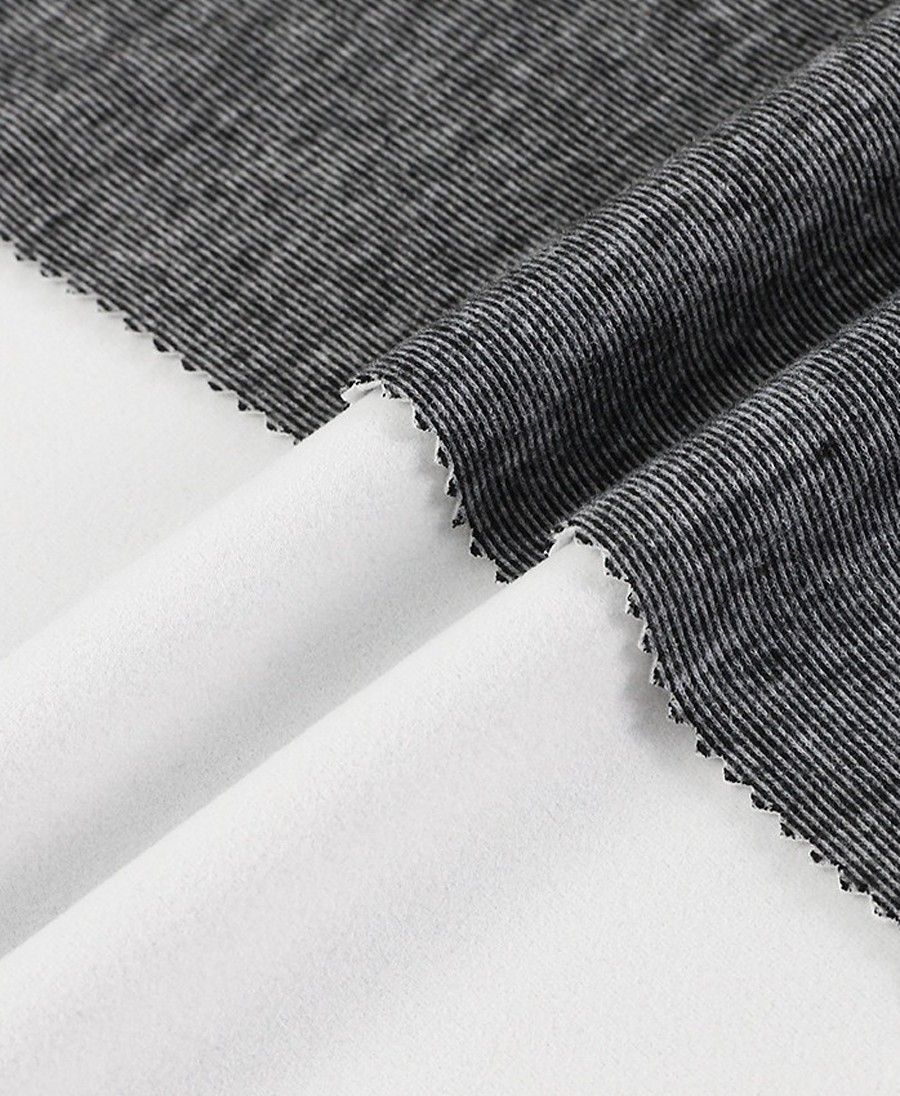
- Composition
- 45% rayon · 52.5% polyester · 2.5% spandexthe polyester is two yarns: 34% + 18.5%
- Weight
- 215 GSM6.3 oz/yd² — a mid-weight knit
- Width
- 165 cm65 inch, open width
- Structure
- Single knit, diagonal ribwool-touch face, knit not woven
- MOQ
- 300 kg≈ 846 running metres
- Colour
- No.001 – No.096quote the shade number
Full specification
| Customization | Available — shade, weight and width confirmed at quotation |
|---|---|
| Knitting technics | Knitted on a circular machine in a fine diagonal rib, then piece dyed. The rib is a knit structure, not a woven twill line: the loops run diagonally instead of the yarns crossing at right angles, which is why the cut edge holds instead of fraying |
| Composition | 45% rayon, 52.5% polyester, 2.5% spandex — the polyester is deliberately split into two yarns, 34% and 18.5%, and the difference between them is what gives the cloth its heather. There is no wool in it. If your care label or your customer needs the full yarn breakdown, ask us and we will put it in writing before you place the order |
| Yarn | A spun rayon/polyester blend with an elastane filament running through it. Two polyester components are used: one carries the body of the cloth, the other sits in it as a lighter fleck, which is where the melange comes from |
| Weight | 215 GSM / 6.3 oz/yd². Mid-weight: heavy enough to hang and to be opaque in mid and dark shades, light enough to gather and to pleat without bulk at the seam |
| Width | 165 cm / 65 inch, open width. Standard for a knit of this weight; on most trouser and legging markers it gives two panels across with trim, and it leaves room for a full-length dress front |
| Yarn count | Set at order. Send the count you already run and we knit to it against 215 GSM on the 165 cm width; the price above is on our standard count |
| Stretch | Cross stretch with recovery, from 2.5% elastane. Enough to hold the knee and the seat and to come back after a day of wear, not enough to be called a compression or a power fabric. It has very little stretch along the length, so cut it as a stable cloth lengthways and as a stretch cloth across |
| Hand | Dry, warm and slightly fuzzy — the reason this quality is sold as a wool blend. It does not have the cool, slick hand of a polyester jersey, and it does not have the prickle of real wool either |
| Surface | A fine diagonal rib on a heather ground: at arm’s length it reads as a wool flannel or a light coating, up close as a knit with a soft, slightly brushed face. The heather is in the yarn, not printed on, so it does not fade at the fold or wash out at the cuff |
| Colour | Our stock shade card, quoted by number (No.001–No.096), or dyed to order against an approved lab dip. Heather shades are built from the two polyester yarns, so they cannot be matched to a Pantone number — approve the heather on a hanger swatch |
| Dyeing | Piece dyed after knitting. Rayon and polyester take different dye classes, which means two dyebaths or a carefully selected single bath: that is the cost behind the depth of shade, and the reason a cheap version of this quality usually looks grey and flat rather than deep |
| Fastness | Good on wash and on light. Rayon is the part that moves: a shade dyed deep can bleed a little on the first cold rinse, so wash it separately or with like colours the first time and skip the bleach, which attacks both the rayon and the elastane |
| Shrinkage | Expect length shrinkage on the first wash, mostly from the rayon. Relax the roll and pre-shrink or wash-test before you cut a programme, and add a little to the length rather than the width — the elastane holds the width |
| Pilling | Low to moderate. A spun rayon surface will fuzz at the friction points — inner thigh, underarm, cuff — after a season of hard wear. It is a surface effect rather than a failure, and a light de-pilling brings it back |
| Sublimation is the weak option here: only the polyester portion takes the disperse dye, so a print on a 45% rayon ground comes out muted and washed. Pigment print, discharge, burnout and embroidery all sit properly on this cloth. Solid shades are what the quality is built for | |
| Making up | Ball-point needle, 75–80, light needle tension, and do not pull the cloth through the machine — the elastane will wave the seam. Overlock with the differential feed slightly positive, tape or stay-tape the shoulder and the waist seam, and fuse with a low-temperature tape: rayon and elastane both take a set from heat |
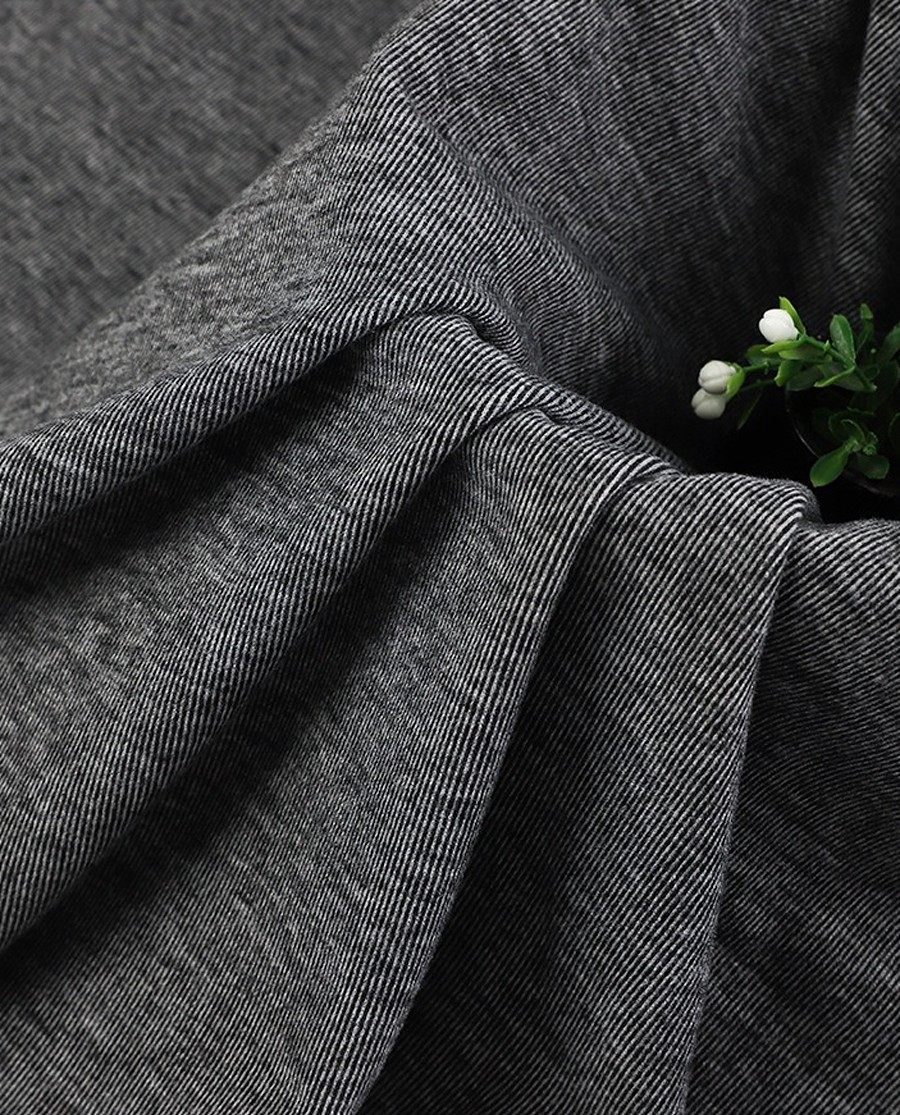
| Cutting | Pinked or rotary cut — the swatch above shows a pinked edge with the loops intact, so raw-edge and unhemmed details are safe. Let the roll relax for 24 hours first, and cut single ply or in low lays: a stretch knit that is cut under tension comes back as a shorter panel |
| Origin | Shaoxing City, Zhejiang, China |
| MOQ | 300 kg per shade |
| Price | US$ 12.54 / kg (300–999 kg) · US$ 10.99 / kg (1,000 kg+) |
| Yield | ≈ 2.82 running metres per kg at 215 GSM × 165 cm (≈ US$ 4.45 per running metre, ≈ US$ 2.70 per m²) |
| Lead time | Stock shades ship from the dye lot on hand; dyed-to-order shades are confirmed at quotation |
| Packing | Roll-packed, roughly 20 kg per roll, poly bag inside a woven sack |
| Sample | Hanger swatch free; a 1 m cut of a stock shade charged at cost and credited against the bulk order |
| Documents | Invoice, packing list, B/L, certificate of origin; test reports on request |
| Care | Machine wash cool (30°C) on a gentle cycle, wash deep shades separately the first time, do not bleach, do not tumble dry hot, dry flat in shade, cool iron on the reverse with a cloth, do not dry clean |
What “wool blended” actually buys you
Strip the name away and you are buying four things that wool does well, without the fibre. The look — a diagonal rib that catches light along the line of the cloth, which is what makes a flannel read as flannel. The hand — dry and warm rather than cool and slick, the one thing a plain polyester jersey never gets right. The heather — two polyester yarns at different depths, so the grey has a texture under it instead of being a flat dyed grey. And the weight — 215 GSM is heavy enough to hold a fold.
What you are not buying is wool’s comfort bill. No prickle against the neck. No felting in a warm wash. No moth risk in storage. No dry-clean-only care label. No wool price — a genuine wool flannel at this weight is several times the cost of this cloth, before you get to the fact that the wool version would have to be dry cleaned.
And what you are buying instead is rayon’s care bill, which is the honest trade: rayon is the component that shrinks, that weakens when it is wet, and that gives up shade a little on the first cold rinse. It is also the component that gives the cloth its drape and its depth of colour. Take the rayon out and you get a polyester knit that looks like a wool blend from two metres away and like a tracksuit up close.
It looks woven. It is a knit.
The diagonal line fools people, and it matters for two reasons: cutting and sewing. A woven twill frays at a cut edge and needs every seam allowance finished. This cloth does not — the loops hold at a pinked edge, which is what the photograph below is showing.
It also means the cloth moves the way a knit moves. There is stretch across the width and a bit in the length, so a seam sewn under tension will wave, and a panel cut slightly short will come back shorter after a wash. Cut it relaxed, sew it relaxed, and stabilise the places that must not grow — shoulder, waistband, pocket mouth — with a tape.
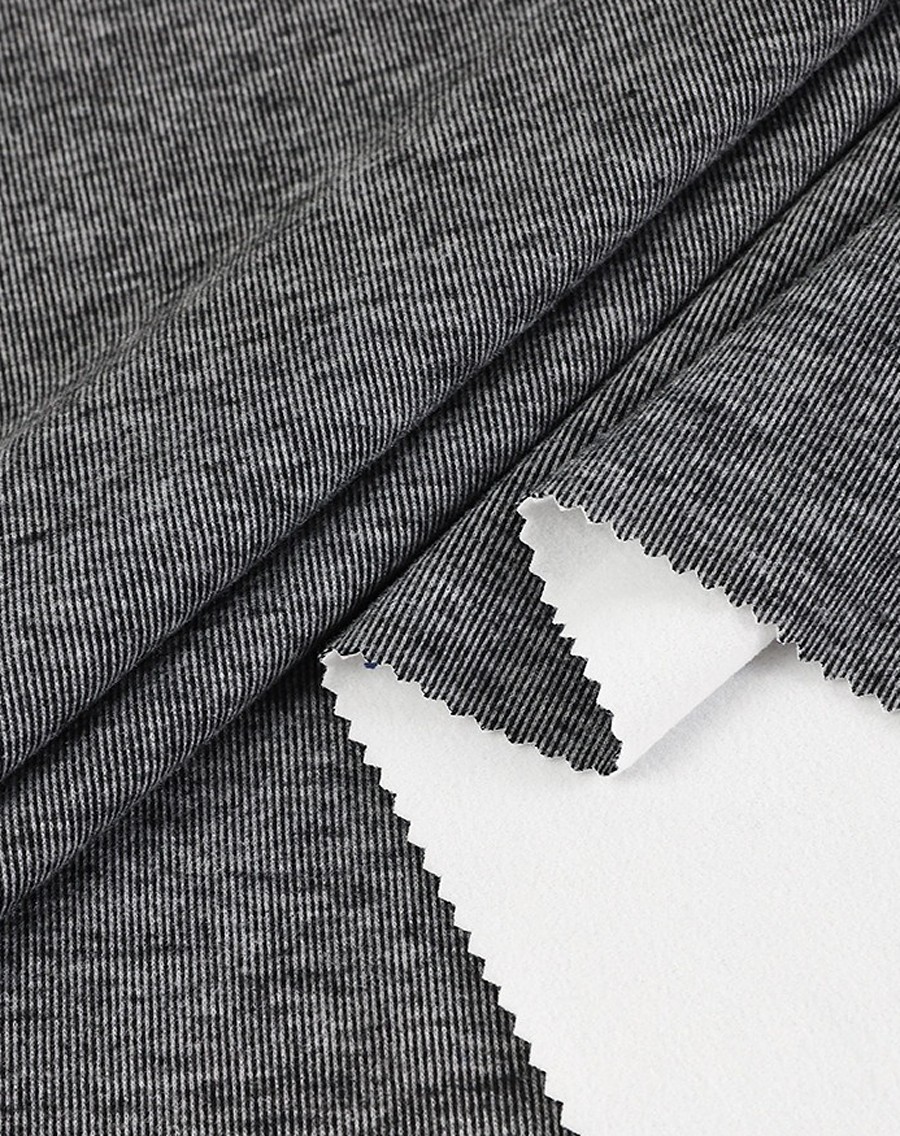
215 GSM, and 2.5% spandex — the numbers that decide the garment
215 GSM sits in the middle of the knit ladder and that is deliberate. A 160 GSM knit at this look reads thin and shiny and needs a lining in anything tailored. A 260–300 GSM double knit holds a shape but is stiff at the waistband and hot for a legging. At 215 you can make a ponte trouser that hangs, a hoodie that is not a sack, a skirt that swings — and you can still gather it.
2.5% spandex is a modest dose and it should be read as recovery, not as compression. It holds the knee and the seat and it comes back. It will not suck anything in, and it will not give you a four-way stretch power fabric. If your brief is sportswear that has to move with the body under load, this is the wrong quality — our super stretch mesh and the poly-spandex meshes are built for that. If your brief is a soft trouser or a knit jacket, the dose is right.
165 cm works on most markers. Two trouser panels across with trim, a full dress front without a seam, a hoodie body plus sleeves. Where it runs out is on a wide leg in the largest size or a full-length coat panel, so lay the marker before you price the style rather than after.
Where it goes
Ponte trousers and leggings, knit blazers and soft coats, autumn and winter hoodies and sweatshirts, dresses and pinafores that need a wool look without a wool price, skirt suits, jacket linings, and the casual trouser programmes where a flannel look and a machine-washable care label are the whole selling argument.
If you want this look in a heavier, double-faced version, the Twisted Two-Tone Knit at 236 GSM is the same family one rung up, and it reverses to a second colour. If you want a brushed surface instead of a rib, the brushed milk-silk qualities on the milk-silk page are the softer read.
Four things that catch people out on a rayon-rich knit. A hot iron kills the wool look. Press it flat and the diagonal rib flattens into a shine and the cloth reads as polyester for good — use steam and a cloth, or press from the reverse. Sublimation prints come out muted: only the polyester half takes the dye, so a photographic print loses about a third of its depth. Pre-shrink before cutting: the rayon relaxes in the first wash, mostly in the length. Keep a retained standard: heather shades drift between dye lots because the two polyester yarns blend, so hold a piece of the bulk against the approved swatch on every repeat.
Ask for the shade card and a price
Send the shade numbers you are choosing between, the quantity in kilos and what you are cutting. We reply within one working day with the price, what is on the dye lot, and a hanger swatch so you can check the hand and the heather against your own standard before you commit.