Fabrics / Cotton & rayon · Piqué mesh
Sorona Piqué Mesh 170–180 GSM, 185 cm
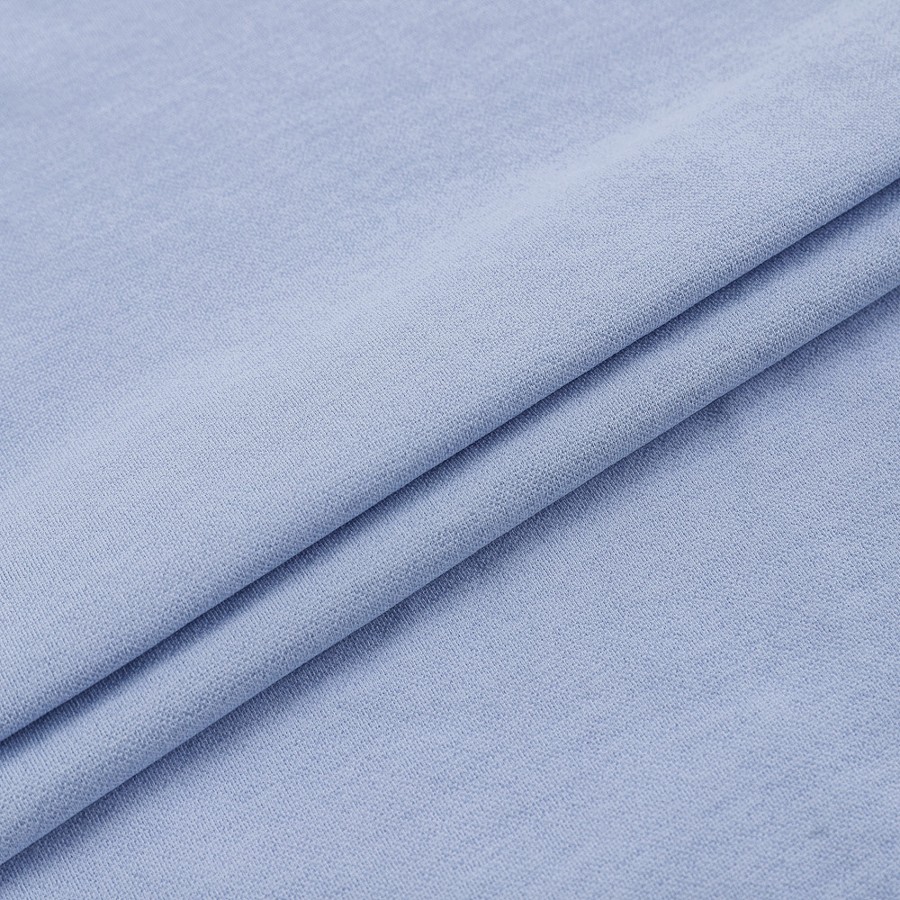
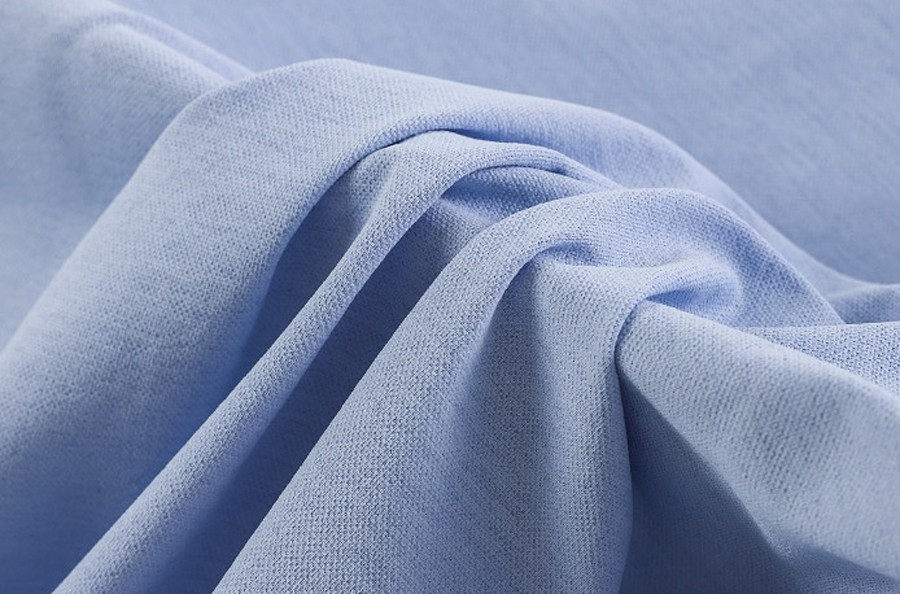
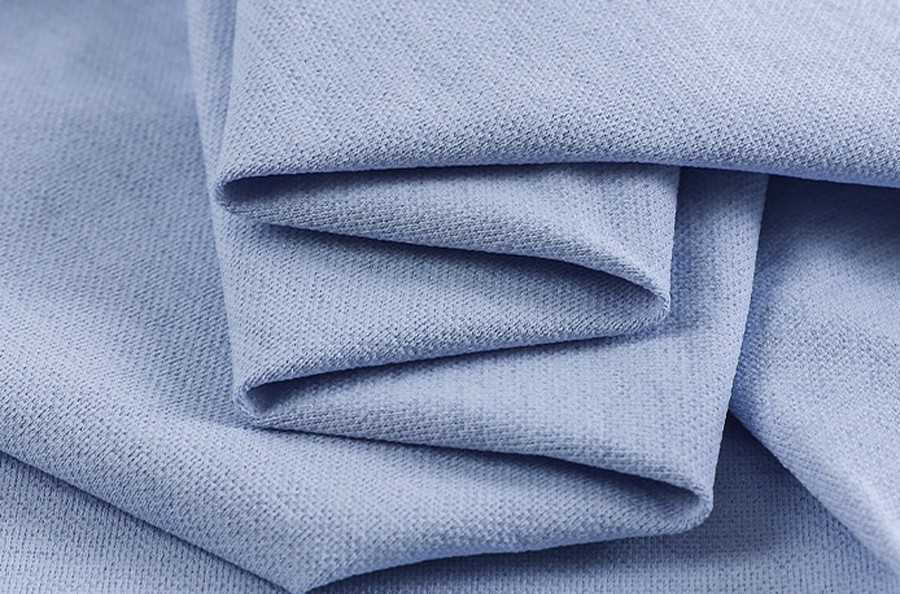
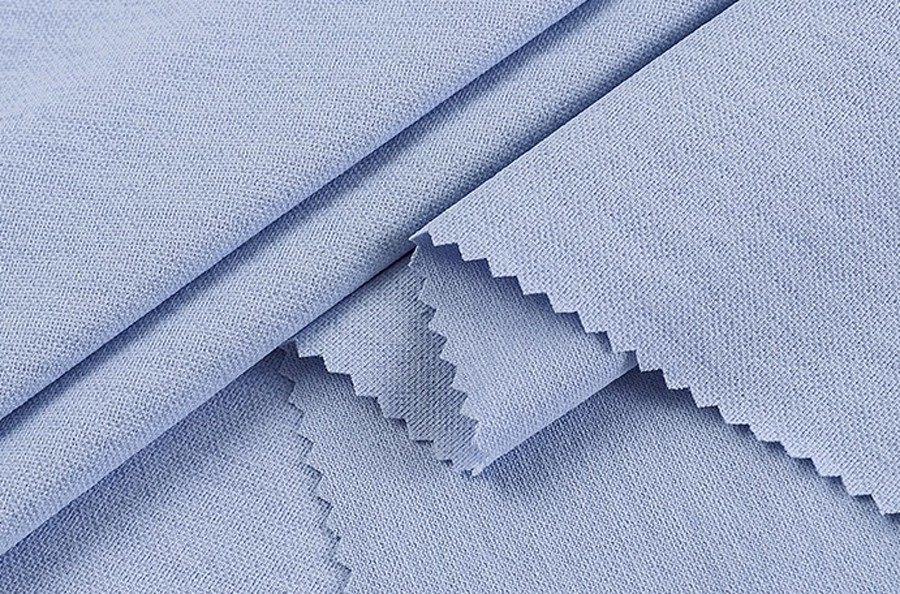
A 170–180 GSM piqué mesh knitted from 50% polyester and 50% Sorona on a 185 cm width. The weight, the width and the shade are all set up for a short-sleeve polo — and the thing that separates a good polo from a cheap one is not the fibre, it is whether the cells are still standing after a season of washes.
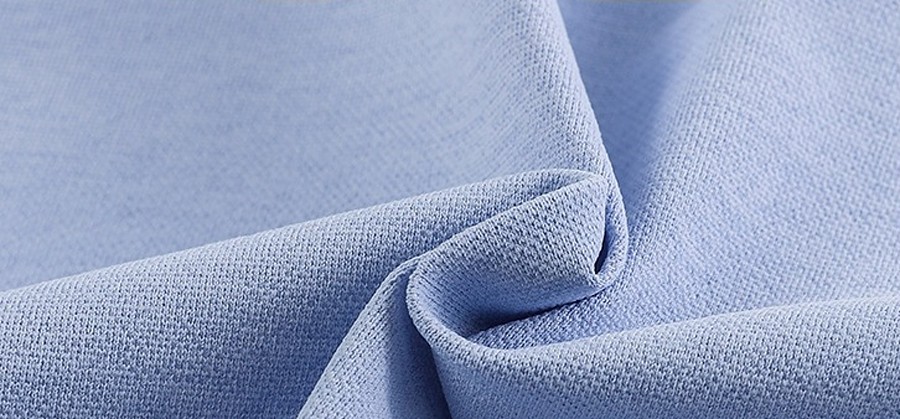
Piqué is a structure, not a fibre. The name comes from the way the cloth is knitted: tuck stitches draw groups of wales together into raised cells, and where the cells meet there is a small open point. Nothing is embossed, bonded or printed onto it — the relief is the knit itself, which is why it survives washing and why a cheap copy that presses a pattern into a flat jersey never looks the same up close.
- Composition
- 50% polyester · 50% Soronano elastane anywhere
- Weight
- 170–180 GSM5.0–5.3 oz/yd²
- Width
- 185 cm73 inch — polo marker width
- Structure
- Piqué / mesh, tuck stitchraised cells, flat back
- MOQ
- 300 kg≈ 926 running metres
- Colour
- No.001 – No.096shade card, quoted by number
Full specification
| Customization | Available — shade, weight and width confirmed at quotation |
|---|---|
| Knitting technics | A circular knit in a piqué structure: tuck stitches pull groups of wales into raised cells and leave a small open point where the cells meet, while the reverse side stays flat. The cells are knitted in, not embossed, not bonded and not printed — which is why they come back after a wash instead of flattening for good |
| Composition | 50% polyester / 50% Sorona (PTT). Sorona is a polyester of a different chain, not a spandex and not a polyamide. There is no elastane to age, no cotton and no linen — the spring in the cloth is the PTT chain itself |
| Yarn | A fine filament ground on the back with a slightly fuller count on the face so the cells stand. Knitted at 170–180 GSM on 185 cm. The count is set at order |
| Weight | 170–180 GSM / 5.0–5.3 oz/yd². The range is the finished band, and it matters more on a piqué than on a jersey: the relief is what makes the cloth feel substantial, and 10 g spread changes how high the cells sit. Name the number you want and we hold it |
| Width | 185 cm / 73 inch, open width. This is the width a short-sleeve polo is normally marked on: body front and back across, two sleeves nested, collar and placket bands off the end of the lay |
| Yarn count | Set at order. Tell us the count your knitter already runs and we match it against 170–180 GSM on 185 cm; the price shown is on our standard count |
| Stretch | About 15–20% with recovery, none of it from elastane. For a piqué this is not a comfort extra, it is structural: the cells only stay up if the ground yarn pulls back after the tuck. A dead ground gives you a piqué that looks right on the roll and flat after twenty washes |
| Hand | Dry, cool, faintly granular — the hand follows the cells rather than the fibre. Against a plain jersey of the same weight it feels thicker than it is, because the relief traps air between the cloth and the skin |
| Surface | Raised cells in a regular repeat, with a fine open point at the intersections. At garment distance on a mid or pale blue it reads solid; hold it against a light the cells are where the air moves. It is not a mesh in the sports-mesh sense — there is no large open hole — so treat it as an opaque polo cloth and check it against a dark underlayer if the shade is white |
| Colour | Stock card, quoted by number (No.001–No.096), or dyed to order against an approved lab dip. On a piqué the shade sits differently on the raised cell and in the open point, so a lab dip on a flat jersey will not predict the garment. Approve on the piqué itself |
| Dyeing | Both fibres in one disperse bath at a temperature the PTT will take. Push toward the 130°C a plain polyester wants and the Sorona side loses recovery and goes papery; run it cool and the polyester side comes up shallow. Ask for the bath curve with the lab dip |
| Fastness | Good on wash and rub. On this blue the test worth naming is bleeding into a white adjacent fabric and greying after five washes; on a white or ecru shade, add light fastness, because a piqué presents more surface to daylight than a flat jersey |
| Shrinkage | Low in the length and low in the width after heat setting. Wash-test before cutting a programme anyway: relaxation on the first wash is normal, and on a piqué it also changes the cell height slightly, which a customer reads as “the fabric changed” |
| Skew | The one number to agree on a piqué: bow and skew after finishing. A tuck structure is easy to pull out of square on the tenter, and a skewed roll sews into a polo that spirals at the hem after two washes. Ask for the skew figure in centimetres per metre and hold it in the spec |
| Pilling | Low to moderate. The filament ground resists pilling; the raised cells can fuzz where a bag strap or a seat belt rubs, then settle. If the garment is a uniform, agree a grade and a wash cycle |
| Snag | The cells are a snag point that a flat jersey does not have. Zips, velcro, watch straps and unsanded embroidery frames lift a thread and leave a pulled loop. Test a snag resistance if the end use is workwear, and cover the cells when you embroider |
| Moisture | Wicking and quick-drying by construction: the cells lift the cloth off the skin, the open points let vapour through, and the filament ground carries liquid along the wale. No hydrophilic finish to wash off — and nothing printed on this page that a lab did not measure on this cloth. Name the standard (GB/T 21655.1, or AATCC 195 / 199 for liquid moisture management) and we run it on the finished, washed quality |
| Sublimation works but the transfer sits on the crown of the cells and skips the open points, so a fine graphic reads lighter and slightly broken. Strike off on the actual quality. Screen print, pigment print and embroidery all take well; embroidery needs a backing because the cells will not support stitch density on their own | |
| Making up | Ball-point needle 75–80, light presser pressure, and do not over-stretch the placket — a piqué recovers, so a placket sewn under tension will pucker as the cloth pulls back. Collar and cuff are normally cut across the wale so the cells run horizontally on the finished band |
| Cutting | Rotary or straight knife with a paper underlay on a loose lay — the cells make layers slip a little more than a jersey. Cut to the marker and let it relax before fusing; do not stretch to fit, the recovery will pull the seam instead of the panel |
| Ironing | Steam, do not press. An iron laid flat on the face flattens the cells and leaves a shine that no wash brings back; press from the reverse through a cloth, or steam and let it hang |
| Origin | Shaoxing City, Zhejiang, China |
| MOQ | 300 kg per shade |
| Price | US$ 18.74 / kg (300–999 kg) · US$ 17.36 / kg (1,000 kg+) |
| Yield | ≈ 3.09 running metres per kg at 175 GSM × 185 cm (≈ US$ 6.07 per running metre, ≈ US$ 3.28 per m²) |
| Lead time | Stock shades ship from the dye lot on hand; dyed-to-order shades are confirmed at quotation |
| Packing | Roll-packed, roughly 20 kg per roll, poly bag inside a woven sack |
| Sample | Hanger swatch free; a 1 m cut of a stock shade charged at cost and credited against the bulk order |
| Documents | Invoice, packing list, B/L, certificate of origin; test reports on request |
| Care | Machine wash cool (30°C), do not bleach, tumble dry low or line dry, cool iron on the reverse, no fabric softener — a silicone softener fills the open points and the wicking stops |
What the cells actually do for the wearer
Three things, and they are the reason piqué became the polo cloth rather than a jersey. It does not cling. The cells hold the cloth off the skin, so a damp polo sits away from the body instead of sticking to it — which is what a customer means when they say a polo “breathes better” than a tee, even at the same weight.
It reads heavier than it is. 175 GSM in a piqué handles like a 200 GSM jersey because the relief adds apparent bulk without adding mass. That is a saving on the freight invoice and on the customer’s summer comfort at the same time.
It hides what a flat jersey shows. A crease, a stitch line pulled slightly tight, a body under a pale cloth — a cell structure breaks all of it up. This is why a white piqué polo can be worn to an office and a white jersey tee of the same weight cannot.
The cells only stay up if the ground yarn pulls back
Here is where a cheap piqué gives itself away. A cell is a small arch of yarn held in tension by the ground: knit it from a slack, dead yarn and the arch collapses on the first wash. The cloth comes off the roll looking correct and comes out of the machine looking like a flat jersey with a memory of texture.
This is the one place where the Sorona earns its price. The PTT chain recovers, so the ground pulls the arch back after every wash — and it does it without elastane, which is what a knit would normally use for the same job and which is also what fails first under heat, chlorine and a year in a warehouse.
For a buyer the practical consequence is a wash test that means something: twenty home washes, then look at the cell height and the surface, not at the shade. A piqué that still shows relief at that point is a polo that will still look like a polo in the second summer. Ask us for the washed sample — we keep them.
Pale shades, open points and what to check before you commit
The open point between the cells is small, and on this blue it is invisible at arm’s length. On white or ecru it is the first thing a customer sees if the garment is worn over anything dark. Before a white programme, put the swatch over a navy sleeve in daylight — not on a light table, which flatters every fabric.
Shade approval belongs on the piqué. A lab dip struck on a flat jersey will not predict this cloth: the raised cell takes the dye to one depth and the open point to another, so the same recipe reads a shade lighter and visibly more textured here. Approve on the quality you are buying, and approve a piece big enough to see a fold.
And ask for the skew figure. A tuck structure is easy to pull out of square on the tenter. A skewed roll sews up fine and then spirals at the hem after two washes — a fault that surfaces in the customer’s hands, not on your inspection table. We hold bow and skew in centimetres per metre and will put the number in the spec sheet.
185 cm, and what 300 kg makes in polos
At 175 GSM on 185 cm a running metre weighs about 324 g, so a kilo runs about 3.09 metres and the 300 kg minimum is roughly 926 metres. A short-sleeve polo normally marks at 0.85–0.95 m of this width with the sleeves nested and the bands off the end, so the minimum lands around 1,000 pieces — a first order that fits a small uniform programme or a test run in two or three shades.
The 185 cm is doing real work here. On a 160 cm roll a polo has to be marked tighter around the sleeves and the collar band often goes to a separate lay; at 185 cm the whole garment nests in one width. If your marker was built for 160 cm, lay it again at 185 before you compare prices per kilo — the saving usually shows as a shorter lay and less waste at the selvedge rather than a cheaper metre.
Four things that go wrong on a piqué. Skew: the tuck structure pulls out of square on the tenter, and a skewed roll spirals at the hem after washing — hold a number, not a promise. Snagging: velcro, zips and a watch strap lift a cell; test it if the end use is workwear. Pressing: an iron laid flat on the face flattens the cells and leaves a shine that never washes out — steam, and press from the reverse. Heat: PTT softens below PET, so a tenter much over 170°C or an iron over 150°C costs the recovery, and without recovery the cells go flat in the second season.
Ask for a swatch, a washed sample or a price
Tell us the shade number, the weight of the programme and what you are cutting — polos, uniforms, workwear or corporate merchandise. We reply within one working day with the price on the lot we hold, the shade card on this quality and a hanger swatch. If you need a wicking or a snag test for the tender, name the standard and we quote it with the cloth.
Related: the lighter summer version of the same blend is the Sorona Wicking Jersey 160–170 GSM; for a brushed winter cloth see the Sheep-Touch Brushed TR Knit 252 GSM. The rest of the range is on the fabrics page.