Fabrics / Cotton & rayon · Piqué
Yarn-Dyed Cotton Pique 150 GSM, 165 cm
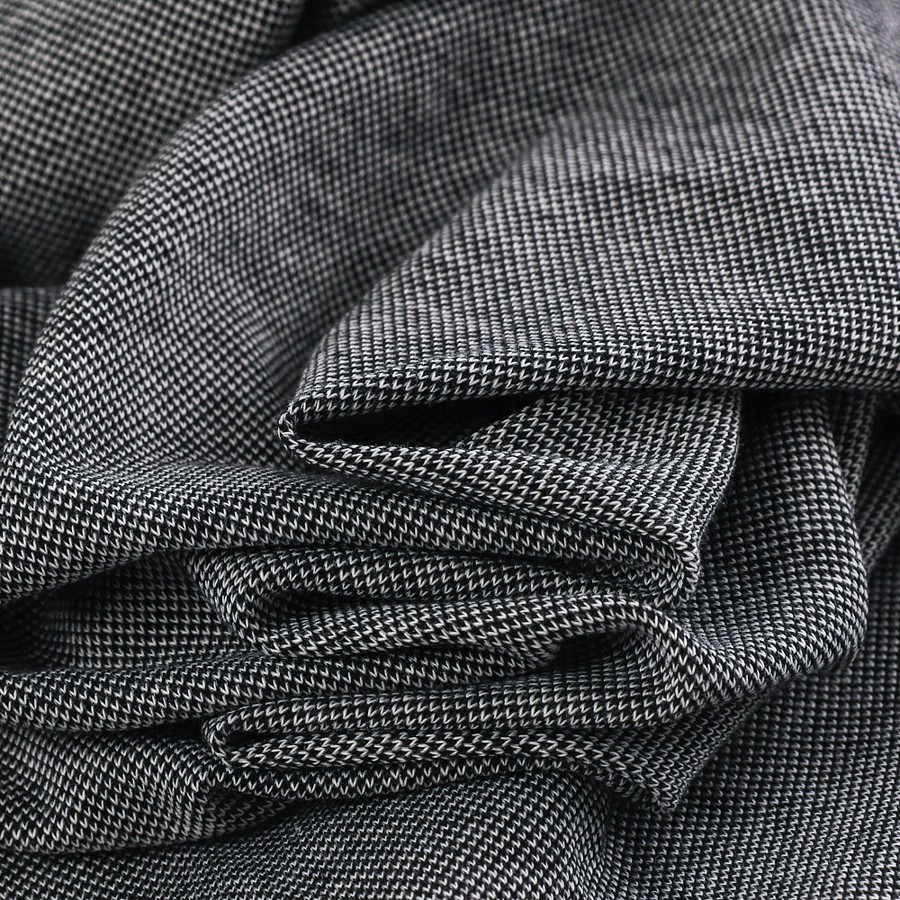
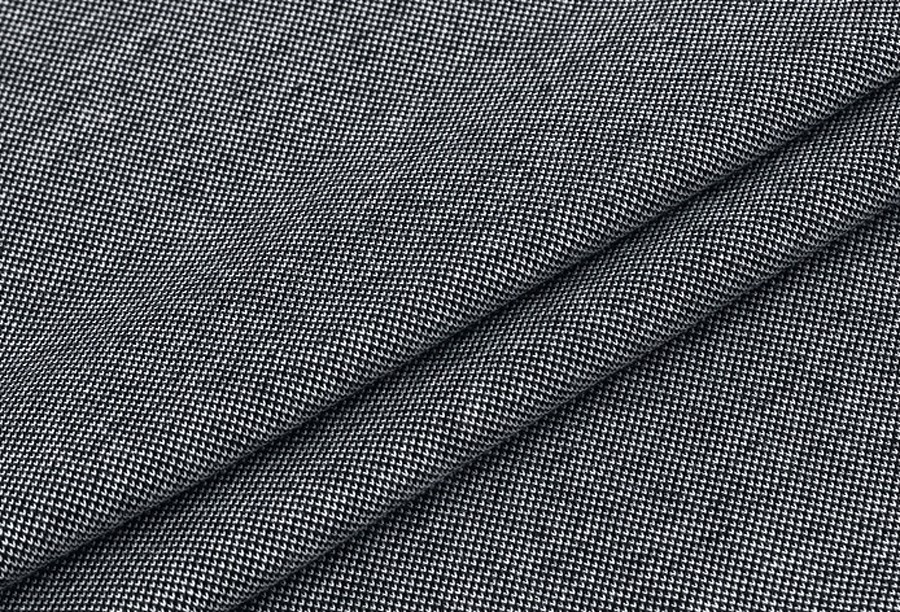
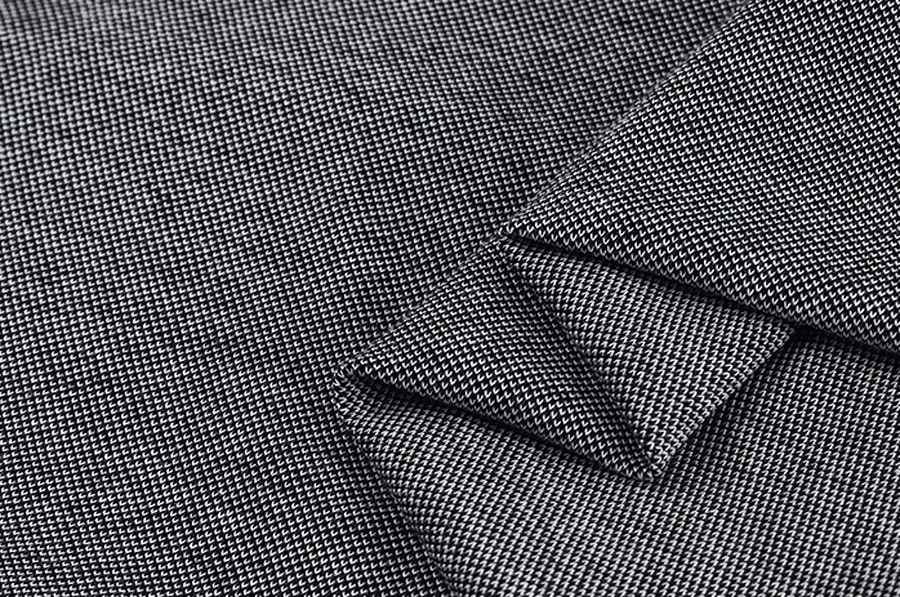
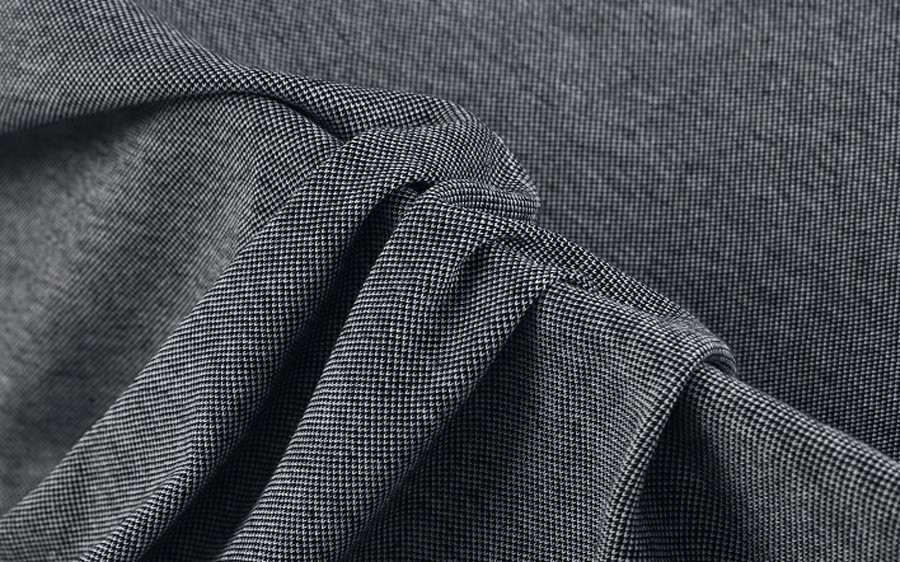
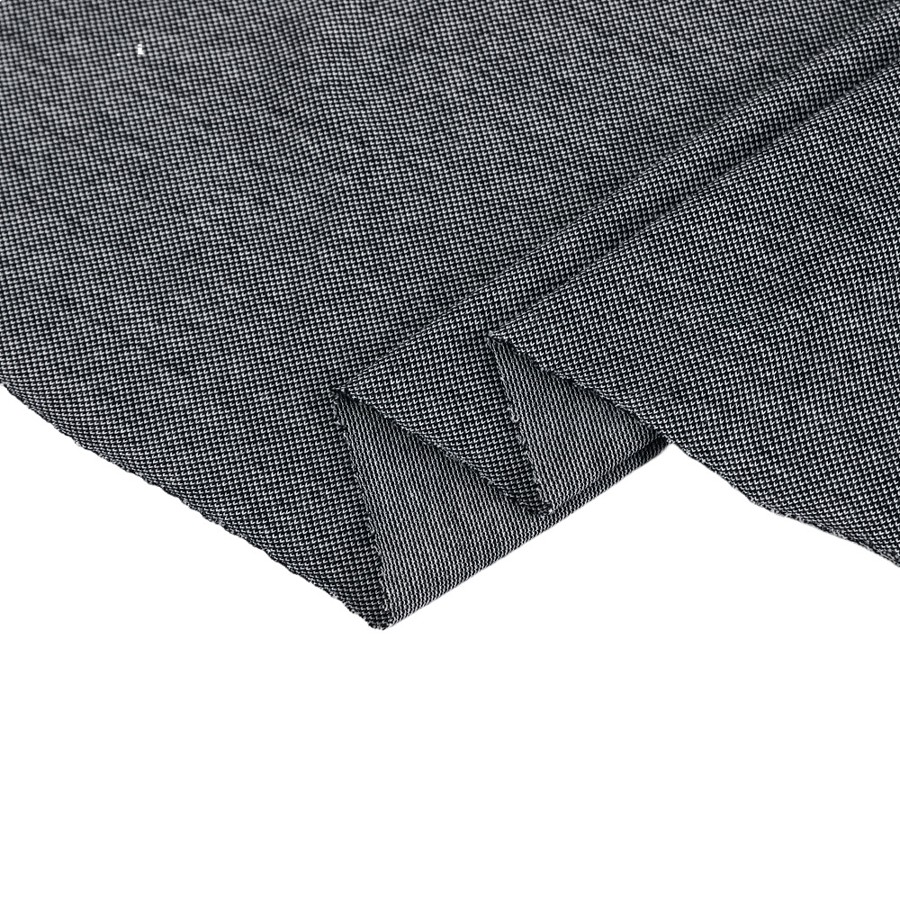
A 150 GSM cotton piqué, 100% cotton, on a 165 cm width, with the colour dyed into the yarn before knitting. This is polo cloth: the cells stand off the skin, the cloth holds a collar, and the two-tone face comes from the yarn rather than from anything printed or sprayed on the surface.
Where the colour comes from. A piqué can be dyed two ways. Most of the market knits first and dyes the roll afterwards — cheaper, one dye bath for any number of metres, and the colour sits on the outside of the yarn. This quality is the other way round: the cotton is dyed as yarn, then knitted, so the light and dark tones are separate yarns locked into the structure. The difference shows at a worn collar and at a rubbed seam, and it is the reason a shade here is priced per colour rather than per metre.
- Composition
- 100% cottonsingle fibre, no elastane
- Weight
- 150 GSM4.4 oz/yd² — polo weight
- Width
- 165 cm65 inch — narrow, plan the marker
- Structure
- Piqué, yarn-dyedcircular knit, cells raised by tuck stitches
- MOQ
- 300 kg≈ 1,212 running metres
- Colour
- No.001 – No.096shade card, quoted by number
Full specification
| Customization | Available — shade, weight and width confirmed at quotation |
|---|---|
| Knitting technics | A piqué on a circular machine: tuck stitches pull the face into raised cells and leave a small open channel between them, on a ground that is a plain jersey. Two tracks, four or six feeds. The cells are knitted in, not embossed and not bonded — which is why they survive washing and why the cloth has to be cut with the cells running the same way on every panel |
| Composition | 100% cotton, combed. No elastane, no polyester, no viscose. The stretch in this cloth comes from the knit structure alone — a piqué gives across the width and recovers on its own, but it is not a stretch quality, and a pattern drafted for a cotton-spandex polo will be tight in this one |
| Yarn | Two yarns: a finer count for the face and a slightly heavier ground yarn that gives the cells their body. Both are combed and ring spun, dyed before knitting. The counts are set at order — tell us the count your knitter runs and we match it against 150 GSM on 165 cm |
| Yarn count | Set at order |
| Weight | 150 GSM / 4.4 oz/yd². This is polo weight: heavy enough that the cells hold their shape and the cloth does not go transparent over a shoulder seam, light enough to wear through a summer shift. We hold the single figure rather than a band |
| Width | 165 cm / 65 inch, open width, tubular slit. Narrow for a polo mill — read the marker note below before you price the garment |
| Colour | Stock card, quoted by number (No.001–No.096), or dyed to order against an approved lab dip. This quality is shown in a charcoal heather; the number on the card is what we quote from, because a heather photographed under a studio light and the same heather in a warehouse are two different greys |
| Dyeing | Yarn-dyed: the cotton is dyed in yarn, then knitted. That is the whole character of this quality — see the note below — and it also sets the commercial terms: a colour is a yarn purchase, so the minimum is per shade and the lead time starts at the dye house, not at the knitting floor |
| Hand | Dry, slightly crisp, with the faint grip a piqué has from its raised cells. It softens with the first wash and settles into a polo hand rather than a T-shirt hand. No elastane means no slickness and no rubbery pull-back |
| Surface | A two-tone face: dark cells with lighter yarn showing at the crown of each cell, which is what gives the cloth its depth. Because the colour is dyed into the yarn before knitting, the tone difference is structural — it does not sit on the surface and it cannot rub off at a collar fold the way a surface dye or a print does |
| Fastness | Good on wash and on rub for a yarn-dyed cotton; moderate on light in the pale end of the card. The test worth naming for a polo is rubbing at the collar and the placket, where a dark shade against a light shirt shows any crock, plus the five-wash shade hold at 40°C |
| Shrinkage | Cotton piqué relaxes on the first wash, and a piqué moves more than a plain jersey because the cells pull in as the yarn relaxes. Expect 5–8% on the length and 2–4% on the width unless the finisher controls it; we finish to a residual figure agreed at order. Wash-test a polo before you cut a programme — a collar that drops 4 mm is a returned order, and the collar is cut on the length |
| Pilling | Low. Combed cotton on a piqué surface pills less than a carded fleece, and the raised cells hide what little fuzz there is. The place pilling does show is under a bag strap or a seat belt, where abrasion is continuous |
| Chlorine | No elastane to protect, so the cloth tolerates a chlorine wash far better than a cotton-spandex quality — but the colour does not. A yarn-dyed dark shade bleached once will not come back to the same tone, and the difference shows against the unbleached panels of the same garment |
| Reactive print and embroidery both work; pigment print on a pique sits on the cells and reads slightly framed unless the designer allows for it. Embroidery on a piqué is the standard polo treatment — back it with a light interlining or the stitches sink into the cells | |
| Making up | A piqué is sewn like a polo, not like a tee: the collar and the placket carry the garment. Use a 75–80 ball-point for the seams and a slightly longer stitch on the cells, because a dense stitch on a raised surface crushes the cell and leaves a polished line. The collar band should be cut on the length with the cells running vertically, and pressed on a collar press, not by hand |
| Cutting | Cut with the cells running the same direction on every panel — a sleeve cut across the cells catches the light differently from a body cut with them, and on a dark shade that reads as two colours under a shop light. One-way lay, and mark the roll ends |
| Ironing | Medium iron, 150°C, with steam, on the reverse for the body. A hard press on the face flattens the cells and leaves a shine on a dark shade; the collar and cuffs are the only parts that should see a firm press |
| Origin | Shaoxing City, Zhejiang, China |
| MOQ | 300 kg per shade |
| Price | US$ 15.15 / kg (300–999 kg) · US$ 13.77 / kg (1,000 kg+) |
| Yield | ≈ 4.04 running metres per kg at 150 GSM × 165 cm (≈ US$ 3.75 per running metre, ≈ US$ 2.27 per m²) |
| Lead time | Stock shades ship from the dye lot on hand; dyed-to-order shades are confirmed at quotation, and a yarn-dyed shade adds the yarn dyeing cycle before knitting starts |
| Packing | Roll-packed, roughly 20 kg per roll, poly bag inside a woven sack |
| Sample | Hanger swatch free; a 1 m cut of a stock shade charged at cost and credited against the bulk order |
| Documents | Invoice, packing list, B/L, certificate of origin; test reports on request |
| Care | Machine wash warm (40°C), no chlorine bleach on dark shades, line dry or tumble low, medium iron with steam. No fabric softener — a silicone softener fills the cells, and a piqué that has lost its cell structure has lost the only thing it does better than a plain jersey |
Yarn-dyed, and what that changes on your side
The visual gain is depth. On a piece-dyed piqué the colour is even across the face and the cells read only as shadow; here the crown of each cell catches a lighter yarn, so the surface has a two-tone flicker that holds up in a photograph and under a shop light. On a dark shade it is the difference between a polo that looks flat black and one that looks like cloth.
The commercial cost is upfront and worth understanding before you compare quotes. A yarn-dyed colour is a yarn order: the dye house runs the yarn, the knitter then builds the cloth, and the minimum is set per shade rather than per total order. Add a colour to a programme and you add a dye cycle, not a bucket of dye. That is why a yarn-dyed piqué quotes slower than a piece-dyed one, and why a small first order in four colours is usually the wrong shape for this quality — four shades, four yarn dyelots.
100% cotton, so the shape has to come from the knit
There is no elastane in this cloth, and that is a deliberate choice for a polo: a cotton-spandex piqué is comfortable and it also grows at the placket and the hem after a season, and it loses that growth to chlorine and a hot dryer. A 100% cotton piqué keeps its size. What it does not do is stretch for you — the give is in the structure, a few percent across the width, and it comes back on its own.
Two things follow. A pattern drafted on a stretch polo will be tight here — check the chest and the sleeve head before you confirm the quality, or ask us for the width and length figures on a washed sample and draft to those. And the collar has to be built, not stretched in. On a piqué the collar band carries the whole garment; a band cut across the cells or fused too hard will ripple at the fall within a few washes, and no amount of pressing brings it back.
A piqué moves on the first wash — test before you cut
Cotton relaxes when it gets wet, and a piqué relaxes unevenly because the cells pull in as the yarn swells. The length moves more than the width, which is exactly the direction that ruins a polo: the body shortens, the collar sits lower, and the placket opens at the bottom button. We finish to a residual shrinkage agreed at order, but the number that matters is the one on your own wash test, not the one on our sheet.
Ask for the figure on a washed sample, and state the wash you will use — 40°C domestic and a 60°C industrial wash give different numbers on the same cloth. If the garment is garment-dyed or washed after making, the cloth should be pre-shrunk before cutting, or the size set will be wrong before the first order ships.
165 cm, and a polo marker is not a tee marker
At 150 GSM on 165 cm a running metre weighs about 248 g, so a kilo runs about 4.04 metres and the 300 kg minimum is roughly 1,212 metres. A short-sleeve polo at this width normally marks at 1.25–1.45 m once the collar, the placket and the pocket are counted, so the minimum lands around 850–950 pieces — a real first order for a workwear or a corporate programme.
The collar is where a narrow width bites. A polo collar is cut from the length of the cloth, and at 165 cm two collars rarely nest side by side, so the collar consumption climbs faster than the body consumption. Ask your pattern room to re-mark at 165 before comparing this quality to a 180 cm one: the gap is usually 6–9 cm a garment, which at this price per metre is a bigger number than the difference between two quotes on the cloth.
Four things that go wrong on a yarn-dyed piqué. Cell direction: panels cut across the cells read as a different tone — one-way lay, always. Shade per dyelot: yarn dyeing runs in dyelots too, so keep lots apart at the cutting table and mark the roll ends. Collar ripple: a band cut across the cells or pressed too hard falls out of shape after a few washes. Softener: a silicone finish fills the cells and the cloth goes flat — it is the fastest way to turn a piqué into a plain jersey.
Ask for a swatch, a washed sample or a price
Tell us the shade number, the garment you are cutting and the weight you need held — polo, workwear shirt, corporate uniform or casual top. We reply within one working day with the price on the lot we hold, the shade card on this quality and a hanger swatch. If the order needs a shrinkage or a rubbing report, name the standard and we quote it with the cloth.
Related: the same piqué structure in a polyester-Sorona blend is the Sorona Pique Mesh 170–180 GSM, for a polo that has to stretch; for a light cotton knit in the same series see the Modal Jersey 120 GSM. The rest of the range is on the fabrics page.