Fabrics / Cotton & rayon · Jacquard eyelet
TR Eyelet Jacquard 250 GSM, 165 cm
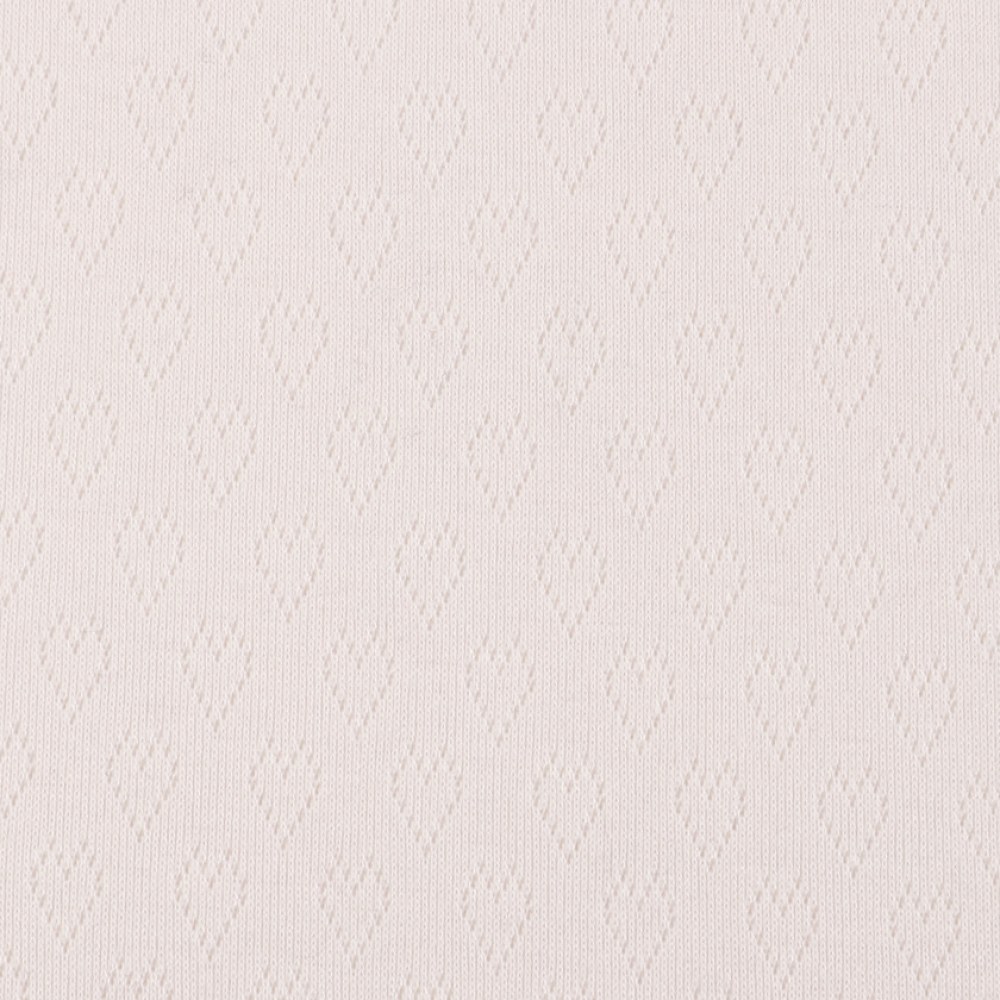
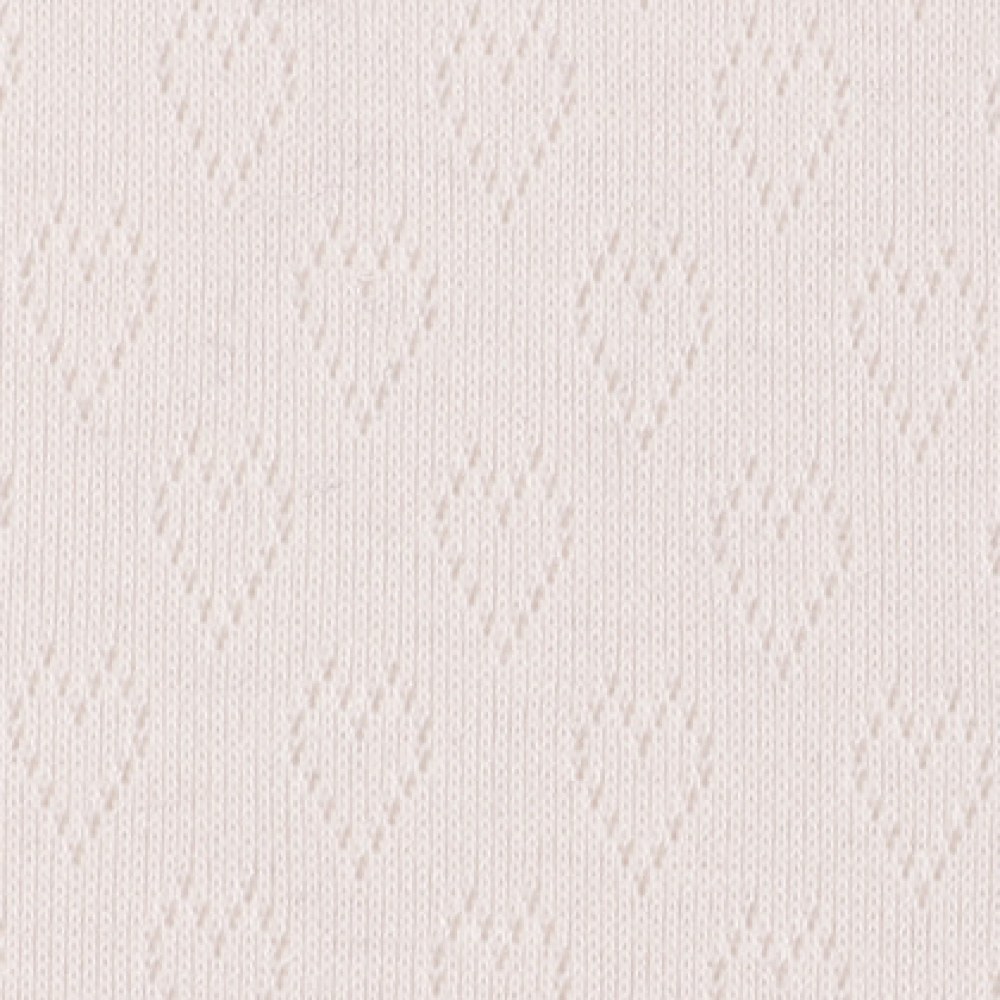
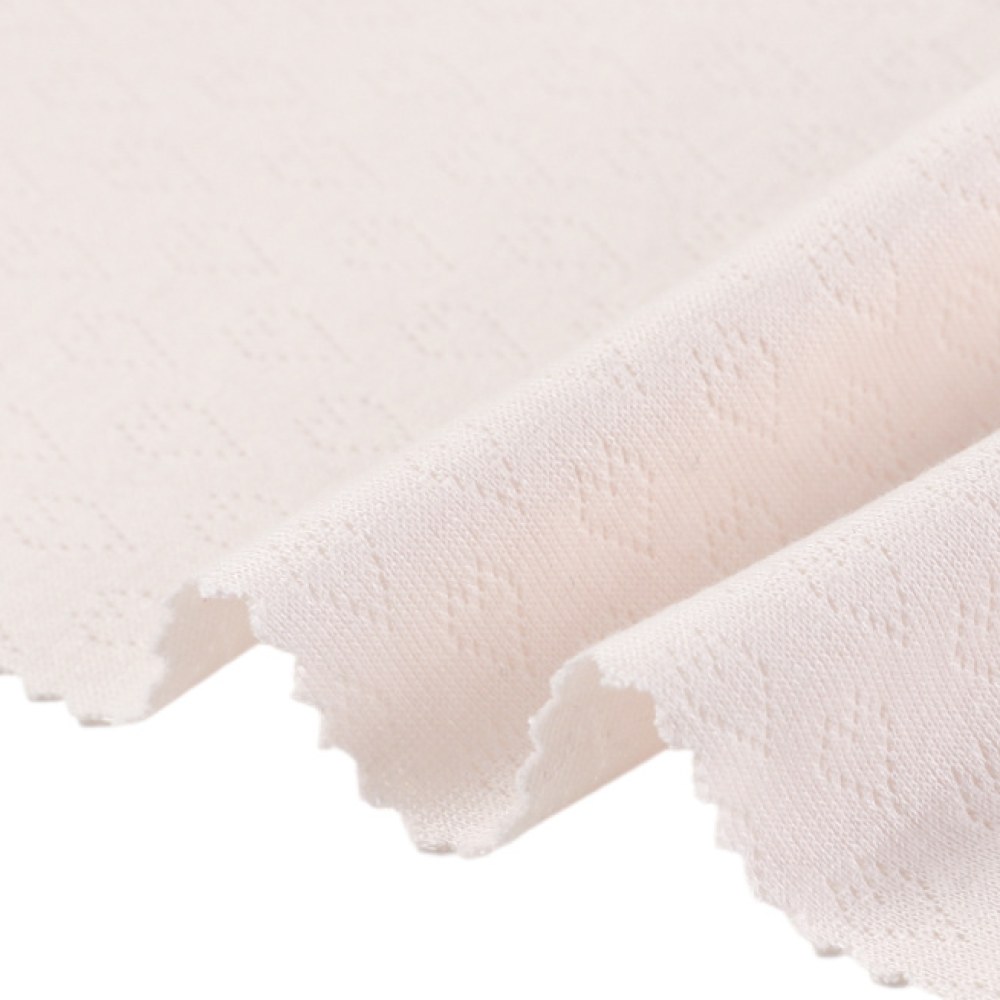
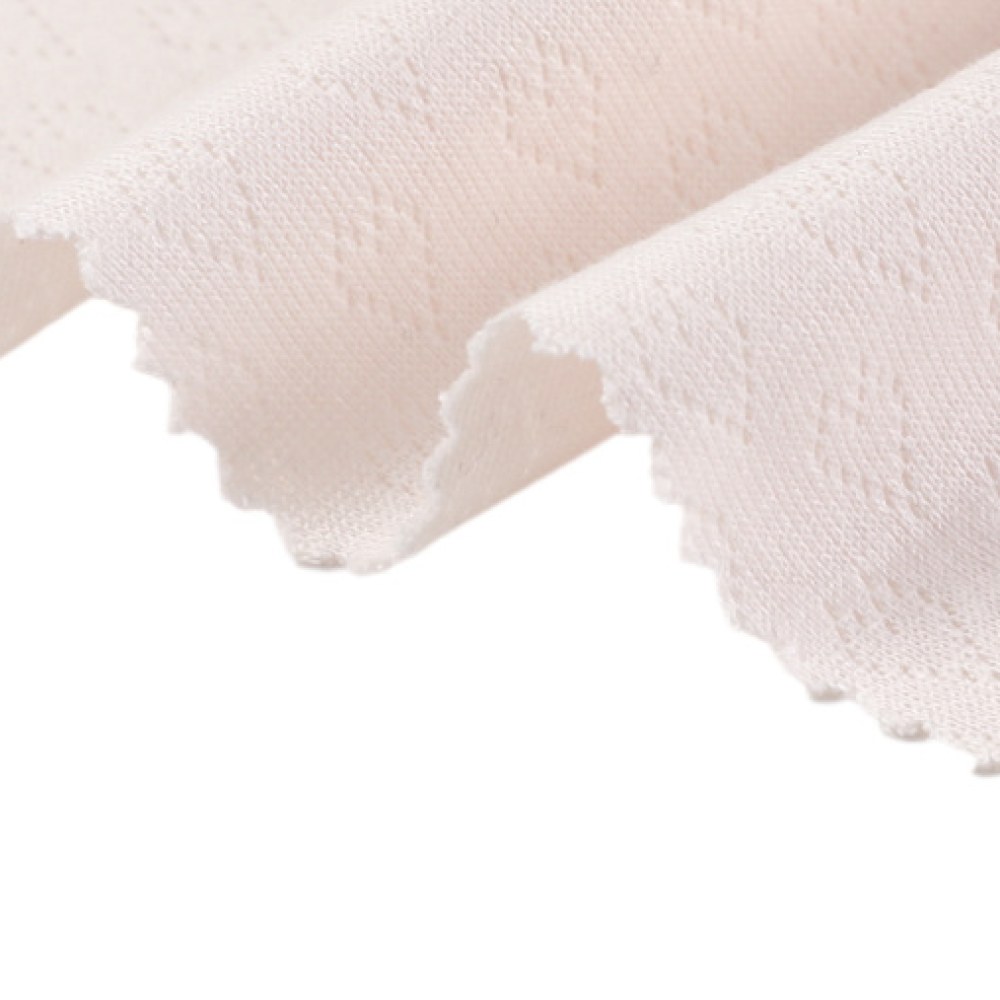
A loop-transfer eyelet jacquard in 64% rayon, 32% polyester and 4% spandex, 250 GSM on a 165 cm width. The holes are not cut or burned into the cloth — they are knitted in, by lifting loops aside so the pattern opens into air. That makes it a fashion knit with the drape of rayon and the give of a small spandex content: a blouse cloth, a dress cloth, a shirring cloth. The “TR” is real here — rayon and polyester are the two fibres, and the rayon is what gives it the fluid fall.

- Composition
- 64% rayon / 32% polyester / 4% spandexrayon gives the drape
- Weight
- 250 GSM7.4 oz/yd² — midweight fashion jersey
- Width
- 165 cm65 inch — standard jersey width
- Structure
- Eyelet jacquardloop transfer, the holes are the stitch
- MOQ
- 300 kgper shade, dyed to match available
- Colour
- No.001–No.096 or dyed to matchblush shown, any shade on request
Full specification
| Customization | Available — shade, weight, width and eyelet size confirmed at quotation. We can open the eyelets finer or coarser and hold a narrower or wider grid on the same base. |
|---|---|
| Knitting technics | An eyelet jacquard knit. The holes are formed by loop transfer: the machine lifts a loop and sets it aside, leaving an open space, then the jacquard brings the pattern back. So the eyelet is part of the stitch structure, not a hole punched after. It is a weft-knit, single-jersey-based jacquard — which is why it has the give of a knit and the pattern of a weave, and why a snag drops one loop rather than laddering down the length. |
| Composition | 64% rayon, 32% polyester, 4% spandex. Rayon (viscose) gives the fluid drape and the slightly cool, dry hand; polyester holds the shade and the shape through washing; the 4% spandex is what lets the cloth open a little and come back, so a gathered seam or a shirred panel relaxes instead of bagging. |
| Yarn | Rayon and polyester spun yarns in the ground, with a bare spandex laid in at the needle. Counts are set at order. |
| Yarn count | Other |
| Weight | 250 GSM / 7.4 oz/yd². A midweight fashion jersey — heavy enough to be a dress or a blouse with body, light enough to gather and shirr. |
| Width | 165 cm / 65 inch. A standard single-jersey width; the eyelet grid is set to register across it. |
| Colour | Stock shades quoted by number (No.001–No.096), or dyed to match a swatch you supply. The quality is shown in a pale blush; send the shade and we match it, not the chip. |
| Hand | Fluid and a little cool from the rayon, with the dry, papery note of a crepe-ish surface; the eyelets make it read as airy rather than dense. |
| Stretch & recovery | Opens roughly 25–35% across the width from the 4% spandex and the knit; recovery is light, not a power stretch. Fine for shirring and gentle gathers; not a compressive activewear stretch. |
| Shrinkage | 3–5% length and 2–3% width on the first wash, controlled by heat setting. |
| Pilling | Grade 3–4. The rayon ground is a regenerated cellulosic, so treat it like a viscose: avoid high-abrasion points and it will surface-fuzz before it holes. |
| Fastness | Wash and light fastness standard. Rayon is sensitive to prolonged wet exposure, so keep the care label simple: cool wash, short cycle, dry flat-ish. |
| Heat setting | Heat set to control the rayon shrinkage and to lock the 4% spandex recovery. Ask for the set temperature with the lot; do not let a finisher re-set a rayon-spandex cloth blind. |
| Making up | A ball-point or jersey needle, a light tension. The eyelets mean a straight stitch can drop a loop at the hole edge — a small zig-zag or a three-step zig-zag over the seams that cross the openwork is worth it. |
| Cutting | Lay it single-ply if the eyelet grid has to register across a panel; the holes are regular but a shifted grid reads immediately. Mark the grain off the wales, not the holes. |
| Pressing | Low to medium, through a cloth, never direct on the openwork or the iron fills the holes. Steam lifts the rayon; a hot shoe glazes it. |
| Abrasion | Moderate. The rayon face is the wear surface; it will surface-fuzz before it holes. Fine for dresses and blouses, not for a seat-belt rub point. |
| Origin | Shaoxing City, Zhejiang, China |
| MOQ | 300 kg per shade. |
| Price | US$ 13.00 / kg (300–999 kg) · US$ 11.67 / kg (1,000 kg+) |
| Yield | ≈ 2.4 running metres per kg at 250 GSM × 165 cm (≈ US$ 5.36 per running metre, ≈ US$ 3.25 per m²) at the 1,000 kg+ price that is ≈ US$ 4.81 per running metre, ≈ US$ 2.92 per m² |
| Lead time | Stock shades ship from the lot on hand; dyeing to match adds 7–10 days for the lab dip and your approval, plus bulk. |
| Packing | Roll-packed, about 20 kg per roll, poly bag inside a woven sack. |
| Sample | Hanger swatch and shade card free; a lab dip against your own cloth charged at cost and credited against the bulk order. |
| Documents | Invoice, packing list, B/L, certificate of origin; test reports on request. |
| Care | Machine wash cool (30°C), short cycle, mild detergent, dry flat-ish. Do not bleach, do not tumble hot; press low through a cloth. |
The hole is the stitch, not a cut
The buyer’s first question is usually “is it burnt?” It is not. A burnt or lasered eyelet is a hole punched after the cloth is made, and it frays. A loop-transfer eyelet is made on the machine: the loop is lifted and the stitch is re-formed around the gap, so the hole is structurally finished at the needle. That is the difference between a cloth that survives a wash and one that comes apart at the first.
It also means the eyelet size and the grid are a programming choice, not a tooling one. We can hold the same base and open the holes finer for a whisper of mesh, or coarser for a deliberate openwork, and the edges stay clean either way.
Rayon is the reason it drapes
Sixty-four percent of this cloth is rayon. That is why it falls the way it does and why it feels cool and dry rather than plastic. The 32% polyester is the quiet partner: it holds the shade through washing and keeps the cloth from going limp, and the 4% spandex is what lets a gathered neckline or a shirred yoke open and then settle instead of permanently stretching.
The honest limit is the rayon one. A viscose-rich cloth surface-fuzzes under hard abrasion and it does not love a long, hot, wet cycle. For a blouse, a dress, a soft shirt it is exactly right; for a high-rub workwear panel it is the wrong cloth, and we will say so.
250 GSM is the sweet spot for a fashion knit
250 GSM is heavy enough to be a dress or a blouse with body and light enough to gather, shirr and layer. A 180 GSM eyelet reads as a tee; a 300 GSM reads as a structured piece. At 250 it sits in the band where a designer can do both — a shirred bodice and a flowing skirt out of one cloth.
And one planning note: the eyelets mean a straight stitch can drop a loop at the hole edge, so spec a small zig-zag over any seam that crosses the openwork. It is a ten-minute change at the tech-pack stage and it is the difference between a sample that looks finished and one that comes apart in the maker’s hands.
Four things that go wrong on an eyelet jacquard. Grid registration: lay it single-ply if the holes must line up across a panel. Seam finish: zig-zag over seams that cross the openwork, or a loop drops. Rayon care: cool, short, dry flat-ish — a hot long cycle fuzzes the face. Shade: match the blush to your trim, not to a chip.
Send a swatch or pick a shade
Tell us the garment, the shade and the quantity — or take a stock shade and we will send the shade card and a hanger swatch. For a made-to-match blush, post or courier a swatch and we come back with a lab dip and a price at your volume.
This eyelet sits with the other rayon-rich cloths: the Rayon Jacquard 150 GSM in a solid jacquard, and the Modal Jersey 120 GSM for a plainer fluid top. The rest of the range is on the fabrics page.