Fabrics / Cotton & rayon · Warp-knit crepe
TR Warp-Knit Crepe 200 GSM, 140 cm
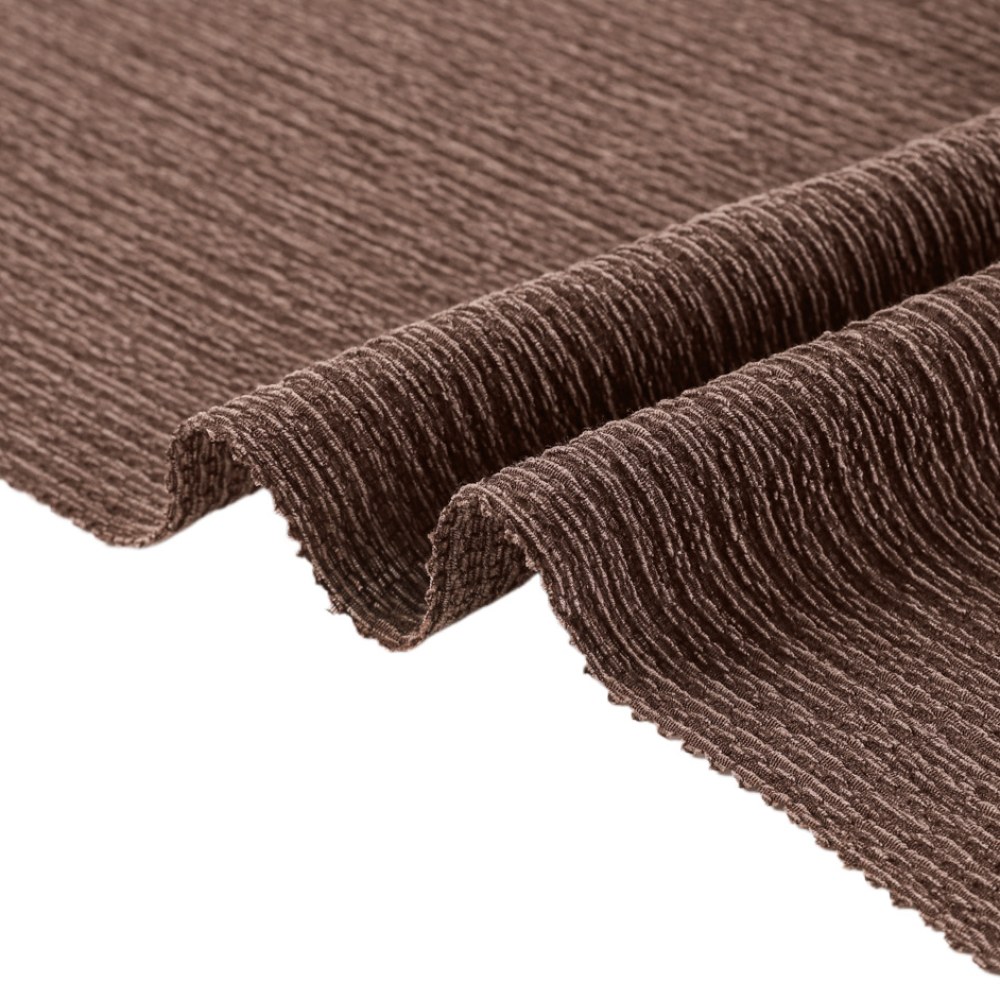
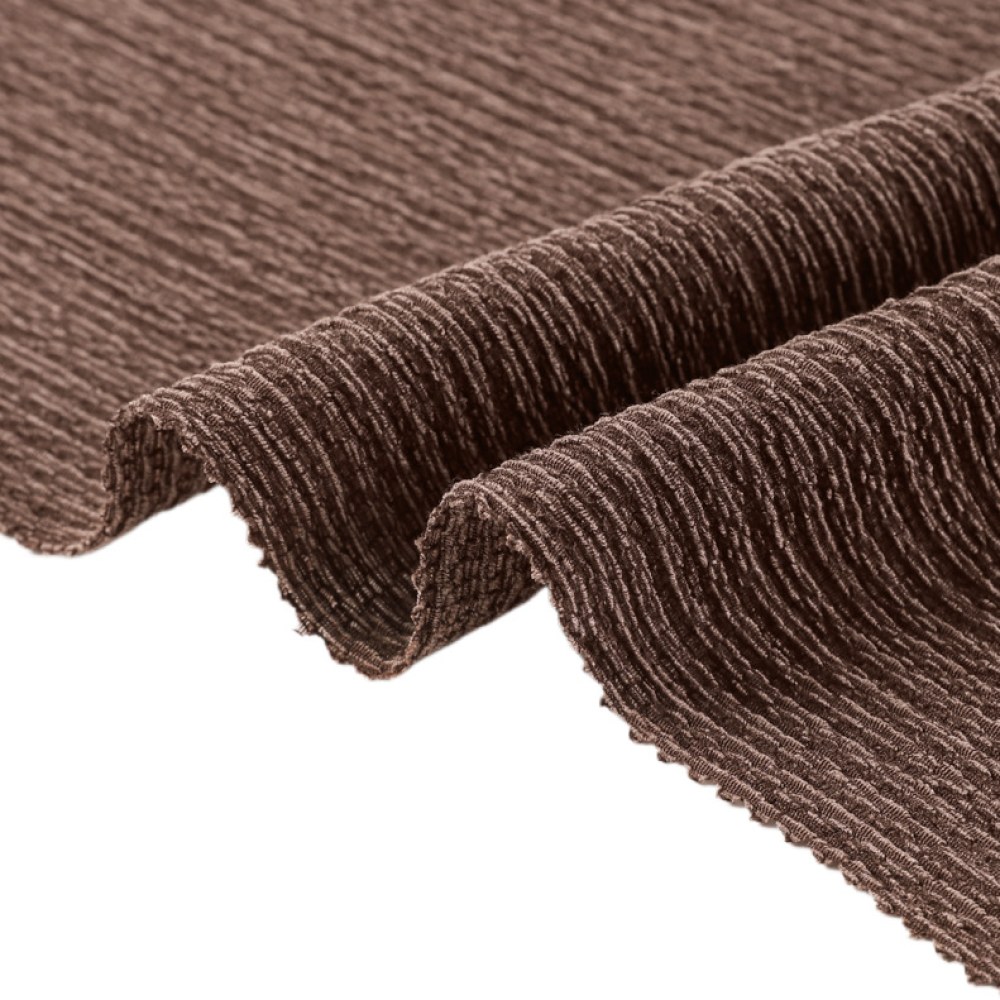
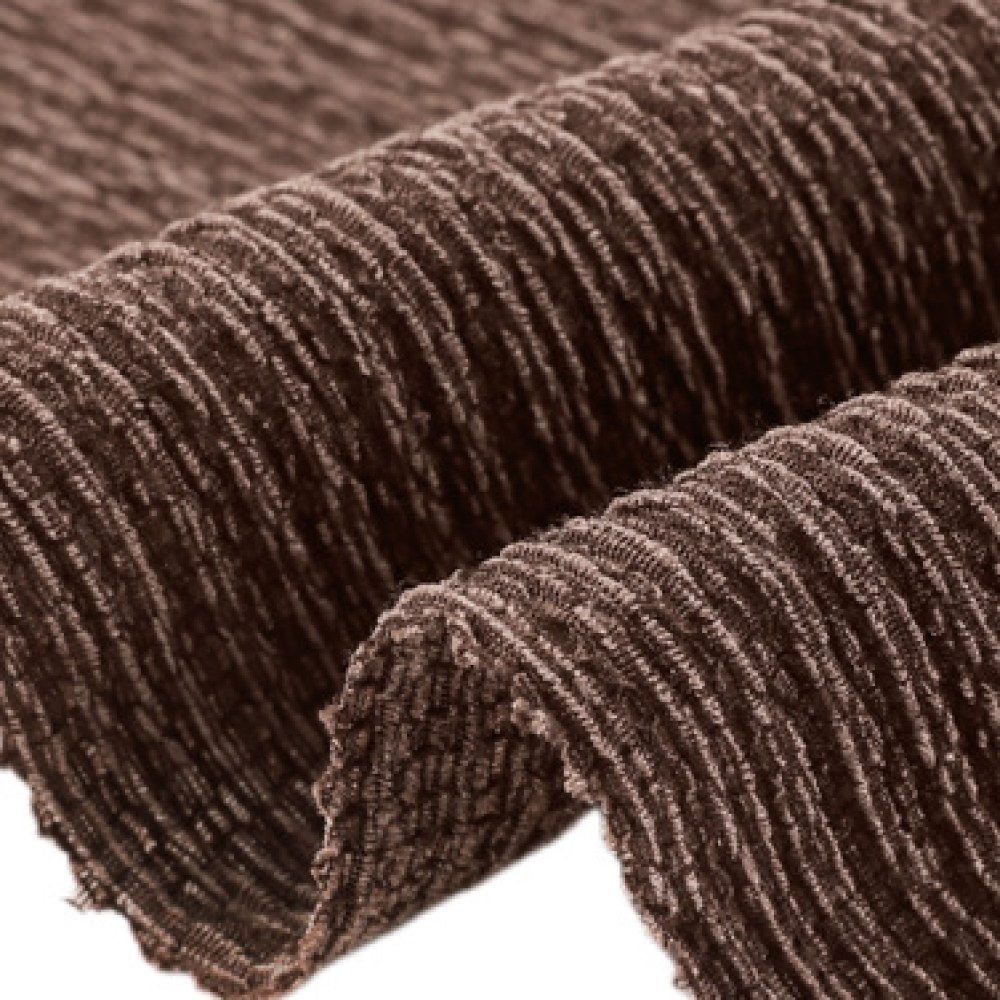
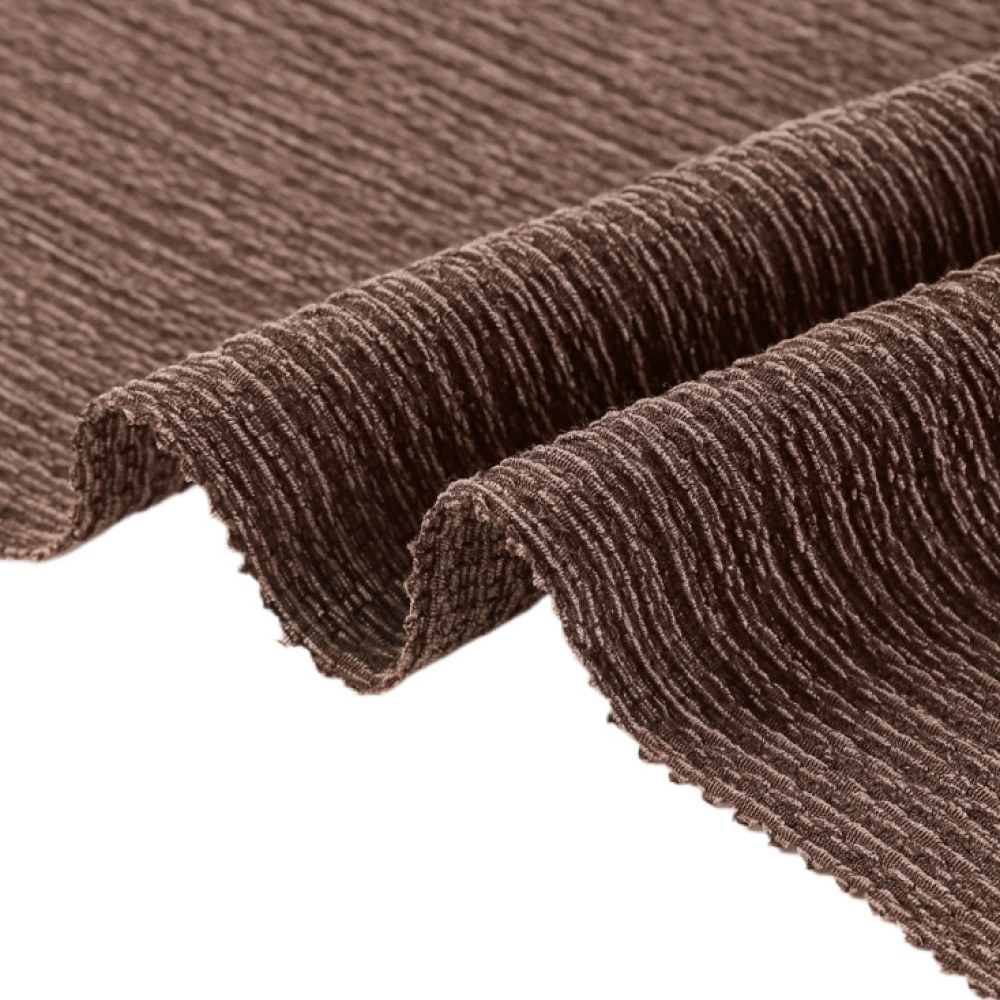
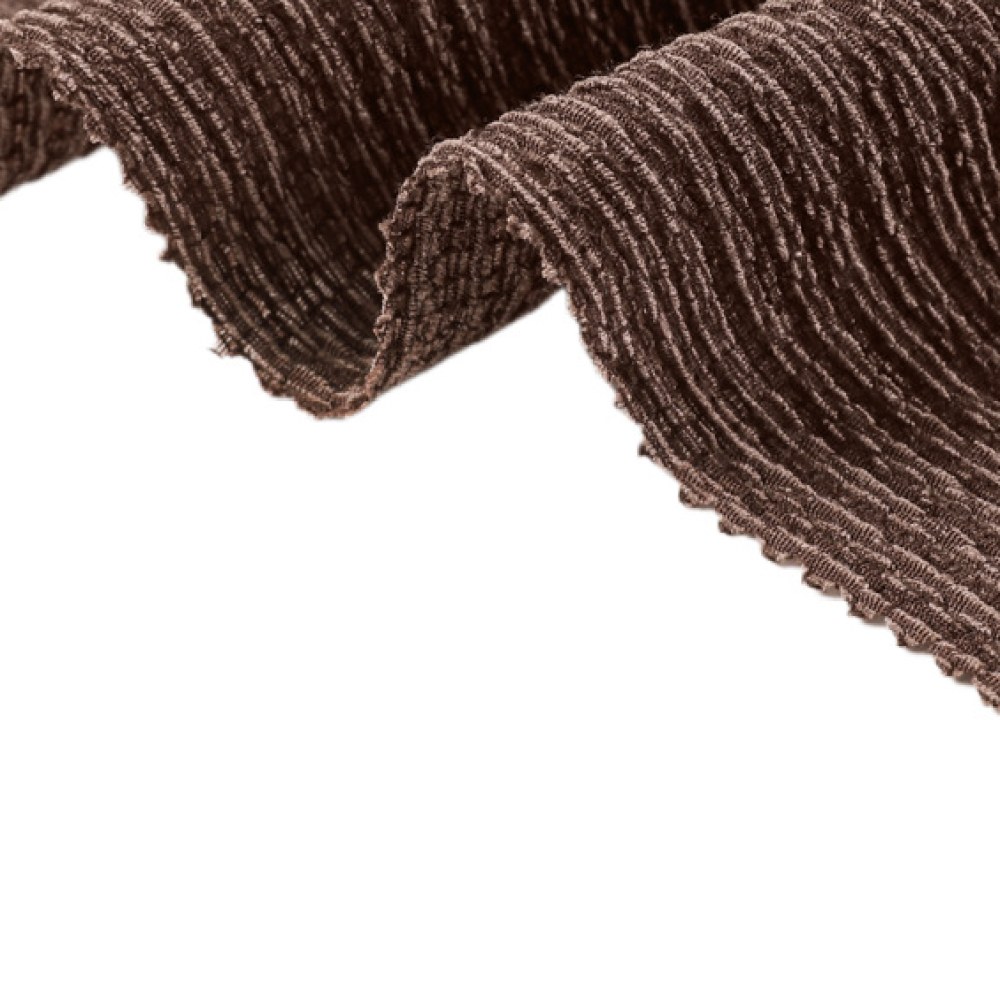
A warp-knit crepe in 100% polyester, 200 GSM on a 140 cm width. Warp knitting locks each wale on its own, so the cloth does not ladder the way a jersey does; the crepe is the texture of the yarn and the stitch, a fine matte crinkle that reads dry and papery rather than shiny. This is the cloth for a blazer, a wide-leg trouser, a skirt — the tailored end of the knit range. The “TR” here is our line name; the cloth itself is 100% polyester, which is exactly why it is easy care.
- Composition
- 100% polyesterno rayon, no spandex — easy care
- Weight
- 200 GSM5.9 oz/yd² — a stable midweight
- Width
- 140 cm55 inch — narrower than a jersey
- Structure
- Warp-knit crepelocks wale-by-wale, does not ladder
- MOQ
- 300 kgper shade, dyed to match available
- Colour
- No.001–No.096 or dyed to matchchocolate shown, any shade on request
Full specification
| Customization | Available — shade, weight and width confirmed at quotation. The crepe depth and the wale density can be held on the same base. |
|---|---|
| Knitting technics | A warp-knit crepe. Warp knitting feeds a yarn to every needle from a beam, locking each wale independently, so the cloth does not ladder or run the way a weft knit does — snag it and it stops at the course, it does not zip down the length. The crepe surface is the texture of the yarn and the stitch: a fine, matte crinkle that reads as dry and papery. It is a stable knit, not a woven, but it behaves more like a woven crepe than like a jersey. |
| Composition | 100% polyester. No rayon, no cotton, no spandex — which is exactly why it is easy care: it does not shrink, does not fade the way a cellulosic does, and needs no recovery management. |
| Yarn | Texturised polyester — the yarn is crimped (false-twist or air-jet) so the surface breaks light into the crepe. Counts are set at order. |
| Yarn count | Other |
| Weight | 200 GSM / 5.9 oz/yd². A stable midweight with the body of a crepe and none of the weight. |
| Width | 140 cm / 55 inch. Narrower than a standard jersey width — see the note on what that costs. |
| Colour | Stock shades quoted by number (No.001–No.096), or dyed to match a swatch you supply. The quality is shown in a chocolate; send the shade and we match it, not the chip. |
| Hand | Dry, matte, papery; the crepe gives it body without weight. No spandex, so no stretch to speak of — it is a stable cloth. |
| Stretch & recovery | Negligible. This is a stable warp knit, not a stretch jersey. It holds a pressed fold and a tailored line, which is why it is used for blazers and wide-leg trousers rather than tees. |
| Shrinkage | Minimal — under 2% — because it is 100% polyester and heat set. |
| Pilling | Grade 4. Polyester pills less than a rayon or cotton, and the texturised yarn wears as a surface, not a ball. |
| Fastness | Excellent wash and light fastness — the standard argument for polyester on programmes that get washed hard. |
| Heat setting | Heat set at finishing; stable. No spandex to manage, so the finisher cannot take the recovery out of it — there is none to take out. |
| Making up | A universal or ball-point needle; a light tension. It sews like a stable knit — no stretch to fight, so a straight stitch holds. |
| Cutting | Lays and cuts like a woven crepe: single or double ply, a sharp blade, mark the grain off the wales. |
| Pressing | Medium-high is fine — polyester takes heat. Press on the reverse or through a cloth to keep the crepe from flattening; once you iron the crinkle out, it does not come back. |
| Abrasion | Good. Polyester is the durable choice; the crepe surface hides rub better than a flat face. |
| Origin | Shaoxing City, Zhejiang, China |
| MOQ | 300 kg per shade. |
| Price | US$ 13.00 / kg (300–999 kg) · US$ 11.67 / kg (1,000 kg+) |
| Yield | ≈ 3.6 running metres per kg at 200 GSM × 140 cm (≈ US$ 3.64 per running metre, ≈ US$ 2.60 per m²) at the 1,000 kg+ price that is ≈ US$ 3.27 per running metre, ≈ US$ 2.33 per m² |
| Lead time | Stock shades ship from the lot on hand; dyeing to match adds 7–10 days for the lab dip and your approval, plus bulk. |
| Packing | Roll-packed, about 20 kg per roll, poly bag inside a woven sack. |
| Sample | Hanger swatch and shade card free; a lab dip against your own cloth charged at cost and credited against the bulk order. |
| Documents | Invoice, packing list, B/L, certificate of origin; test reports on request. |
| Care | Machine wash cool to warm, mild detergent, tumble dry low or line dry; press medium through a cloth. No special care — that is the polyester point. |
Warp-knit means it will not ladder
The difference a buyer feels is the laddering. A weft-knit jersey, snag it and a run walks down the length of the garment. A warp knit feeds a yarn to every needle and locks each wale on its own, so a snag stops at the course it happened in. For a blazer or a trouser that gets caught on a desk edge, that is the difference between a garment that survives and one that is ruined by a thread.
It also presses and tailors like a woven crepe. A jersey fights you — it wants to curl and it wants to stretch under the foot. This cloth holds a fold, takes a crease, and sits where you put it. That is why it is the knit that gets made into tailored pieces rather than tees.
The crepe is the yarn, not a finish
The crinkle is not a chemical or a calendering that washes out. It is the texturised polyester yarn itself — crimped so the surface breaks light and reads matte. So the crepe is in the cloth for its life, not for its first ten washes, and it is why the cloth looks expensive without looking shiny.
The trade is the narrow width. A crepe yarn runs on a warp-knit beam at 140 cm, not the 165–170 cm a jersey gives you. That is a planning number, not a defect — read the note below before you cost a laid marker.
140 cm is a planning number, not a defect
A 140 cm cloth costs more per garment than a 170 cm one, because fewer pieces lie across the width. On a blazer or a wide-leg trouser that barely uses the width anyway, it is a non-event — you were never going to get two bodies across 170 cm of a tailored piece. On a full skirt or a dress that wants the width, it is a real few percent.
So the honest advice: spec this cloth for the tailored pieces it is built for, and let a wider jersey do the wide, fluid work. We will tell you which is which at the enquiry rather than let a marker surprise you.
Three things that go wrong on a warp-knit crepe. Pressing: iron the crinkle out and it is gone for good — press on the reverse or through a cloth. Width: 140 cm, so cost the marker before you commit a programme. Shade: match the chocolate to your trim, not to a chip.
Send a swatch or pick a shade
Tell us the garment, the shade and the quantity — or take a stock shade and we will send the shade card and a hanger swatch. For a made-to-match colour, post or courier a swatch and we come back with a lab dip and a price at your volume.
The tailored end of the range sits next to the Poly-Spandex Single Jersey 200 GSM for the stretch pieces, and the Sorona Piqué Mesh 170-180 GSM for a breathable structured cloth. The rest of the range is on the fabrics page.