Fabrics / Cotton & rayon · Jacquard jersey
TR Dot & Stripe Jacquard Jersey 207 GSM, 170 cm
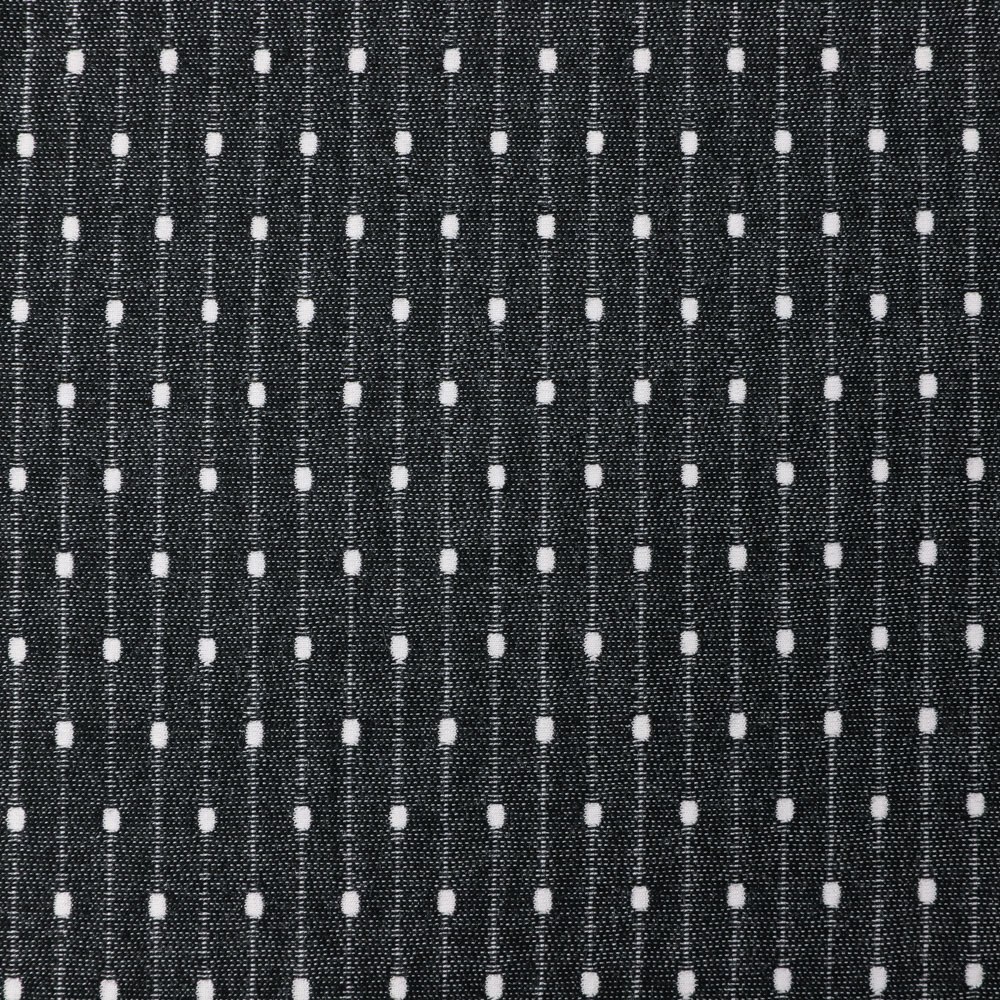
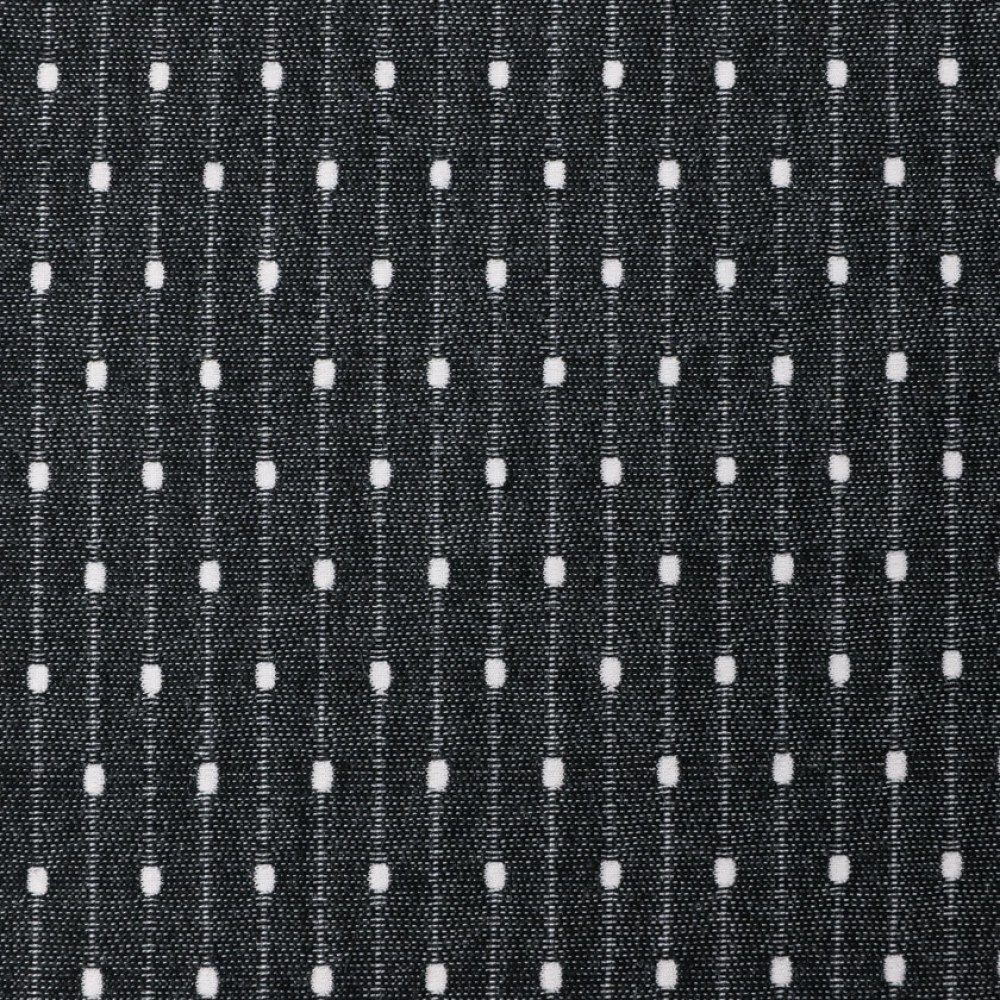
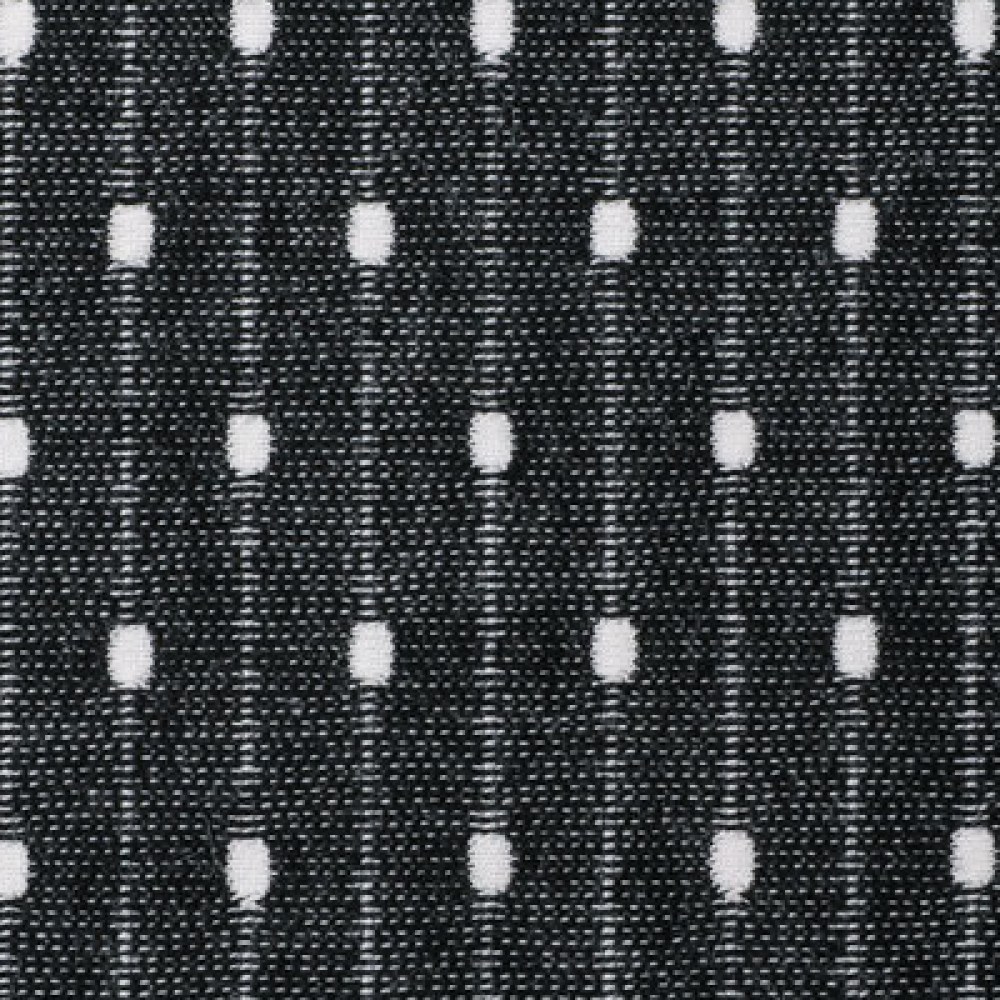
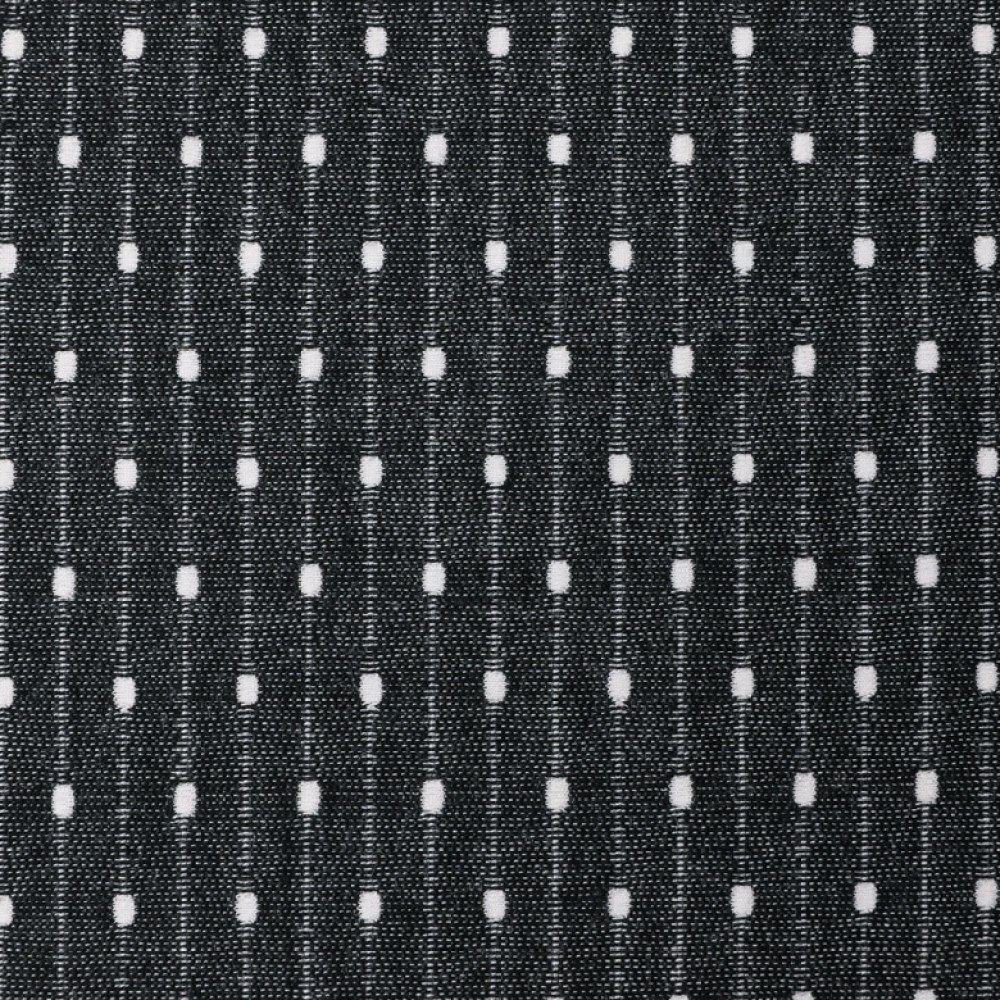
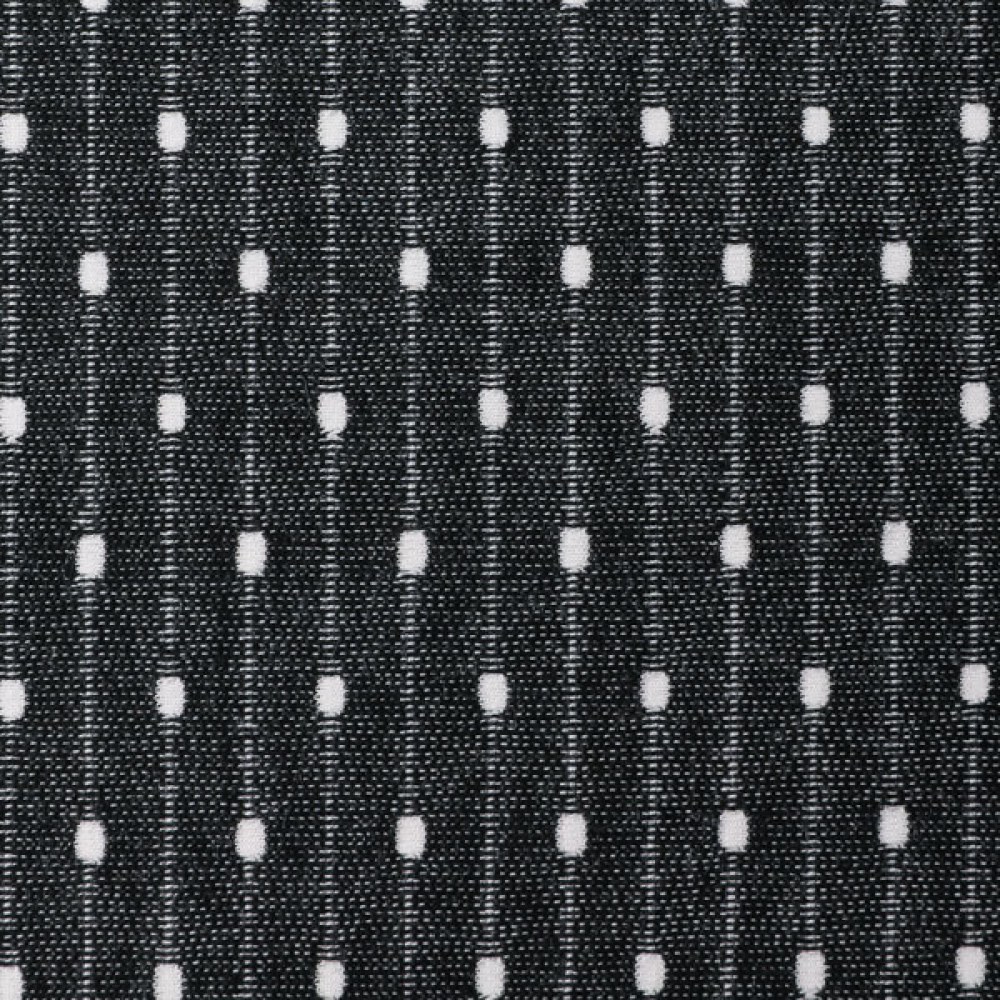
A single-jersey jacquard in 65% cotton, 35% polyester, 207 GSM on a 170 cm width, knitted with a regular white dot grid over a fine vertical pinstripe. The pattern is not printed — it is knitted in, stitch by stitch, on a jacquard machine, so the dots stay sharp through washing and read the same on both faces. Cotton gives the hand and the breathability; polyester gives the strength and keeps the colour fast. The “TR” here is our line name; the cloth is cotton-rich with a polyester share, no spandex.
- Composition
- 65% cotton / 35% polyestercotton hand, poly strength
- Weight
- 207 GSM6.1 oz/yd² — a substantial jersey
- Width
- 170 cm67 inch — standard jersey width
- Structure
- Jacquard single jerseydots and stripe knitted in
- MOQ
- 300 kgper shade, dyed to match available
- Colour
- No.001–No.096 or dyed to matchcharcoal-and-white shown
Full specification
| Customization | Available — shade, weight, width and the dot/stripe contrast confirmed at quotation. The ground and the pattern colour are set together, so a made-to-match means matching both. |
|---|---|
| Knitting technics | A single-jersey jacquard. The dots and the pinstripe are knitted into the cloth on a jacquard machine — the pattern is a difference in which needles pull a stitch, not a print laid on top. So the dots will not wash off, will not crack, and read the same on both sides (though the back is flatter). It is a weft-knit jersey, so it has the natural give of a tee, with no spandex. |
| Composition | 65% cotton, 35% polyester. Cotton gives the hand and the breathability; polyester gives the cloth strength, a bit of recovery, and the colour fastness that keeps the dots sharp through washing. No spandex — the stretch is the knit’s own. |
| Yarn | Combed cotton and polyester spun yarns; counts are set at order. |
| Yarn count | Other |
| Weight | 207 GSM / 6.1 oz/yd². A midweight jersey — a substantial tee or a light top, with enough body to hold a printed-looking jacquard. |
| Width | 170 cm / 67 inch. A standard jersey width; the dot grid is set to register across it. |
| Colour | Stock shades quoted by number (No.001–No.096), or dyed to match a swatch you supply. On a jacquard the ground and the dot are two yarns, so “match the shade” means matching both together — send the cloth, not a chip. |
| Hand | Cotton-soft and breathable on the face, with the slight firmness of a jacquard. The pinstripe and dots give it a fashion read without a print. |
| Stretch & recovery | The knit’s own recovery — opens roughly 30–40% across the width and comes back to near-flat because the polyester shares the load with the cotton. No power stretch. |
| Shrinkage | 4–6% length and 3–4% width on the first wash (cotton content) — controlled by heat setting / pre-shrink at finishing. |
| Pilling | Grade 3–4. The cotton face pills a little; the polyester in the blend keeps it from balling. |
| Fastness | Good wash fastness; the jacquard means the dot colour is in the yarn, so it stays sharp. Light fastness standard. |
| Making up | A ball-point needle, a light tension; a straight stitch is fine, but watch the pinstripe registration across panels — the stripe is the grain reference. |
| Cutting | Single-ply if the stripe has to line up across a front; the pinstripe is the straight line to cut against, cleaner than the dot grid. |
| Pressing | Medium, through a cloth; cotton takes steam, and do not flatten the jacquard relief — the slight raised dot is part of the look. |
| Abrasion | Good for a cotton jersey; the polyester share helps the surface wear. |
| Origin | Shaoxing City, Zhejiang, China |
| MOQ | 300 kg per shade. |
| Price | US$ 13.00 / kg (300–999 kg) · US$ 11.67 / kg (1,000 kg+) |
| Yield | ≈ 2.8 running metres per kg at 207 GSM × 170 cm (≈ US$ 4.57 per running metre, ≈ US$ 2.69 per m²) at the 1,000 kg+ price that is ≈ US$ 4.11 per running metre, ≈ US$ 2.42 per m² |
| Lead time | Stock shades ship from the lot on hand; dyeing to match adds 7–10 days for the lab dip and your approval, plus bulk. |
| Packing | Roll-packed, about 20 kg per roll, poly bag inside a woven sack. |
| Sample | Hanger swatch and shade card free; a lab dip against your own cloth charged at cost and credited against the bulk order. |
| Documents | Invoice, packing list, B/L, certificate of origin; test reports on request. |
| Care | Machine wash cool (30°C), mild detergent, line dry or tumble low. Cotton content means a little shrink on first wash — pre-shrunk at finishing where the programme needs it. |
The pattern is in the stitch, not on it
The first thing to know about a jacquard jersey is that the dots and the stripe are knitted in, not printed. On a printed jersey the white sits on the surface and the first hard wash starts to dull it; on this cloth the white is a yarn pulled to the face by the jacquard, so it stays sharp for the life of the garment. It also reads the same on the back, just flatter — which matters if the inside shows.
The cost of that is registration. A jacquard is a programmed pattern, so the dot grid and the pinstripe are fixed in the cloth. If your design needs the stripe to land on a seam, cut single-ply and use the stripe as the grain line — it is cleaner to cut against than the dot grid.
Cotton-rich, with the polyester doing the quiet work
Sixty-five percent cotton means the hand and the breathability are real — this is not a plastic-feeling synthetic jersey. The 35% polyester is the quiet partner: it carries some of the recovery so the cloth comes back flatter after a stretch than a pure-cotton jersey would, and it keeps the dot colour fast through washing.
The honest limit is the cotton one. A 65% cotton jersey shrinks a little on first wash and pills a little on the face. We pre-shrink and set it at finishing where the programme needs it; for a relaxed casual top it is a non-event, for a precise fitted piece it is a number to plan.
207 GSM is a substantial jersey
Two hundred and seven GSM is heavier than a fashion tee and lighter than a sweatshirt — it is the band where a jersey can be a finished top on its own, not a layer. With a knitted-in dot-and-stripe it reads as a designed cloth rather than a blank one, so it carries a simple silhouette without looking plain.
And because there is no spandex, the stretch is the knit’s own — gentle, with the recovery the polyester share provides. Spec it for casual tops, skirts and fashion wear, not for anything that needs a compressive hold.
Three things that go wrong on a dot-and-stripe jacquard jersey. Registration: cut single-ply and use the pinstripe as the grain line. Shrink: a little first-wash shrink on the cotton — pre-shrunk where the fit is precise. Shade: matching means matching the ground and the dot together, so send the cloth, not a chip.
Send a swatch or pick a shade
Tell us the garment, the shade and the quantity — or take a stock shade and we will send the shade card and a hanger swatch. For a made-to-match ground and dot, post or courier a swatch and we come back with a lab dip and a price at your volume.
The cotton-rich jacquards sit next to the Yarn-Dyed Cotton Piqué 150 GSM for a woven-in cotton pattern, and the Modal Jersey 120 GSM for a plainer fluid top. The rest of the range is on the fabrics page.