Fabrics / Cotton & rayon · Print jersey
Abstract Doodle Print Rayon Jersey 190 GSM, 170 cm
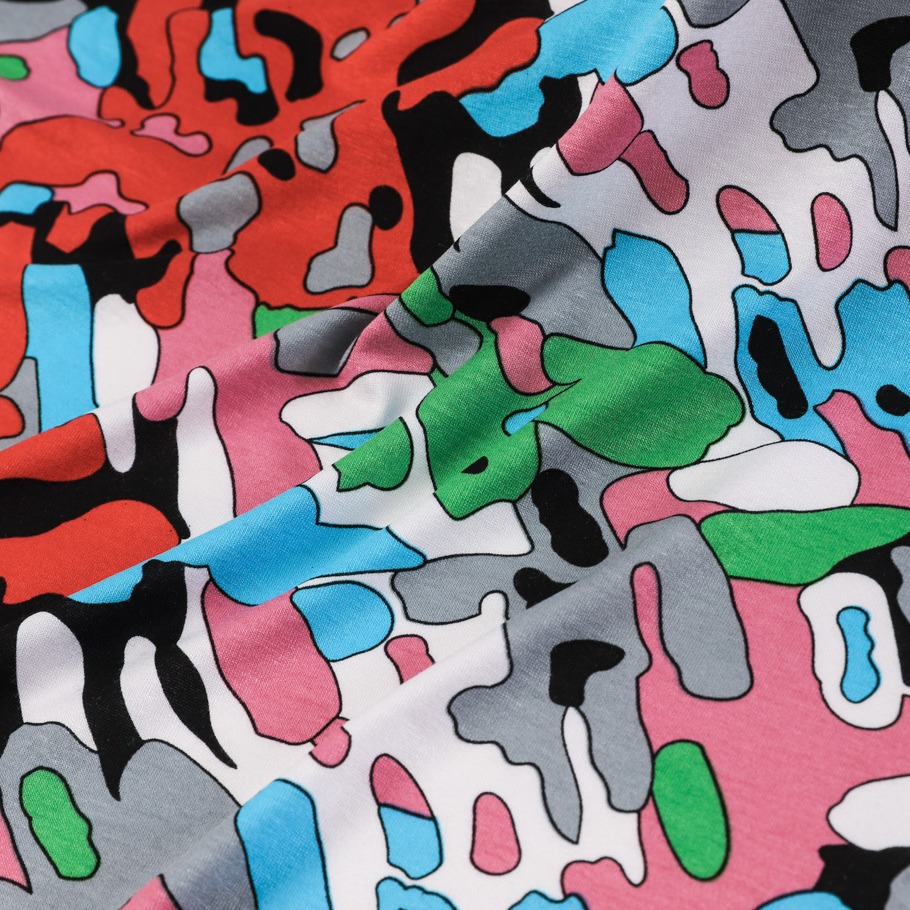
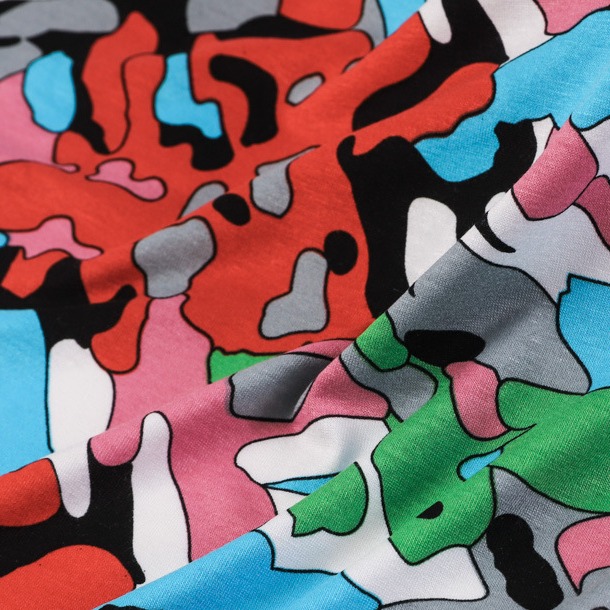
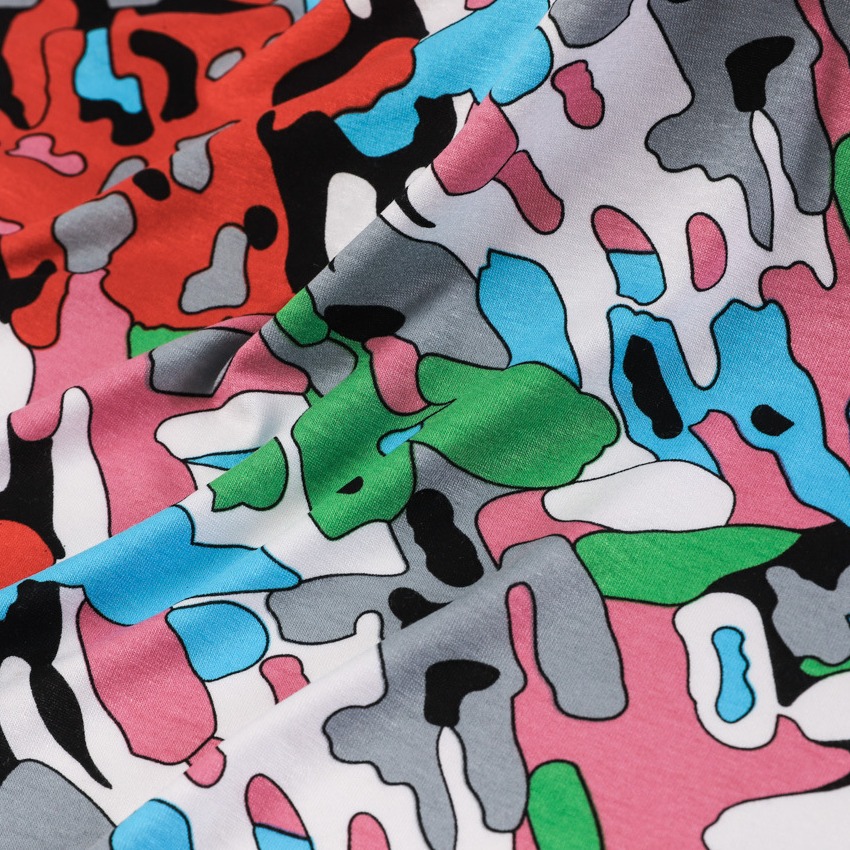
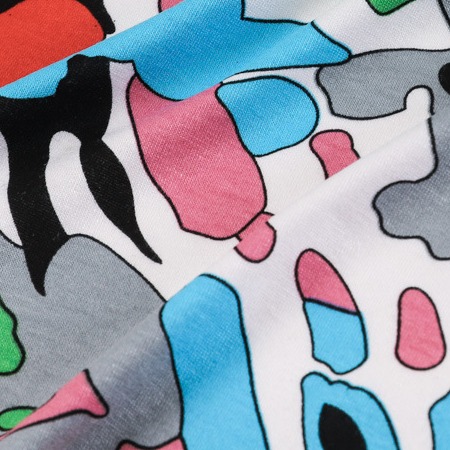
A single-jersey print in 96% rayon and 4% spandex, 190 GSM on a 170 cm width, carrying a bold abstract doodle print. The cloth is knitted first and printed after — the rayon gives the fluid drape and the cool, dry hand, and the 4% spandex gives the gentle give a jersey needs. Because the print sits on a rayon ground it reads softer and more “fashion” than a poly print would: a blouse cloth, a dress cloth, a kidswear cloth.
- Composition
- 96% rayon / 4% spandexrayon gives the drape
- Weight
- 190 GSM5.6 oz/yd² — a blouse-weight jersey
- Width
- 170 cm67 inch — standard jersey width
- Structure
- Print single jerseyknit first, print after
- MOQ
- 300 kgper design, dyed to match available
- Colour
- No.001–No.096 or dyed to matchyour artwork or our shades
Full specification
| Customization | Available — the print, the ground shade, the weight and the width are confirmed at quotation. Send artwork (AI / PDF / a high-res jpg) or pick a stock shade and we print to it. |
|---|---|
| Knitting technics | A single-jersey knit. The cloth is a weft-knit jersey — the natural give of a tee, with the 4% spandex adding a little recovery. It is smooth and light on the face, with the loop structure on the back. The print is applied after knitting, not knitted in, so it is a surface design on a fluid base. |
| Composition | 96% rayon (viscose), 4% spandex. Rayon gives the fluid drape and the slightly cool, dry hand; the 4% spandex is what lets a gathered neckline or a shirred panel open and then settle instead of permanently stretching. |
| Yarn | Rayon and a bare spandex laid in at the needle; counts are set at order. |
| Yarn count | Other |
| Weight | 190 GSM / 5.6 oz/yd². A blouse-weight jersey — heavy enough to be a dress or a top with body, light enough to gather. |
| Width | 170 cm / 67 inch. A standard single-jersey width; the print repeats across it. |
| Colour | Stock shades quoted by number (No.001–No.096), or printed to your own artwork. On a print the “shade” is really the artwork — send the file and the ground colour and we match both. |
| Print method | Digital direct-to-garment from 300 kg, rotary screen from about one tonne. Digital is the fast, low-volume route (a lab strike-off in days); rotary is the route once the volume justifies the screen cost. Both lay the colour on the rayon face. |
| Hand | Fluid and a little cool from the rayon, with the dry, papery note of a print; the spandex keeps it from bagging at a gathered seam. |
| Stretch & recovery | Opens roughly 30–40% across the width from the knit and the 4% spandex; recovery is light. Fine for gathers and gentle shirring; not a compressive activewear stretch. |
| Shrinkage | 3–5% length and 2–3% width on the first wash, controlled by heat setting. |
| Pilling | Grade 3–4. The rayon ground is a regenerated cellulosic, so treat it like a viscose: avoid high-abrasion points and it will surface-fuzz before it holes. |
| Fastness | Wash and light fastness standard. On a print the one to watch is wet rubbing — a bold print on rayon can transfer a little colour when rubbed hard while wet, so keep the care label simple: cool wash, short cycle, wash inside out. |
| Making up | A ball-point or jersey needle, a light tension. The print is a surface, so a straight stitch is fine; match the pattern at the seams if the repeat is large, or let it run — an abstract doodle hides mismatch better than a geometric would. |
| Cutting | Lays and cuts like any jersey; a sharp blade, mark the grain off the wales. The abstract pattern needs no directional layout, so the marker wastes less than a one-way print would. |
| Pressing | Low to medium, through a cloth; do not press hard on the print or you flatten the rayon and glaze the colour. Steam lifts the rayon; a hot shoe dulls it. |
| Abrasion | Moderate. The rayon face is the wear surface; it will surface-fuzz before it holes. Fine for blouses and dresses, not for a seat-belt rub point. |
| Origin | Shaoxing City, Zhejiang, China |
| MOQ | 300 kg per design / shade. |
| Price | US$ 15.15 / kg (300–999 kg) · US$ 13.77 / kg (1,000 kg+) |
| Yield | ≈ 3.1 running metres per kg at 190 GSM × 170 cm (≈ US$ 4.89 per running metre, ≈ US$ 2.88 per m²). At the 1,000 kg+ price that is ≈ US$ 4.45 per running metre, ≈ US$ 2.62 per m². |
| Lead time | Stock shades ship from the lot on hand; a printed strike-off adds 5–7 days for your approval, then bulk (digital) or screen engraving (rotary) before bulk. |
| Packing | Roll-packed, about 20 kg per roll, poly bag inside a woven sack. |
| Sample | Hanger swatch and shade card free; a printed strike-off against your artwork charged at cost and credited against the bulk order. |
| Documents | Invoice, packing list, B/L, certificate of origin; test reports on request. |
| Care | Machine wash cool (30°C), short cycle, mild detergent, wash inside out, dry flat-ish. Do not bleach, do not tumble hot; press low through a cloth. |
The print is laid on, not knitted in
The first thing to know is that this is a print, applied after the cloth is knitted. That is the difference between this and a jacquard: a jacquard’s pattern is in the stitch and will not wash off, while a print sits on the rayon face and must be fastness-managed. The trade is that a print lets you run a one-off doodle or a customer’s artwork at 300 kg, where a jacquard would never be worth the programming.
The cost of the print is one fastness: wet rubbing. A bold print on rayon, rubbed hard while wet, can transfer a little colour. It is not a fault you see in normal wear — it shows up in a lab rub test and in a careless hot wash — so the care label does the work: cool, short, inside out. The print also does not penetrate: the back is lighter than the face, so this is a one-way cloth.
Rayon is why it drapes
Ninety-six percent of this cloth is rayon. That is why it falls the way it does and why it feels cool and dry rather than plastic. The 4% spandex is the quiet partner: it gives the cloth a little recovery so a gathered neckline or a shirred yoke opens and then settles instead of permanently stretching.
The honest limit is the rayon one. A viscose-rich cloth surface-fuzzes under hard abrasion and it does not love a long, hot, wet cycle. For a blouse, a dress, a kidswear top it is exactly right; for a high-rub workwear panel it is the wrong cloth, and we will say so.
190 GSM is a blouse-weight print
One hundred and ninety GSM is heavier than a fashion tee and lighter than a sweatshirt — it is the band where a printed jersey can be a finished top on its own. With a bold abstract doodle it reads as a designed cloth rather than a blank one, so it carries a simple silhouette without looking plain.
And the abstract pattern is a planning gift: because it has no up or down, the marker can be laid without reserving for a one-way print, so you recover a few percent of cloth you would lose on a directional floral. Spec it for tops, dresses and kidswear, not for anything that needs a compressive hold.
Four things that go wrong on a printed rayon jersey. Wet rub: wash cool, short, inside out — a bold print on rayon transfers a little colour when rubbed hard while wet. One-way: the print is on the face only, the back is lighter, so cut and place it one-way. Rayon care: cool, dry flat-ish. Shade: send the artwork and the ground colour, not a paper chip.
Send artwork or pick a shade
Tell us the garment, the artwork and the quantity — or take a stock shade and we will send the shade card and a hanger swatch. For a printed doodle or a custom artwork, send the file and we come back with a strike-off and a price at your volume.
The printed cloths sit next to the Rayon Spandex Floral Print 220 GSM for a heavier print, and the Modal Jersey 120 GSM for a plain fluid top. The rest of the range is on the fabrics page.